

A British Christmas cake is a dense, heavily spiced rich fruit cake, copiously soaked in brandy, that takes center stage at British Christmas celebrations. This recipe for a sumptuously moist, traditionally festive cake is one that you'll be smitten with at once and forever. Easy to prepare, success lies in planning ahead and following the aging process to the letter.
Like the famous German Stollen, this Christmas cake must be aged and matured for a month. The British adaptation uses spiced cake batter rather than yeast dough, which makes preparation considerably simpler. The cake is perfect for Christmas festivities, gift-giving, and creating cherished holiday traditions.
This is my third Christmas making this cake. It's so moist and rich that I want to make it again and again and again. There's something so enchanting about the aroma of spiced baking, brandy-soaked fruits, wrapping, and aging. The most enjoyable part is to wrap this fragrant wonder in paper, tie it with a ribbon, and give loved ones a slice of Christmas magic.
The best month to bake Christmas cakes is November. This gives you time to soak the candied fruits in brandy, bake the cakes at your convenience, and allow them to mature to achieve their complex flavor profile. The cakes "mature" for 3-6 weeks, and the longer they remain, the more flavorful and moist they become. If properly prepared, these cakes will retain their intense flavor and moistness for months, with some samples staying fresh for up to a year.
Ingredients for 16 portions
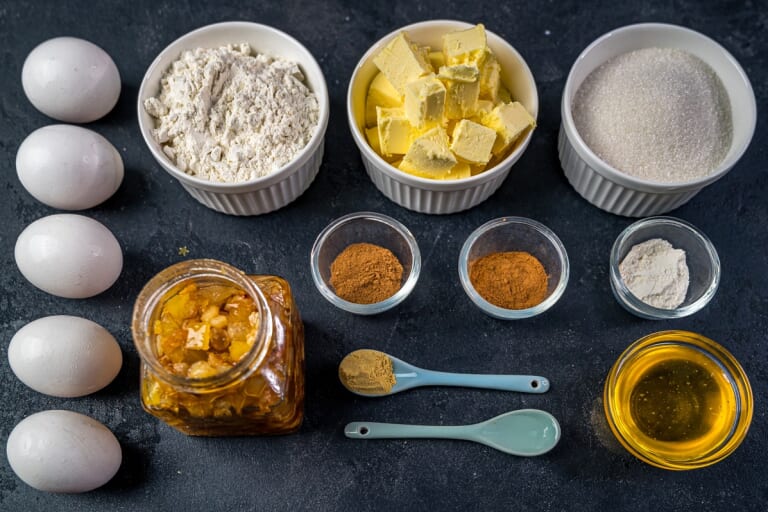
For the cake batter
- 1½ cup Unsalted butter (350 g)
- 1¾ cup Granulated Sugar (350 g)
- 2¾ cup All-purpose flour (350 g)
- 6 large Eggs
- 2½ tbsp Honey (50 g)
- 1 tsp Baking powder
- 1 tbsp Pure Vanilla extract
- 1 tsp Ground Cinnamon
- 1/2 tsp Ground ginger
- 1 tsp mixed spice
- 1 pinch Salt
- 1/2 cup sliced Almond
For the fruit mixture
- 2¾ cup Raisins (400 g)
- 3/4 cup candied Pineapple (100 g)
- 3/4 cup candied Cherries (100 g)
- 3/4 cup candied Mango (100 g)
- 3/4 cup Orange peel (100 g)
- 3/4 cup Lemon peel (100 g)
- 1 cup Brandy (250 ml)
- 1 tsp Lemon Zest
- 1 tsp Orange Zest
Additionally
- 3/4 cup Brandy (200 ml)
- 1¼ cup All-purpose flour (150 g)
- Unsalted butter for greasing
British Christmas Cake Recipe
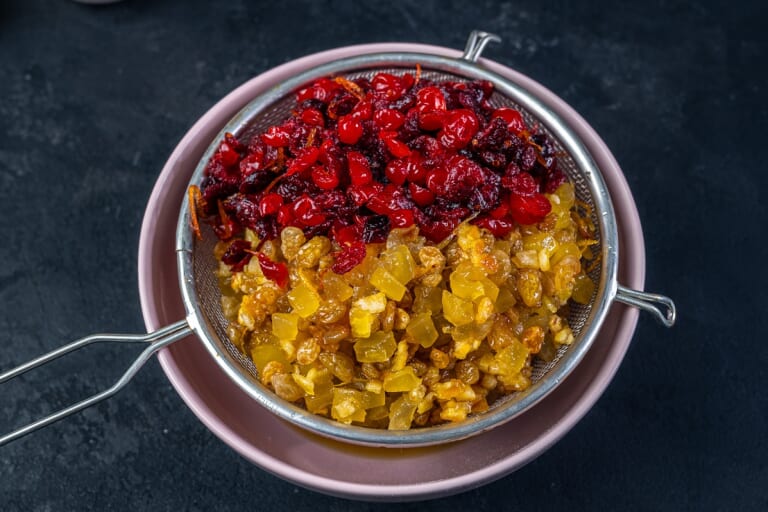
Cut any large pieces of candied fruit to match the size of the raisins, pour brandy or rum over them, and let them soak for at least overnight.
Drain the soaked fruits in a sieve, allowing excess liquid to drip off. For all the details on preparing the fruits, see our recipe for brandy-soaked fruits for fruit cake.
You can use any combination of candied fruits you prefer for this Christmas cake, but the proportion of raisins should be significantly higher. It's best to use two or three different types of raisins, for example, golden and dark.
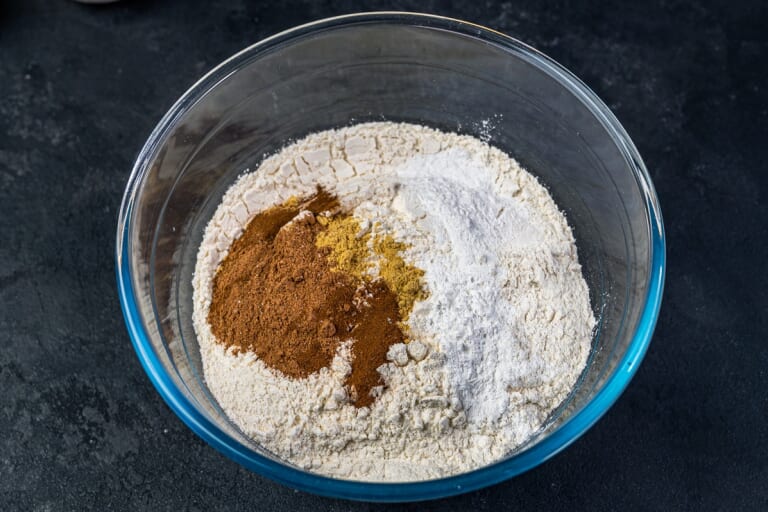
In a separate bowl, combine the sifted dry ingredients: 2¾ cups all-purpose flour (350g), 1 teaspoon baking powder, 1 teaspoon ground cinnamon, ½ teaspoon ground ginger, and 1 teaspoon mixed spice.
Add a pinch of salt and thoroughly mix all dry ingredients together.
You can make your own mixed spice blend, use a store-bought version, or simply add your favorite spices to taste: cardamom, star anise, cloves, nutmeg, and allspice.
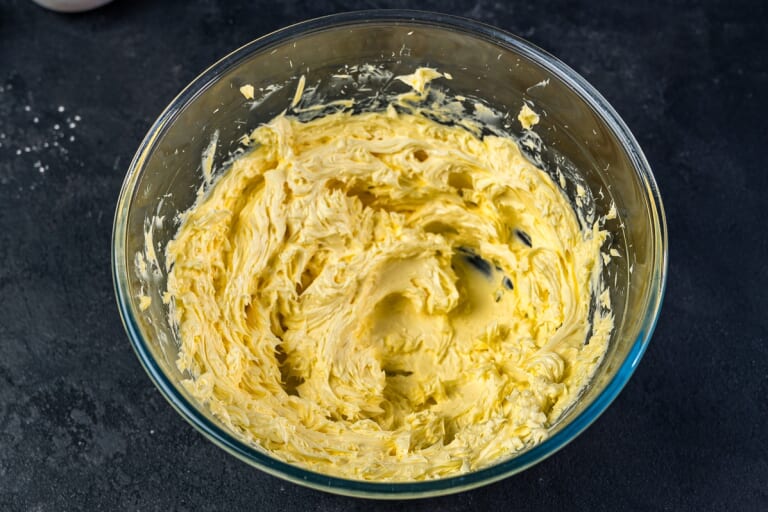
Beat 1½ cups (3 sticks) softened unsalted butter until light and fluffy, about 5 minutes, then gradually add 1¾ cups sugar (350g) in a thin stream or small portions while continuing to beat.
For a richer flavor and deeper color, brown sugar works best. If desired, you can add 1 tablespoon of black treacle, date syrup, or several tablespoons of dry caramel (burnt sugar).
It's best to keep the butter and sugar quantities exactly as specified, as the correct ratio of ingredients is crucial for this cake's success.
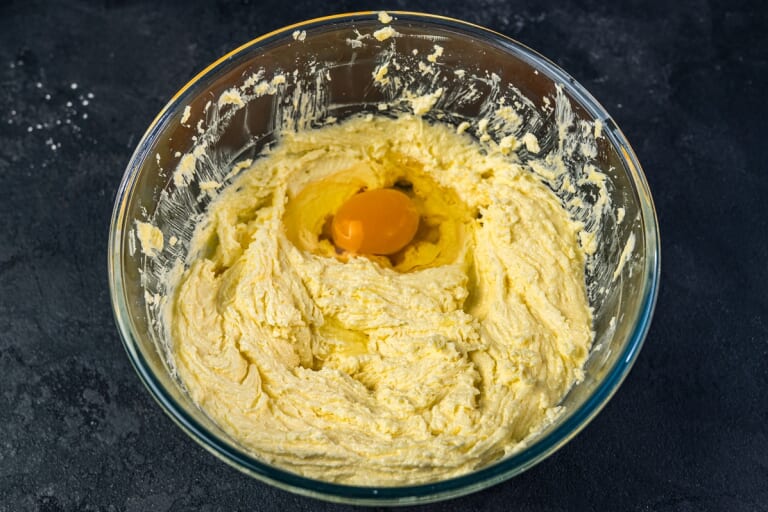
Add eggs one at a time to the butter mixture. Beat each egg until fully incorporated before adding the next one.
If you're using large eggs, 5 will be sufficient; if using medium or small eggs, use 6.
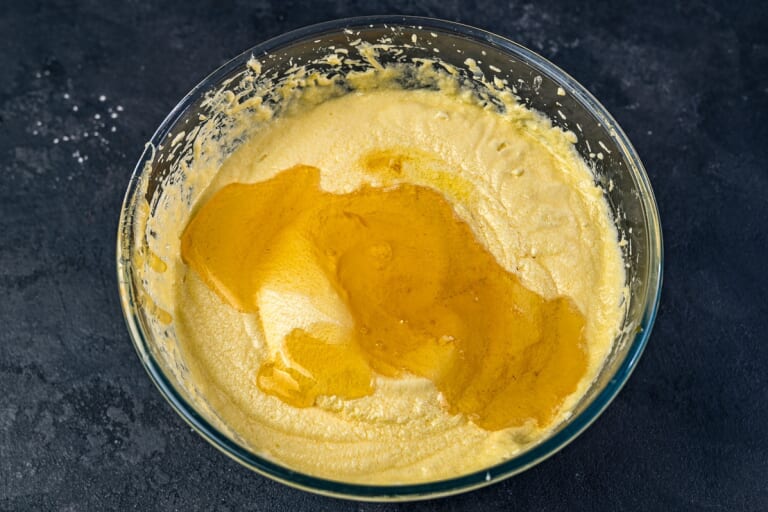
Add 1 tablespoon pure vanilla extract and 2½ tablespoons honey to the mixture.

Add the spiced flour mixture to the butter-egg mixture in two or three batches. After each addition, thoroughly fold the batter with a spatula until evenly combined.
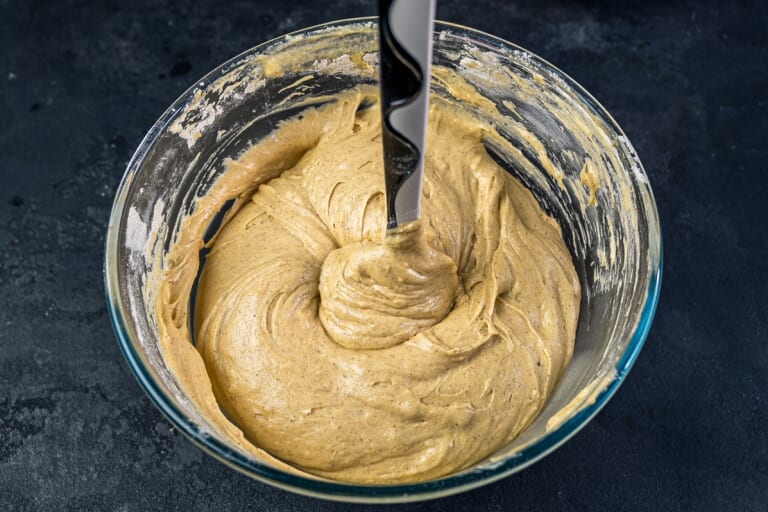
Finally, add ½ cup (60g) toasted and ground almonds or almond flour. If you prefer to make the cake without almonds, increase the all-purpose flour by ½ cup (60g) instead.
The batter should be glossy, uniform, and thick enough that a spatula stands upright in it.
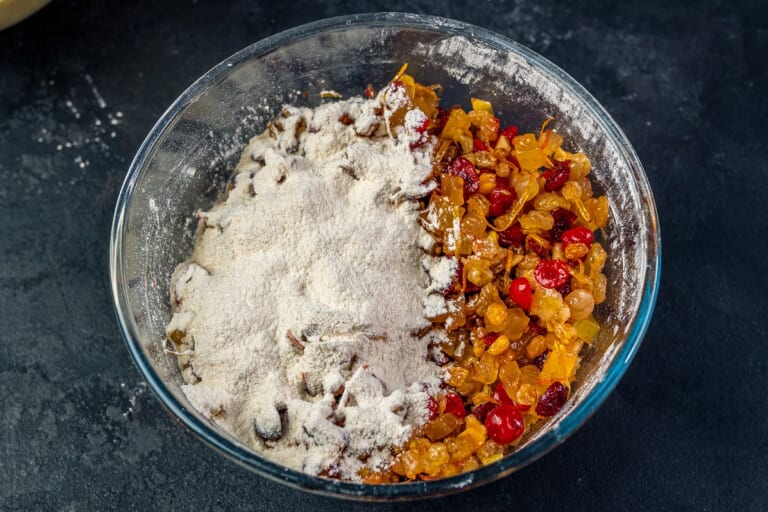
Squeeze excess liquid from the drained fruits and toss them with ½ cup (60-70g) all-purpose flour. Mix well.
The flour coating helps the fruits distribute more evenly throughout the batter.
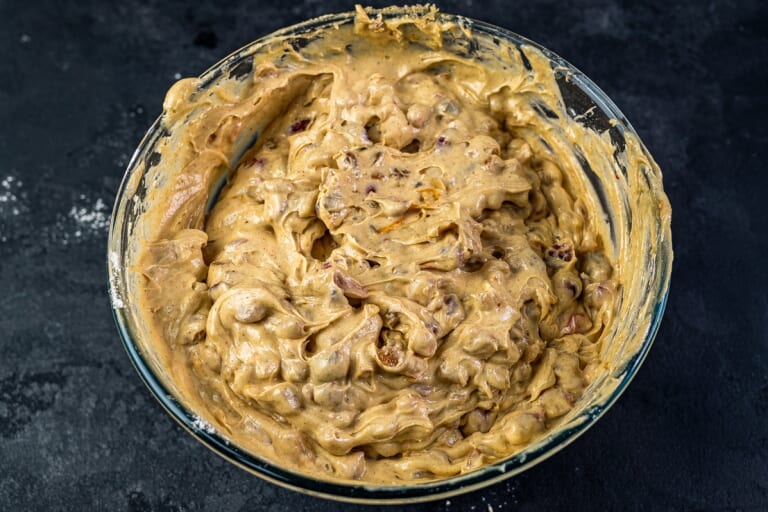
Fold the floured fruits into the batter and mix thoroughly.
The batter should be thick and wonderfully fragrant.
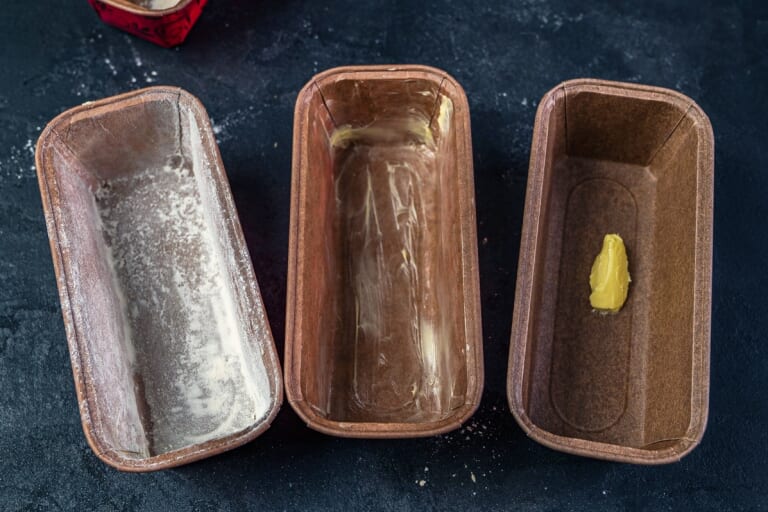
Grease your cake pans with unsalted butter, then dust with flour. Tilt and tap the pans to distribute the flour in a thin layer over the buttered surface. Turn the pans upside down and tap out excess flour into a suitable container.
I use disposable loaf pans for convenience, but you can bake these cakes in any standard baking pan. For best results, use:
- 3 standard loaf pans (8.5 x 4.5 x 2.5 inches/216 x 114 x 64mm)
- 6 mini loaf pans (5.75 x 3 x 2 inches/146 x 76 x 51mm)
- 2 round cake pans (8 inches/203mm in diameter)
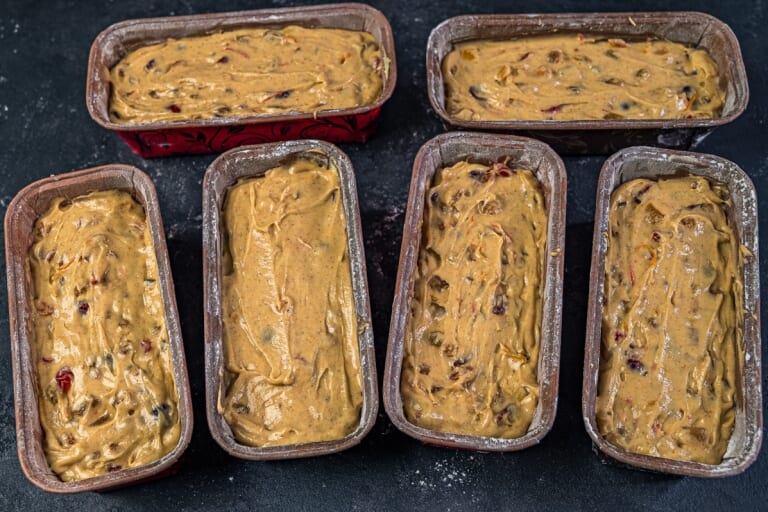
Fill each prepared cake pan about ⅔ full and smooth the top.
If desired, you can set aside a portion of the batter without fruits and spread it in a thin layer on top. This will prevent the candied fruits and raisins from burning.
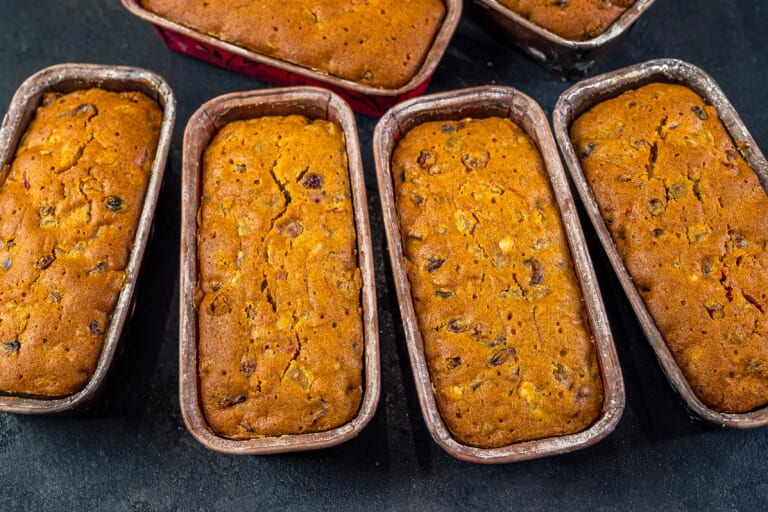
Bake in a preheated oven at 300°F (150°C) for 1-1½ hours, using both top and bottom heating elements. Test for doneness by inserting a toothpick into the center of the cake - it should come out completely clean.
Baking time will vary significantly depending on your oven's characteristics, pan size, and pan material. Monitor the baking process carefully and adjust temperature and time as needed.
If the outside of the cake starts browning too quickly before the center is done, tent the top with aluminum foil or a double layer of parchment paper.
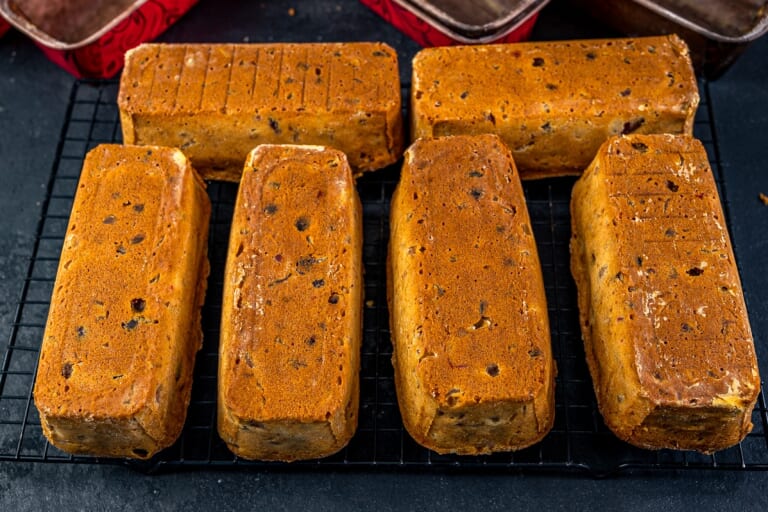
Let the baked cakes cool in their pans for one hour, then remove them and allow to cool completely. I transfer mine to a wire rack.
Brush each cake with 2 tablespoons of brandy or rum. You can add the alcohol while the cakes are still warm or after they've cooled completely. Warm cakes absorb the alcohol better, but if you're using cooled cakes, you can first prick the top of the cake all over with a toothpick.
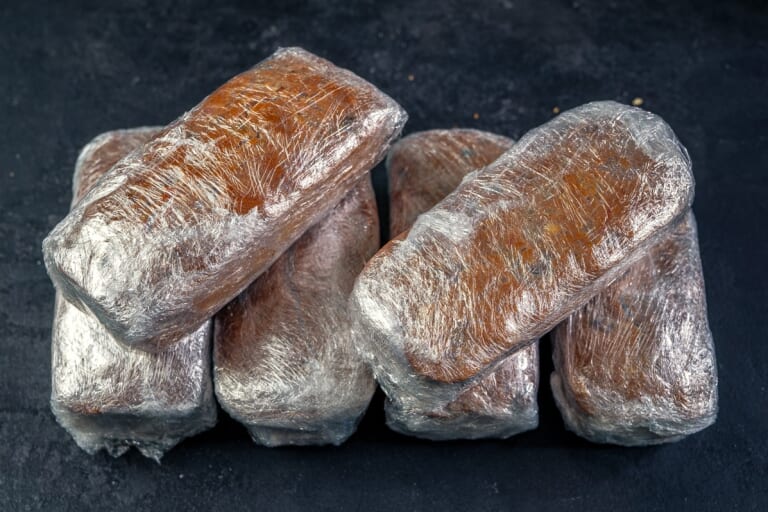
Wrap the cooled, brandy-soaked cakes tightly in plastic wrap - you can use up to 20 layers. I then wrap them in aluminum foil and store them in a dark, cool place for 3-6 weeks (mine mature on my enclosed porch). During this time, the cakes develop beautifully into rich, moist fruit cakes infused with an exquisite aroma. If desired, you can brush the cakes with additional brandy every 2 weeks, always rewrapping them in fresh plastic wrap afterward. I usually skip this extra step because it's impossible to resist sampling, and each time I do, the number of maturing cakes mysteriously decreases!
Our goal is to create a "microclimate" where the Christmas cakes can age, absorb the alcohol, and distribute moisture evenly. Traditionally, bakers would use alcohol-soaked cloth, which made it easy to add fresh brandy periodically, and store the cake in a covered metal tin.

The Christmas cake is ready! Before serving, you can decorate the top of the cake with icing or jam and garnish with nuts, candied fruits, dried fruits, or any other way you prefer. In Britain, these cakes are traditionally decorated with fondant, royal icing, or marzipan.
Personally, I prefer to dust my Christmas cake with powdered sugar, wrap it in festive paper, and give it to loved ones as Christmas approaches. If you don't have 4 weeks for aging but still want to enjoy this delicious treat, you can try the cake right away - while it won't have the same rich, aromatic buttery taste it develops over a month, it's still absolutely delicious. Merry Christmas!
Leave a Comment