

Pickled red onions are a sweet-and-tart, crunchy, gorgeously zesty condiment with a reddish-pink hue that can ring a bright note in any food. The simple brine mellows the onion flavor to become soft and rounded, tames the onion's sharp bite and bitter odor. It's so common it's hard to attribute to one cuisine: served with tacos and quesadillas in Mexico, served with delicately salted fish in the Scandinavian countries, served as an accompaniment to main dishes in Asia, and served as an accompaniment to shashlik and barbecues in Eastern Europe.
For me, this is my go-to quick and easy recipe. It comes together in minutes and uses just five basic ingredients that I always have on hand. That's why you'll almost always find a jar of these beautiful pink onions in my fridge, right next to the Sriracha.
Ingredients for 2 portions
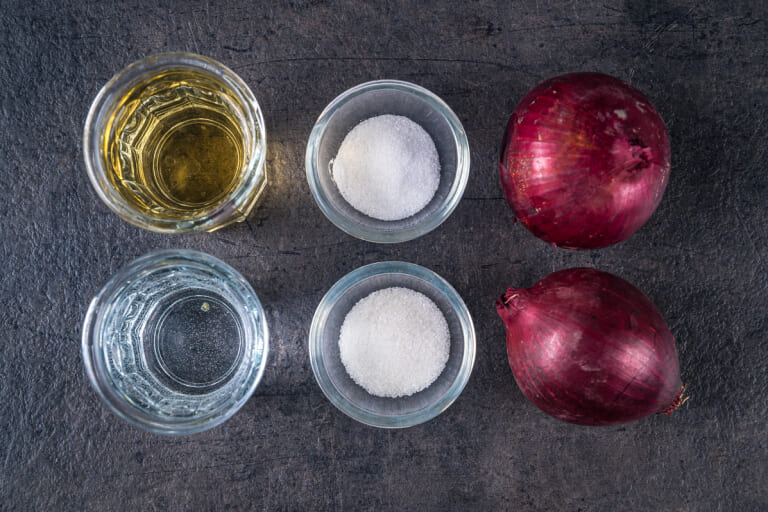
- 2 medium Red onion
- ½ cup Water (120 ml)
- ½ cup White wine vinegar (120 ml)
- 1 tbsp Granulated Sugar
- 1½ tsp Kosher Salt
How to make pickled red onions
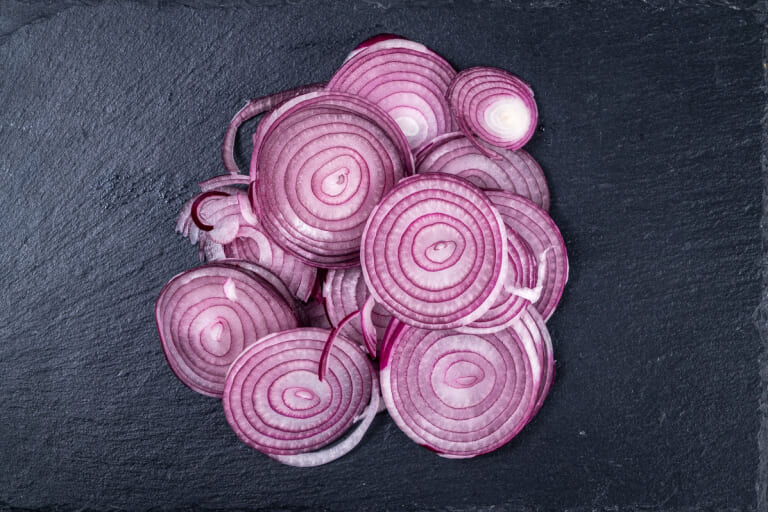
Peel sweet red onions and cut them into thin rings or half-rings no thicker than 1/16 inch (2 mm). This is easiest to do using a sharp knife, a food processor with a slicing attachment, or a mandoline slicer.
Important. The thinner the onions are sliced, the faster they pickle and absorb the flavors better. The onions will remain crispy regardless of the thickness of the slices.
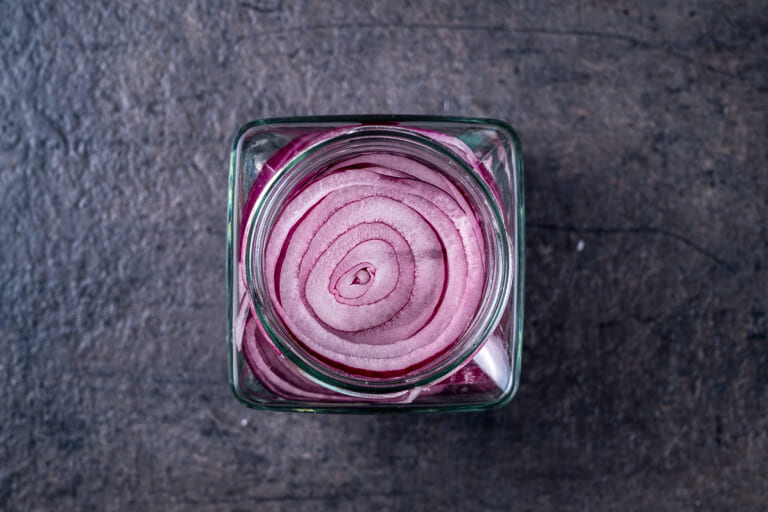
Place the onion rings in a suitable clean jar. You can gently pack them down, being careful not to break the delicate onions.
Important. Use a glass container with a tight-fitting lid. Any glass jar or container with a suitable lid will work. You can use a Mason jar, a jar with a twist-off lid, or one with a bail-and-trigger closure.
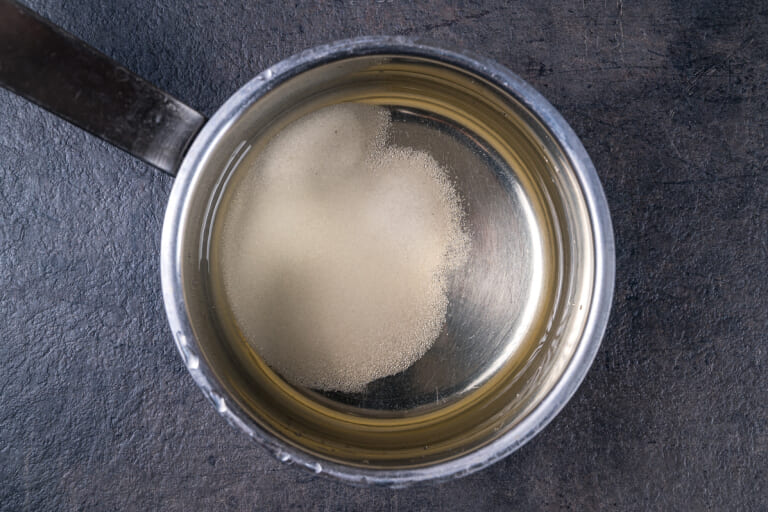
In a small saucepan, combine 1½ teaspoons kosher salt (1.5 tsp), 1 tablespoon sugar (1 Tbsp), ½ cup vinegar (120 ml) and ½ cup water (120 ml). Place the brine on the stove, bring to a boil and heat until the salt and sugar crystals completely dissolve.
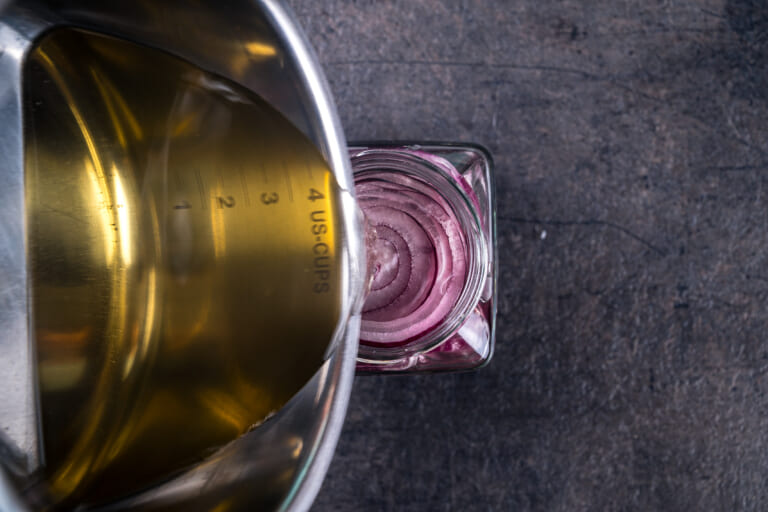
Pour the hot brine over the onions so that it fully submerged.
Seal the jar tightly with a clean lid and leave at room temperature until completely cool. This can take 30-80 minutes depending on the batch size and room temperature.
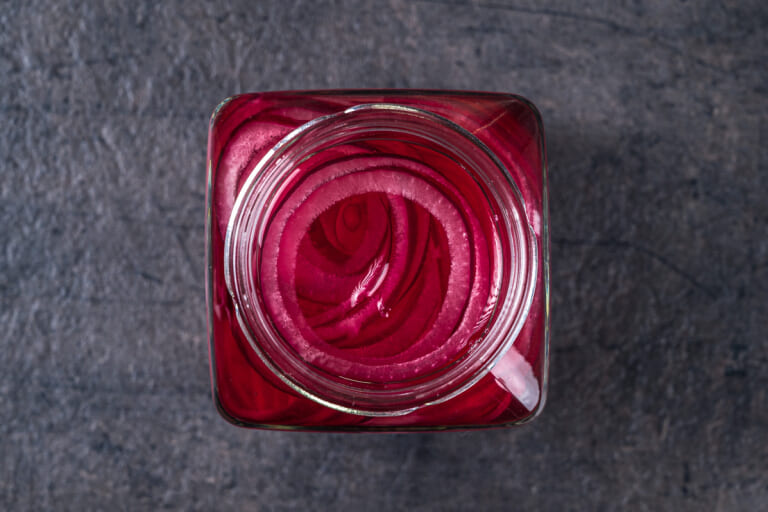
Transfer the jar with cooled onions to the refrigerator.
The onions are ready to eat after about 20-30 minutes of pickling, right after the liquid has completely cooled. However, I leave them in the refrigerator for at least 6-8 hours, or better yet, overnight. During this time, they become fully pickled and softened, losing their sharp bite and distinctive onion aroma.
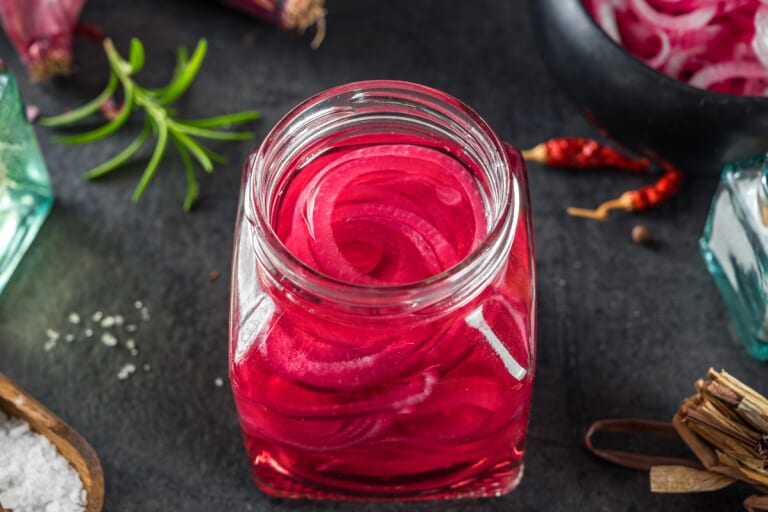
The crispy pickled red onions are ready.
You can add them to a salad or serve as a side with shashlik, meat, poultry, potatoes, or salted herring. Personally, I add them to burgers, sandwiches, tacos, burritos, shawarma, and hot dogs — thanks to their crispy texture and zesty flavor, they make an excellent addition to these dishes.
In my experience, this versatile condiment can be added to practically any dish: enchiladas, egg toast, guacamole, or even as a topping for ready-made pizza.
Tip. If you've eaten the onions too quickly, don't discard the remaining brine. You can use it as a salad dressing or reuse it to pickle more onions or other vegetables. Simply add fresh onion rings, radishes, small cauliflower florets, or thin carrot slices to the marinade and leave them in the refrigerator overnight.
Important. If the brine becomes cloudy, develops mold, or has an unpleasant odor, do not reuse it.
Quick-Pickled Onions Video Recipe
Recipe Tips
Storage and Shelf Life
Store pickled onions in the refrigerator in a tightly sealed glass container for up to 1 month. Ensure each onion slice remains covered with liquid.
They taste best during the first week after preparation, as they gradually lose their crispiness over time.
Spices to Add to the Marinade
The basic recipe consists of 5 ingredients: onions, vinegar, salt, sugar, and water. To make the flavor and aroma even more interesting, you can add spices or their combinations to taste. These spices pair excellently with pickled onions:
- black, allspice, green, white, or pink peppercorns;
- sliced garlic, ginger, or jalapeño; lemon or orange zest;
- fresh dill, parsley, cilantro, basil, or tarragon;
- dried oregano, thyme, basil, marjoram, tarragon; red pepper flakes;
- cloves, star anise, cardamom, cinnamon, bay leaf;
- mustard or coriander seeds;
- a sprig of thyme or rosemary;
- cumin or fennel seeds.
You can add spices directly to the bottom of the jar or to the boiling marinade. To enhance the flavor and aroma of dried spices, you can toast them in a dry skillet first.
Ingredient Selection and Substitutions
Red Onions. Any type of onion will do in this recipe, but sweet onions are best because two factors determine the result: sweetness and color.
Less pungent flavor will result from employing sweet onion varieties, including: salad onions, Yalta onions, sweet red onions, Tropea onions, Creole Red, Burgundy onions, Spanish sweet onions.
Sharp varieties contain less sugar and more sulfur, which results in them being pungent, bitter, and sharp - that's what creates that characteristic onion smell. When pickling such varieties, you might want to add a bit more sugar to partially counteract the bitterness. Sharp varieties also contain denser flesh.
The color red dissolves partially in the liquid to yield a beautiful pink color. The higher the ratio of pigment to liquid, the darker the marinade will color: a Tropea onion will color it light pink, while Creole Red will leave it fuchsia.
I would prefer to use sweet red onions because they are so mild flavored and have a beautiful rich color.
Tip. If using white onions but want a rich red color, add a bit of grenadine. You can add beetroot, red cabbage, or berries, but it's important to maintain balance so the coloring agent doesn't overpower other ingredients.
Sugar. Regular white sugar works fine. To make it taste more thrilling, you may substitute it with brown sugar, honey, maple syrup, agave syrup, or other sweetener.
When choosing a substitution, it must be understood what role sugar has in the recipe. Sugar softens the natural pungency of the onion, balances overwhelming vinegar acidity, and adds a pleasant sweetness to the end product. It acts as a preservative and affects the texture of the onion, keeping it firm and crispy.
Vinegar. You can use any type of food-grade vinegar or their combination.
I use natural 6% vinegar: this can be apple cider, rice, red or white wine vinegar. Natural vinegar has a milder taste and fruity aroma.
Table vinegar (white vinegar) also works for this recipe. Just note that the recipe is calculated for 6% vinegar. If using 9% vinegar, use a calculator for conversion.
Important. Don't use concentrated balsamic vinegar for this recipe!
Water. Any clean drinking water works, as its main purpose is to dilute other components to increase marinade volume and reduce its concentration.
You can decrease or increase the amount of water according to your taste preferences. Some pickle onions without water, in pure vinegar marinade. In my opinion, such marinade becomes too concentrated, but as they say, it's a matter of taste.
Salt. Any salt works. However, keep in mind that the ratio of sodium chloride to mineral impurities varies between different types of salt. This affects taste intensity and ability to color the marinade. For example, table salt contains almost no impurities, so it tastes saltier compared to sea salt. Sea salt, Hawaiian salt, black salt, and Himalayan salt often contain mineral impurities that don't dissolve in water. As a result, the marinade might take on different shades or become slightly cloudy.
Leave a Comment