

Roman cuisine hallmarks are anchovy, zucchini flower, and mozzarella pizza on a white base. Romans treasure zucchini blossoms' unusual, delicate flavor and aroma and prepare delicious dishes with this seasonal ingredient. In Rome, zucchini flowers are stuffed with various fillings, fried in batter, and added to pasta, pies, pizza, soup, risotto, lasagna, and even ravioli.
Roman Pizza (Bianca) with Squash Blossoms and Anchovies surprises with the perfect combination of delicate petals, the spicy and "robust" taste of anchovies, and creamy, stringy mozzarella.
Where to Find Squash Blossoms?
This is the question I asked myself when I first wanted to taste them. In Italy, greenhouse zucchini flowers are available year-round, and fresh bouquets are sold in markets from April through September. This luxury isn't sold in our stores but abounds in any summer cottage garden. From my experience, not only zucchini flowers can be used; pumpkin flowers or squash blossoms work just as well. When picking fiori di zucca, choose the male flowers (those not set into a small squash or pumpkin).
Ingredients for 3 portions
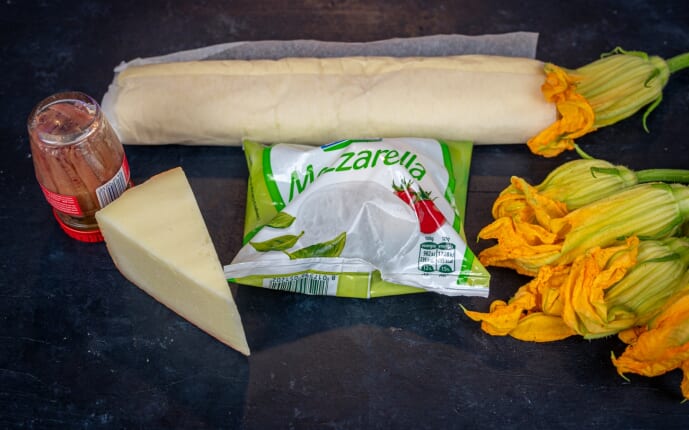
- 12 oz Pizza dough homemade or bought (350 g)
- 10 piece Zucchini Flowers
- 4.5 oz Mozzarella (125 g)
- 6 piece Anchovies
- ½ cup grated Pecorino Cheese (50 g)
How to cook
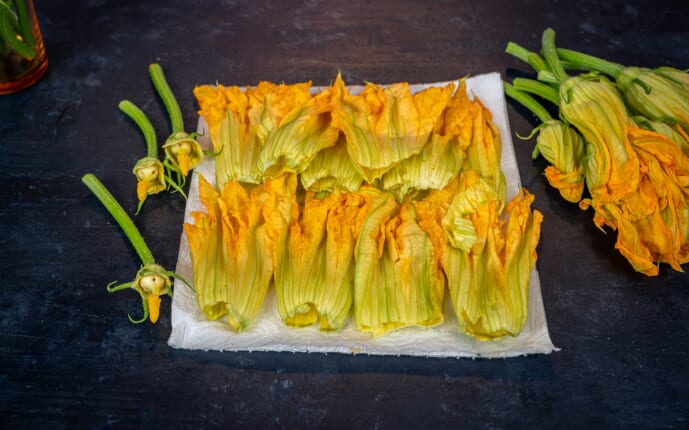
Remove the stem and pistil from the zucchini flowers, rinse the petals, shake off the water, and lay them on a paper towel to remove excess moisture. If necessary, remove the green parts of the sepals (outer petals).
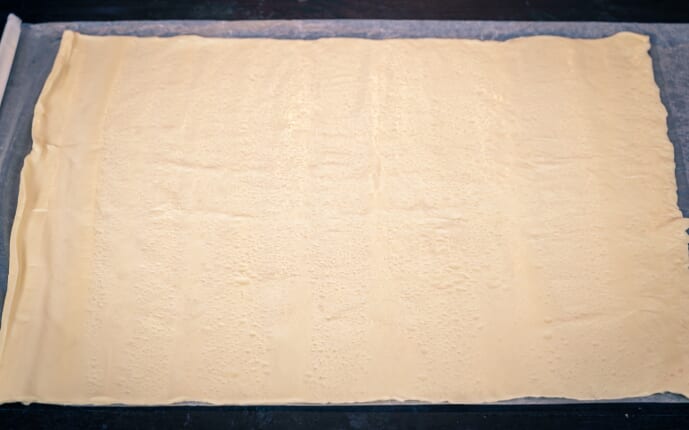
Roll out the pizza dough and form a crust around the edges if desired.
I used store-bought dough this time, but any pizza dough recipe that suits your taste will work. I love making pizza and khachapuri using Peter Reinhart's pizza dough recipe.
If you are making a pizza with a crust, using a standard 12-to-14 ounce ball (around 350 g) of prepared dough is better. I had a small package of store-bought dough, so I chose not to form a crust.
If the edges of your pizza turn out very thick and bulky, you can lightly drizzle them with olive oil. Additionally, if the dough contains minimal salt, you can sprinkle the crust lightly with extra salt.
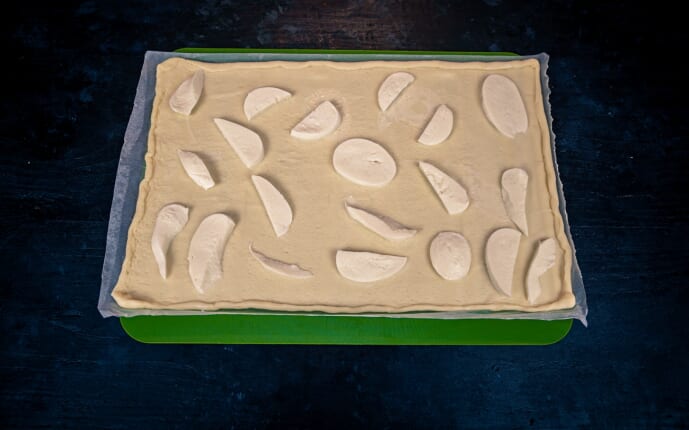
Place slices of mozzarella on the dough. Optionally, you can lightly drizzle the pizza base with extra virgin olive oil.
There are two main types of mozzarella: cheese in brine and firm "dry" mozzarella for pizza. For this recipe, I prefer to use mozzarella in brine. Allow the brine to drain well to avoid excess moisture in the pizza.
If desired, you can use buffalo mozzarella, which is softer, creamier, and juicier than regular cow's milk mozzarella. This type of cheese is better torn by hand rather than cut with a knife.
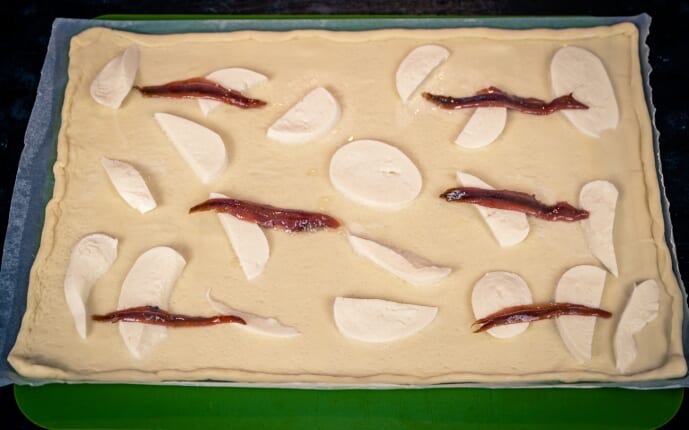
Distribute pieces of anchovies on top. Anchovies have a vibrant and spicy flavor and aroma. If too many are added, they can overpower the taste of the other ingredients.
It's best to evenly distribute them in small pieces across the pizza's surface. Depending on how intense a fish flavor you desire, you can add 3 to 7 anchovies per pizza.
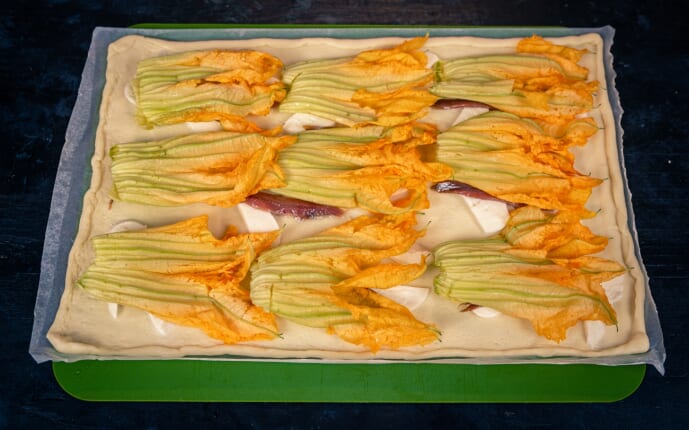
Arrange the zucchini flowers on top. They might stick up a bit, but that's not a problem, as they will wilt slightly and reduce in size during cooking.
Squash blossoms turn out very tender, so if you prefer, feel free to add more than the recipe specifies.
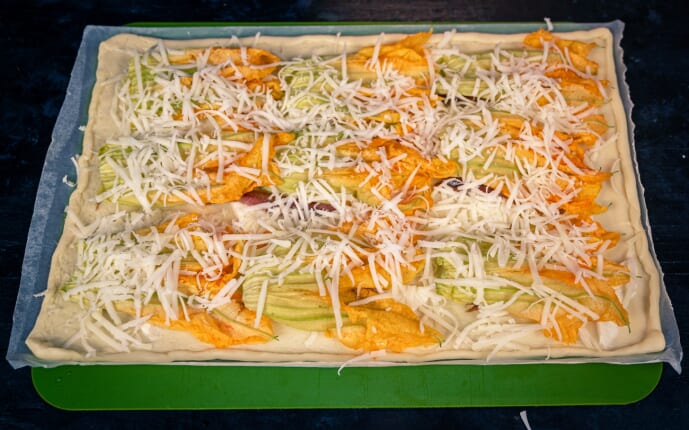
I added a layer of Pecorino cheese, whereas the original recipe uses mozzarella. I prefer the sharper and richer flavor of the cheese. Additionally, this pizza pairs beautifully with the mild heat of red pepper. You can substitute this by drizzling the finished pizza with spicy oil.
I recommend first trying the classic version with anchovies, zucchini flowers, and mozzarella, then adding variations according to taste.
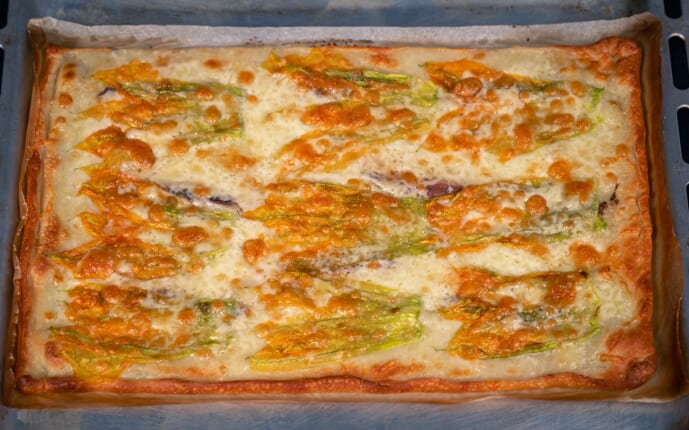
Place the pizza on parchment paper and bake in an oven preheated to 475°F (245°C) for 8-10 minutes. The cooking time may vary depending on your oven's characteristics and the thickness of the pizza.
If you don't have parchment paper, sprinkle the baking sheet with flour or cornmeal (semolina can also be used).
The temperature is one of the most essential factors for pizza — it affects the color, aroma, taste, texture of the finished dough, and cooking time. In a traditional pizza oven, temperatures often reach 660-840°F (350-450°C), and pizzas cook in just 2-4 minutes. In a regular oven, the highest temperature setting might get around 550-575°F (290-300°C) allowing cooking in about 5-8 minutes, while many standard household ovens peak at about 475°F (245°C) requiring 8-10 minutes, and in some cases even less heat is available, extending the cooking time beyond 10 minutes. This cooking time is approximate as it will be influenced by the thickness of the dough, the moisture of the toppings, and how your specific oven distributes heat.
There are tricks to improve pizza baking in a regular oven: preheat it to the highest possible temperature and use a pizza stone or steel. A special bread baking pan or, in a pinch, flipping over a regular baking sheet to preheat it with the oven can also work. If your oven only heats up to 400°F (200°C) or lower, and the pizza base is quite thick, you might consider splitting the preparation of the dough and toppings. Roll out the dough, brush it with olive oil, lay down the first layer of mozzarella, and bake it in the preheated oven for 8-10 minutes. The dough should rise and gain a pale golden color by this time. Then, add the anchovies, zucchini flowers, and remaining mozzarella on top, and return it to the oven for another 5-10 minutes until the cheese and crust are nicely browned.

The pizza with anchovies, zucchini flowers, and mozzarella is ready. Grab a pizza cutter, slice the delicious pie into portions, and enjoy the exquisite and unique flavor.
Recipe Tips
The Fresher, The Better!
Zucchini flowers are incredibly delicate; they don't transport or store well at all. My best advice? Try to use them the same day you pick or buy them. The sooner the pumpkin flowers get from the garden (or market) to the table, the better their flavour and texture will be.
Room Temperature Dough is Key
Whether you're using homemade or store-bought dough, try to let it sit at room temperature for at least 30 minutes (or as the package/recipe directs) before stretching. Cold dough is much harder to work with; it tends to snap back. Room temperature dough relaxes the gluten, making it significantly easier to stretch into your desired shape without tearing.
Avoiding a Soggy Pizza Bottom
A common pizza woe! Two main culprits here: excess moisture from toppings and insufficient heat from below. As mentioned in Step 3, draining your fresh mozzarella really well is crucial. Don't overload the pizza with toppings either. Secondly, ensure your oven (and pizza stone/steel/baking sheet, if using) is fully preheated to that high temperature (475°F/245°C or higher). This intense bottom heat helps cook and crisp the crust quickly before the toppings release too much moisture.
Leave a Comment