

Let's make Italian cheese grissini - long, thin, crispy, aromatic, and incredibly delicious breadsticks. It's hard to overestimate the value of this traditional Italian baked good. Making Grissini is so simple that even a child can handle it, and all the necessary ingredients can be found in any home.
These Italian breadsticks can be served as an appetizer, taken on the go as a snack, used instead of bread, or wrapped with a slice of Parma ham. But the best thing about grissini is that you can make them with almost any addition: sun-dried tomatoes, sesame seeds, sunflower seeds, chia, flax seeds, olives, cumin, oregano, coarse sea salt, rosemary, herbs de Provence, chili pepper, paprika, bacon, Parmesan, cheese - and get a completely new flavor every time.
Grissini, like many genius recipes, has its own legend. The story goes that somewhere in the vicinity of Turin, an Italian prince was suffering from either stomach problems or obesity. To cope with the ailment, the doctor prescribed him fractional nutrition. The royal cook baked the first batch of crunchy, aromatic grissini, which not only won over the prince but continued their expansion throughout the world.
Ingredients for 6 portions
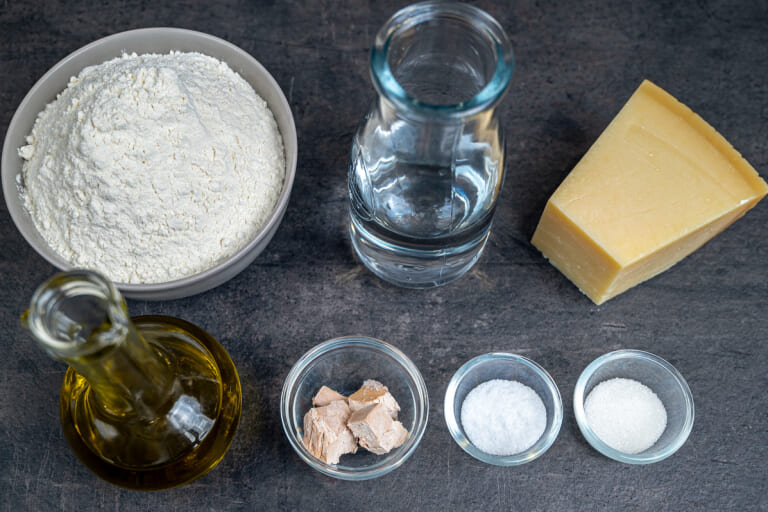
For the dough
- 4 cup All-purpose flour or bread flour (480 g)
- 1 cup Water (240 ml)
- 1 tsp Salt
- 1 tsp Sugar
- ½ oz Fresh cake yeast (14 g)
- 3 tbsp Extra Virgin Olive Oil (45 ml)
Additionally
- 2 tbsp Extra Virgin Olive Oil
- 1/2 cup grated Parmesan or Grano Padano
Crispy Cheese Grissini Breadsticks Recipe
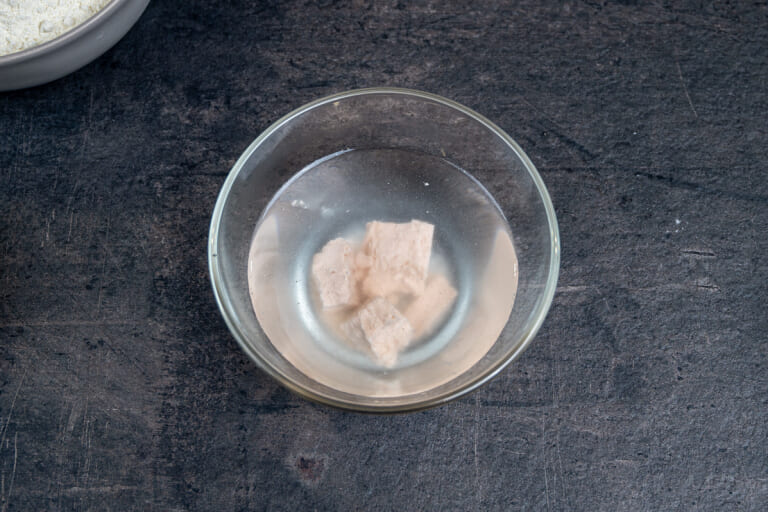
Pour warm water 1/2 cup (120 ml) into a bowl and add a teaspoon of sugar, then stir. The water temperature should be around 95-98°F (35-37°C). If you dip your finger in it, the water should feel comfortable, not hot.
Next, add the fresh cake yeast ½ oz (14 g) and let it sit for 10-20 minutes until a yeasty foam forms on the water's surface, ready for the grissini recipe. This process activates the yeast, and we can be 100% sure it's working.
If you're using active dry yeast, you'll need to use about a third of the amount of cake yeast. So, you'll need about 1 ½ teaspoons (5 g) of active dry yeast. For the best results on how to use it, it's better to read the instructions on the package.
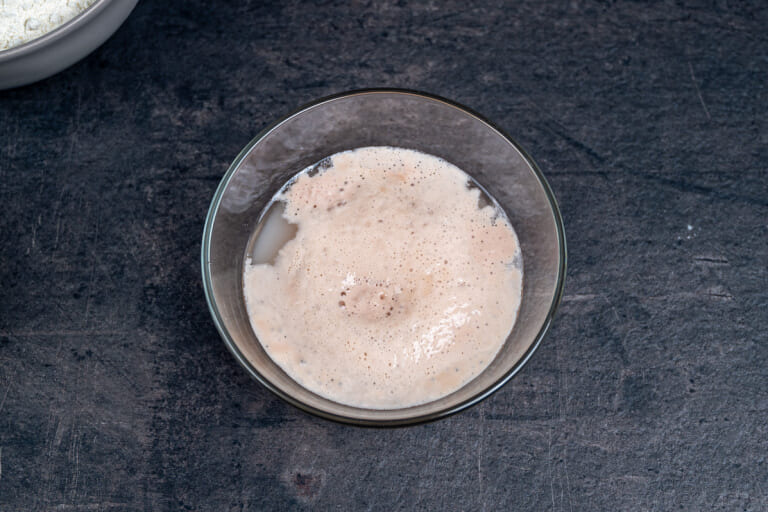
After 10-20 minutes, you'll see a fluffy yeast foam form on the water's surface, just like this.
In the remaining warm water 1/2 cup (120 ml), dissolve a teaspoon of salt.
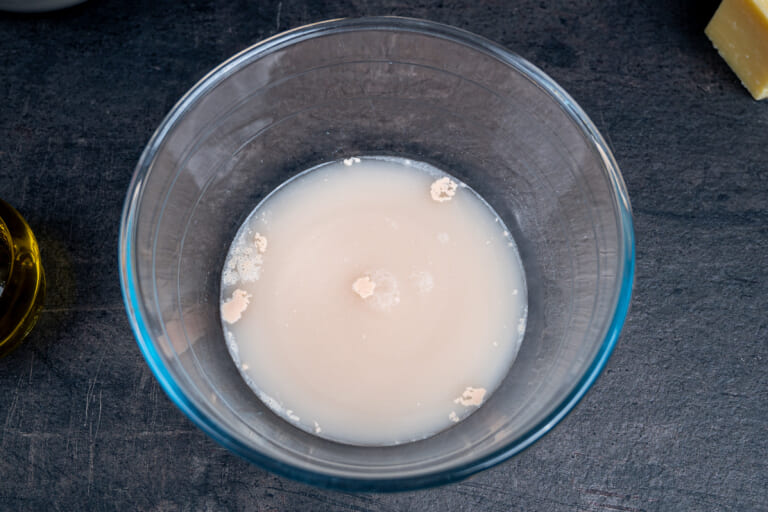
Add the water with the activated yeast and mix it in.
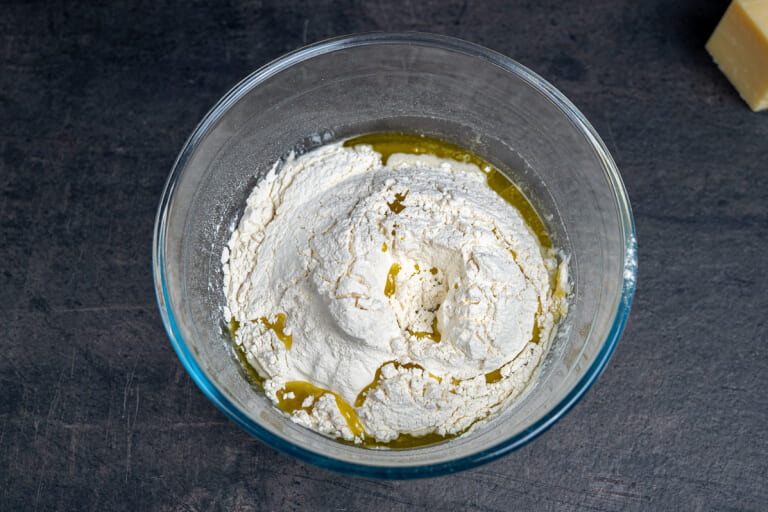
Add 3 tbsp (45 ml) of olive oil and part of the sifted flour (2 1/2 cups or 300 g), then mix the dough.
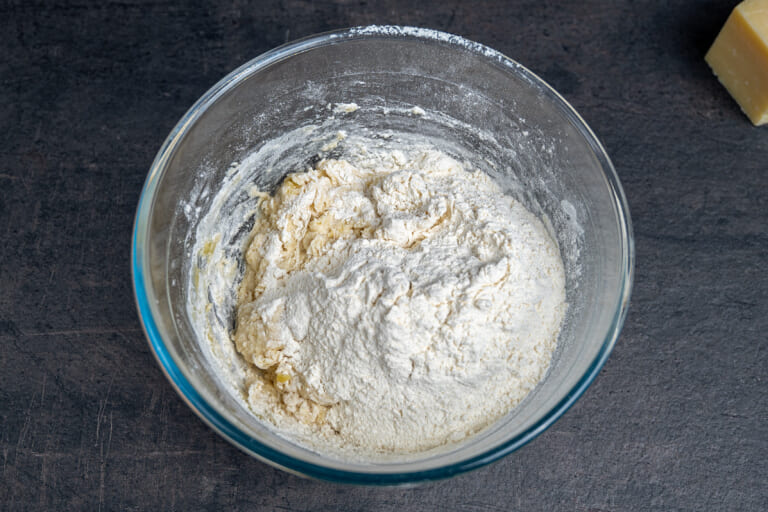
Next, add the remaining all-purpose flour (1 1/2 cups or 180 g). For added texture, you could consider using bread flour.
It's best to add the flour to the dough in portions, as you may need more or less depending on its quality and composition.
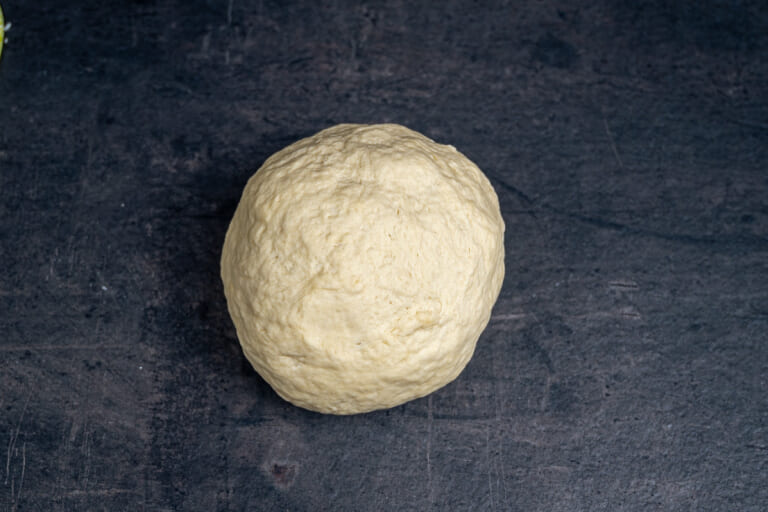
Knead the dough until it becomes soft, slightly sticky, and elastic. If you're kneading by hand, it will take about 10-15 minutes.
When kneading bread dough, it's important not to overload it with flour.
To achieve a soft, airy, elastic, and pliable dough, we knead it thoroughly. At first, the dough might seem too sticky, but as you continue kneading, you'll see its consistency and properties change before your eyes. You can knead the dough by hand, using a bread machine, or with a stand mixer fitted with a dough hook.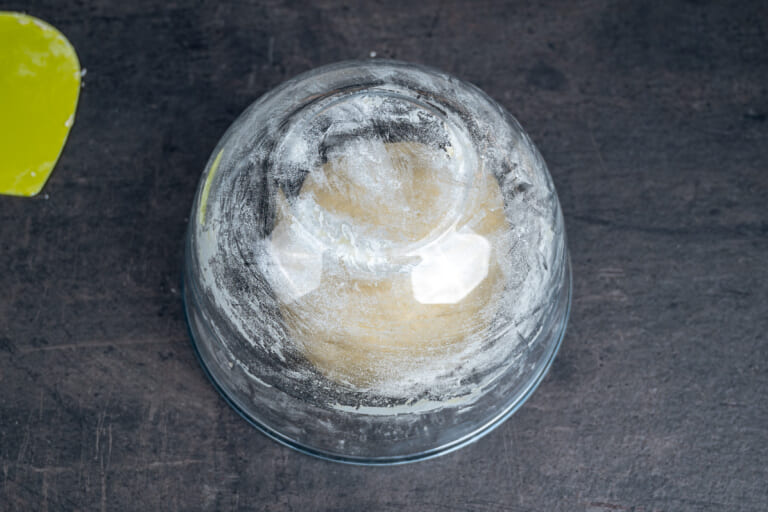
Shape the dough into a ball, cover it with an inverted bowl or plastic wrap, and leave it in a warm, draft-free place for 30-40 minutes. During this time, the dough should double in volume.
If you prefer, you can grease a bowl with oil and place the dough in it. The important thing is that the bowl is large enough so the dough doesn't overflow as it rises.
For a warm, draft-free spot, a microwave with a cup of hot water inside works great, as does the top of a radiator or an oven with the light on or set to 85-90°F (30°C).
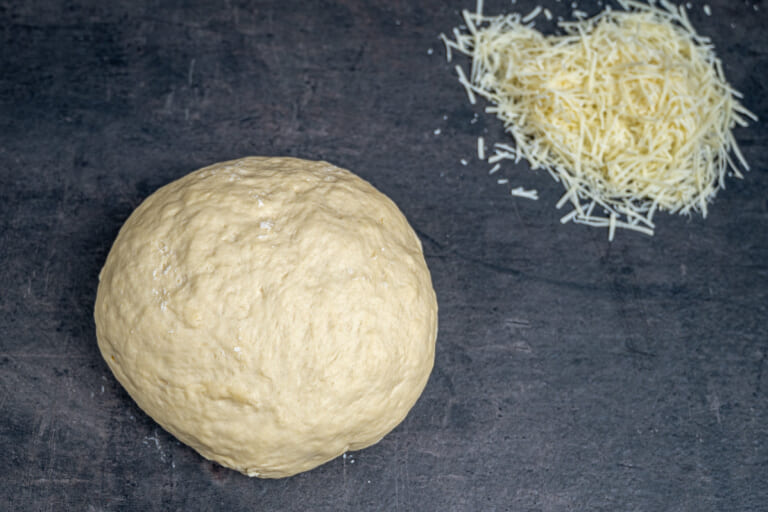
While the dough for the breadsticks is rising, you can grate the cheese using a fine grater.
For this recipe, it's best to use aged cheese varieties, such as Parmesan. However, any cheese you prefer will work just fine.
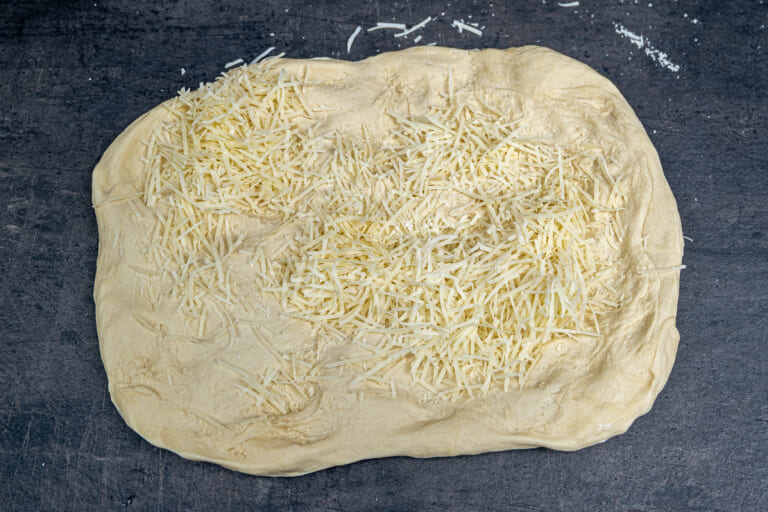
Lightly grease your work surface with vegetable oil and roll out the dough into a flat sheet. Sprinkle the resulting flatbread with cheese and mix it to distribute the cheese more or less evenly throughout.
If you like, you can divide the dough into 2 parts and prepare them with different add-ins to taste: rosemary, sun-dried tomatoes, grated Parmesan, flax seeds, chia seeds, sesame seeds, sunflower seeds, or dried herbs.
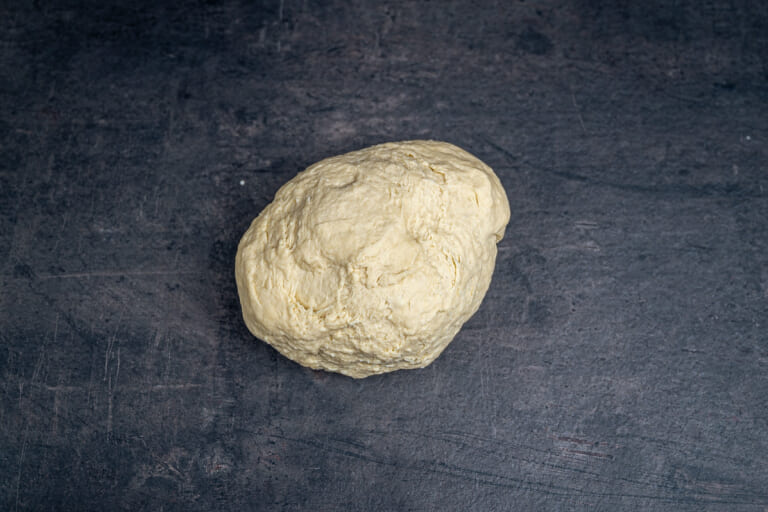
Divide the resulting dough into 2 equal parts, cover them with a bowl or plastic wrap, and let them rest for 15-20 minutes in a warm, draft-free place. During this time, the dough will rise slightly and become more pliable for creating a crunchy breadstick.
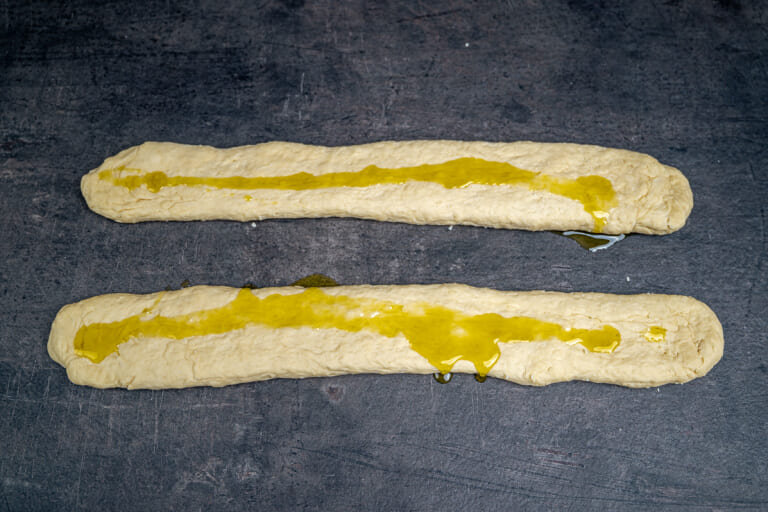
Shape each piece of dough into an oblong semi-sausage shape, about 3 inches (8 cm) wide.
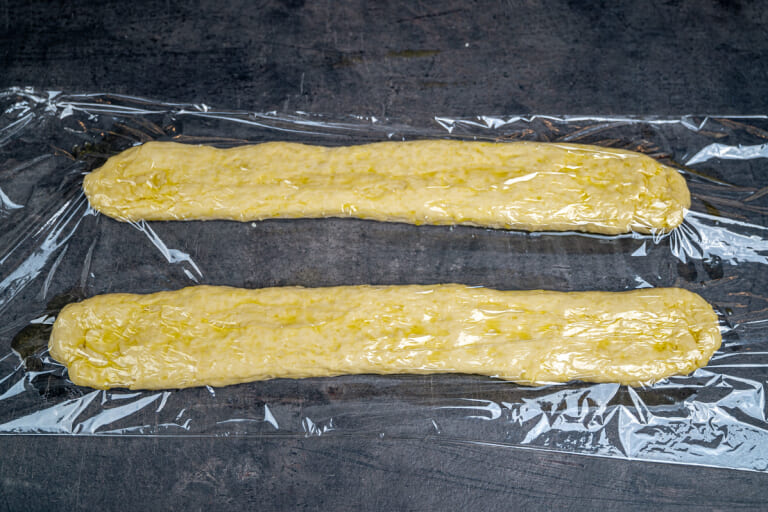
Brush each piece with olive oil, cover with plastic wrap, and let them rest for 1 hour. The dough should double in volume.
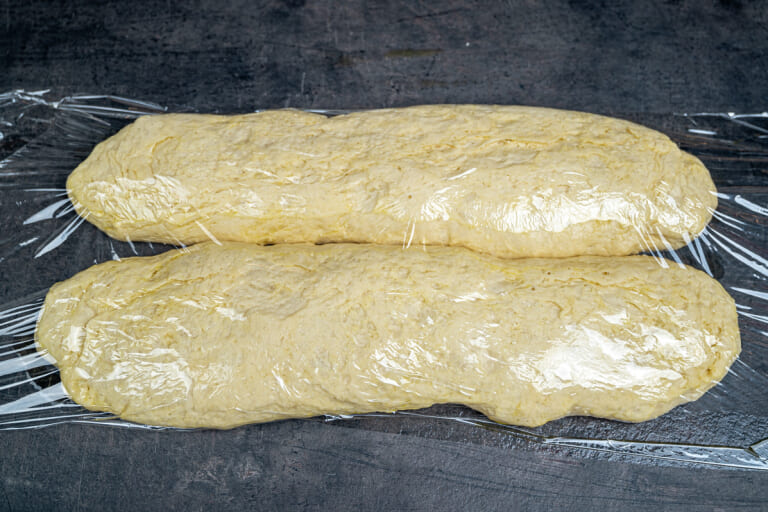
After an hour, the dough will look approximately like this.
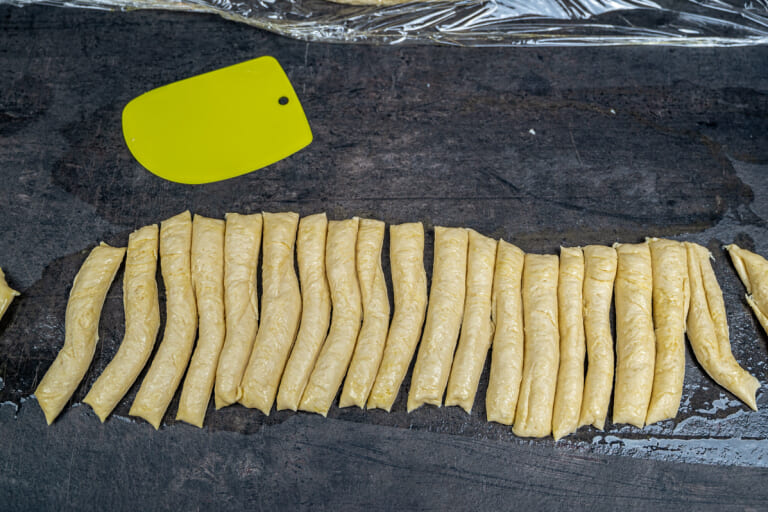
Divide each sausage-shaped piece into equal strips about ½ to ⅔ inch (1-1.5 cm) wide, depending on the size of your baking sheet and your desired grissini size.
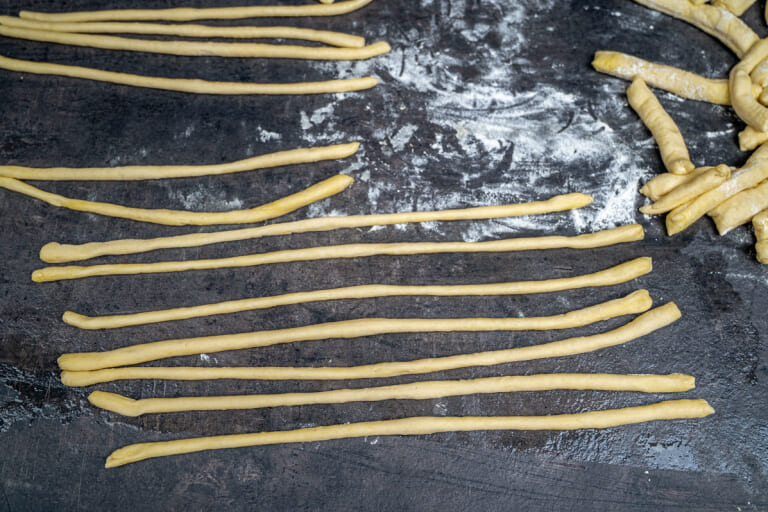
Roll each piece of dough into a small sausage shape and lightly coat it in flour. Instead of regular flour, coarse flour works great, including cornmeal. You can also add sesame seeds, chia seeds, poppy seeds, or grated cheese to the coating.
You can shape the future breadsticks in different ways: stretch them, roll them into sausage shapes, or twist them into cords. Grissini can be various shapes, lengths, and thicknesses, so experiment to find your ideal version.
Keep in mind that most of the topping will fall off the finished grissini, so for a more pronounced flavor, I always add it to the dough itself.
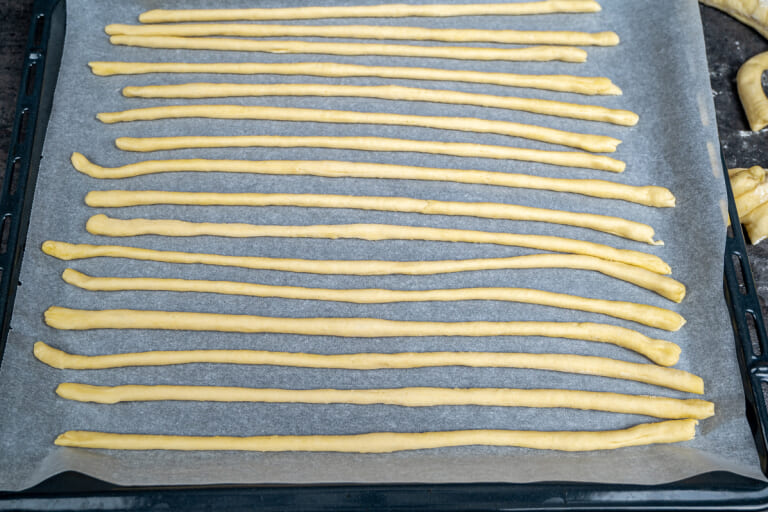
Transfer the dough cords onto a parchment paper-lined baking sheet, spacing them apart as they will increase in size during baking. Then, place them in an oven preheated to 400°F (200°C), using the "top and bottom heat" setting (conventional bake mode), for 20-23 minutes.
From the amount of ingredients listed, I typically get 2 large baking sheets of grissini, which is approximately 30-40 sticks depending on their size.
As the grissini bake, they'll become golden-brown and crispy. Keep a close eye on them, especially since they contain cheese, to prevent burning. The darker they get, the crunchier they'll be, but be careful not to let the cheese burn.

Bake the sticks until they reach a beautiful golden color.
The finished breadsticks should be crispy both on the outside and inside.

Italian grissini are traditionally served as an appetizer before the main course. Additionally, you can serve them with soup, take them on a picnic, or pack them as a snack for work or school.
It's best to store these breadsticks in an airtight container. If they lose their crispiness, you can pop them in a preheated oven for 2-3 minutes to restore their crunch.
Recipe Tips
Tips for Success
- Flour Matters: While all-purpose flour works wonderfully, using bread flour will give your grissini a slightly chewier interior and an even crispier crust due to its higher protein content. Feel free to experiment!
- Don't Rush the Yeast: That first step of activating the yeast is crucial. Seeing that "yeasty foam" is your guarantee that the dough will rise beautifully. Make sure your water is warm, not hot—like a comfortable bath.
- Uniformity is Key (for even baking): Try to roll your breadsticks to a similar thickness. This ensures they all bake at the same rate. If some are thick and some are thin, the thin ones might burn while the thick ones are still soft inside.
- Bake for Crunch: Don't be afraid to let the grissini get a deep golden-brown color. The color is where the flavor and the crunch come from! Just keep a close eye on them in the last few minutes to prevent the cheese from burning.
Leave a Comment