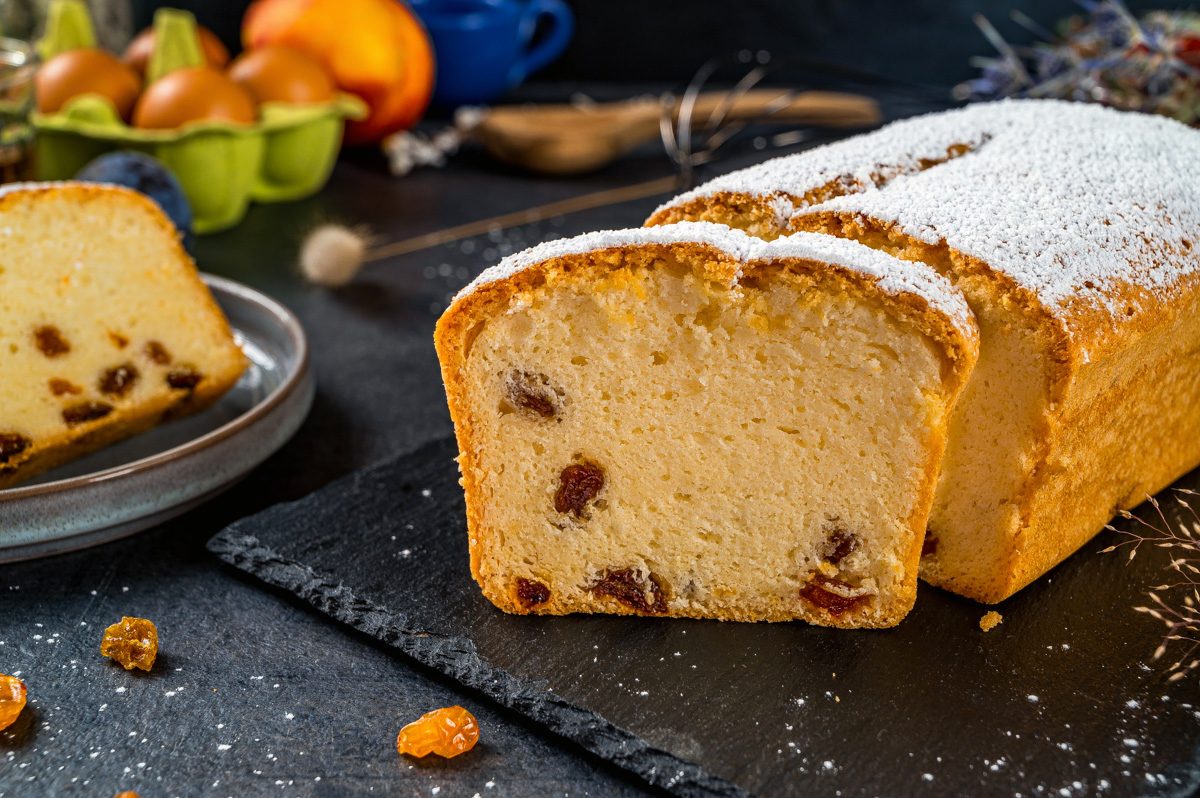

Munavalgekook - an Estonian pastry, whose name translates as "egg white cake". This delicate, airy cake has been a real discovery for me. The taste of the cake is reminiscent of something between a pound cake and an angel food cake. The texture of the crumb is similar to a sponge cake, but thanks to the addition of butter, it turns out more moist, soft, and spongy.
The main advantage of the Estonian cake is that only egg whites are needed for its preparation. Often making crème anglaise, I always have leftover whites in my fridge. Pavlova and meringue are great ways to use up excess whites, but this recipe is beyond comparison.
Ingredients for 8 portions
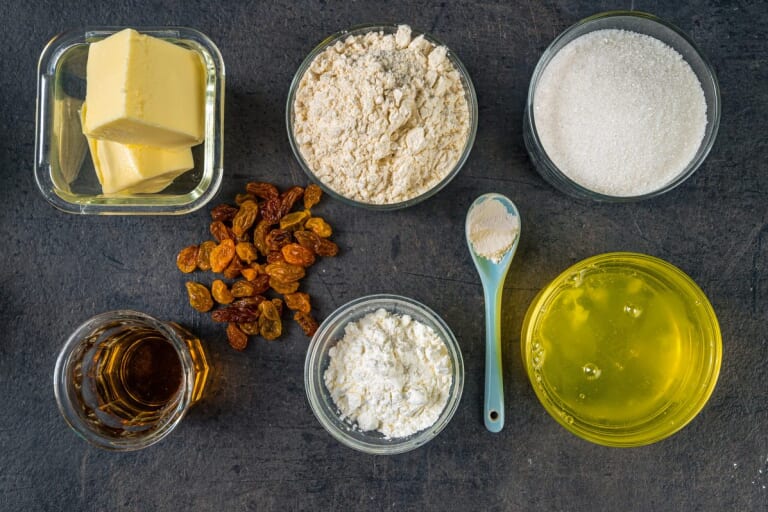
- 7 Large Egg whites (210 g)
- 1 1/3 cup All-purpose flour (160 g)
- 1 1/4 cup Sugar (250 g)
- 7 tbsp Unsalted butter (100 g)
- 2 1/2 tbsp Cornstarch (20 g)
- 1 tsp Baking powder (5 g)
- 2/3 cup Raisins (80 g)
- 3 1/3 tbsp Cognac (50 ml)
- 1 pinch Salt
Egg-White Cake Recipe
Before we start preparing the batter, we do three things:
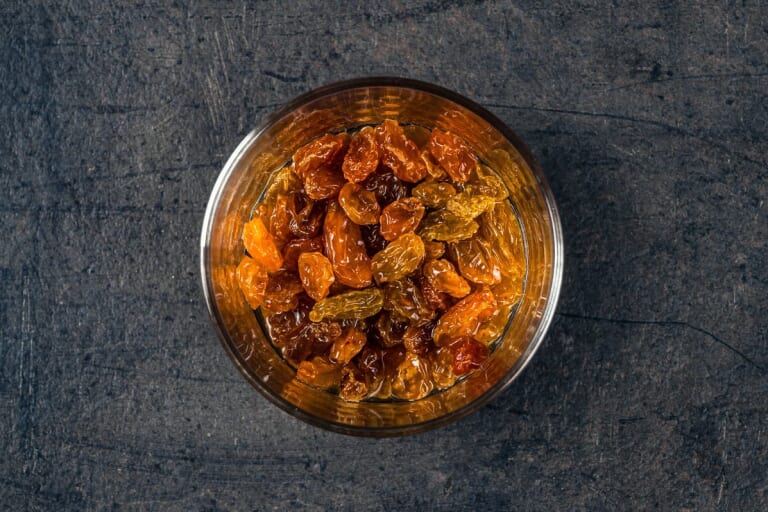
- Rinse the raisins in warm running water, drain them in a sieve to remove all liquid, and pour cognac over them. Leave the raisins to marinate in the alcohol.
- Melt the butter and let it cool to room temperature. The easiest way to melt butter is in the microwave, but you can do this in a double boiler or on the stovetop.
- Preheat the oven in advance so that it gets well heated. Usually, it takes 15 to 25 minutes to preheat the oven, depending on its characteristics.
Nuance. The longer the raisins absorb the cognac, the more aromatic they become. I recommend soaking them in a closed container at room temperature for at least 1 hour, or better overnight. I always keep several jars of candied fruits and raisins soaked in cognac or rum in the refrigerator. Such boozy candied fruits can be stored in the refrigerator for months, improving their properties each day.
Tip. Instead of cognac, you can use any strong aromatic alcohol: rum, brandy, whiskey.
Tip. If you're making the cake for children or don't tolerate alcohol, you can pour boiling water, orange or apple juice over the raisins, or skip the soaking step altogether.
Nuance. The original recipe adds 50 g of dry raisins. In my opinion, this is not enough, so I use 80-100 g.
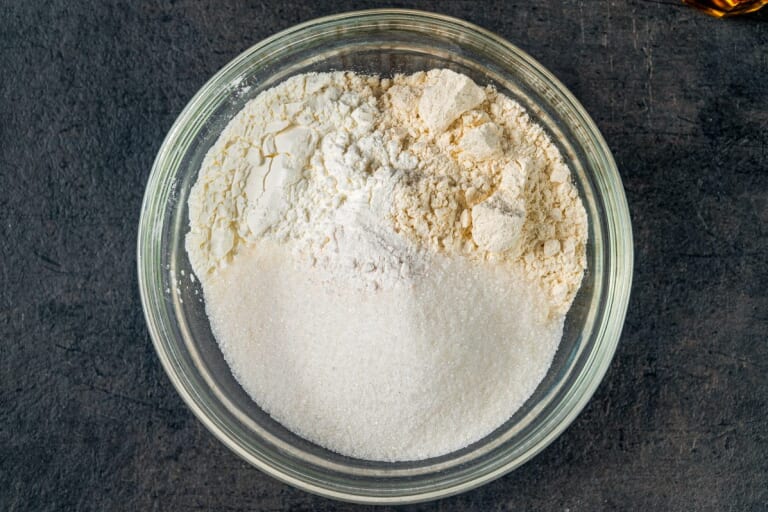
Sift the all-purpose flour, baking powder, and cornstarch into a separate bowl. Add a pinch of salt for flavor balance and 200 g (1 cup) of sugar. Mix everything well.
Nuance. We set aside the remaining 50 g (1/4 cup) of sugar, we'll need it later.
Nuance. In my opinion, despite the 250 g (1 1/4 cups) of sugar in the recipe, the finished cake has a not overly sweet - moderately sweet, balanced taste. However, if desired, you can use from 175 to 250 g (7/8 to 1 1/4 cups) of sugar.
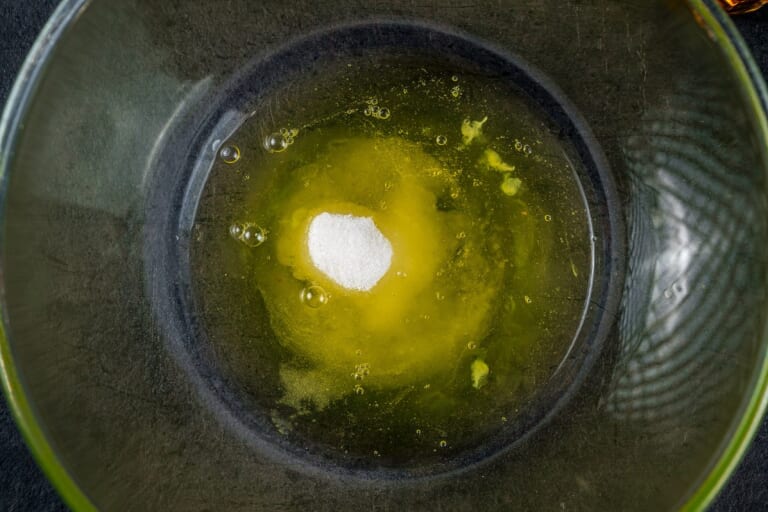
Pour the egg whites into a large clean bowl, add a pinch of salt or a drop of lemon juice, and beat on the lowest speed of the mixer. When they reach the consistency of soft foam, gradually add the remaining 50 g (1/4 cup) of sugar in a thin stream (about 2 heaping tablespoons). Beat the whites into stiff peaks, gradually increasing the mixer speed from low to medium power. 210 g of egg whites is approximately 7 large eggs.
Important. The bowl and mixer whisk should be clean, dry, and ideally completely degreased. Any particles of water, fat, or foreign matter can prevent the whites from whipping properly.
Tip. Ingredients should be at room temperature, as they will whip up easier and faster.
Important. Separate the whites from the yolks carefully to ensure no yolk particles accidentally get into the whites. If this happens, the mixture won't whip up properly.
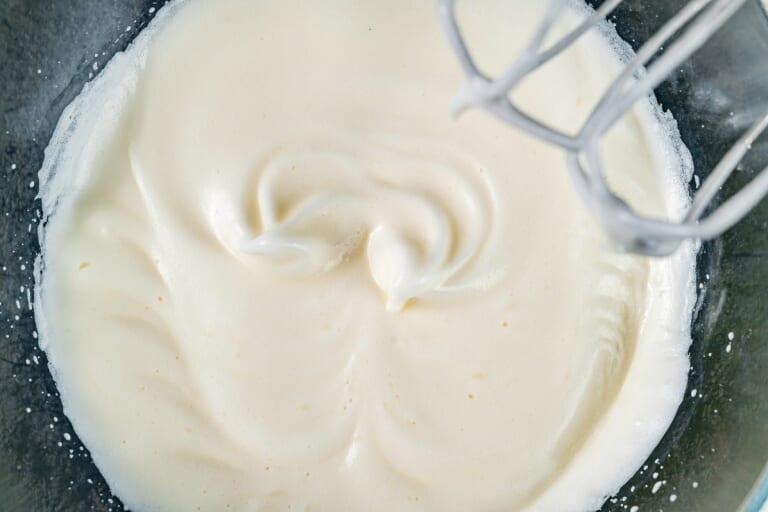
Beat the whites to soft, at most medium peaks. In the photo, the consistency is slightly firmer than soft peaks, and this is more than enough to get a stable result. When whipping, we use the same principle as when preparing French meringue. However, since we have a 1:4 ratio of ingredients rather than 1:1, we won't be able to whip the mixture to stiff (hard) peaks.
Important. If the whites are not whipped enough, there's a risk they will separate during baking and the liquid part will settle at the bottom.
Important. Don't overbeat the meringue. If it has lost its shine and airiness and has become lumpy - it means the protein structure has begun to break down. This happens because you've been beating it for too long or used too high a mixer speed. As a result, the baked goods will not hold their shape well.
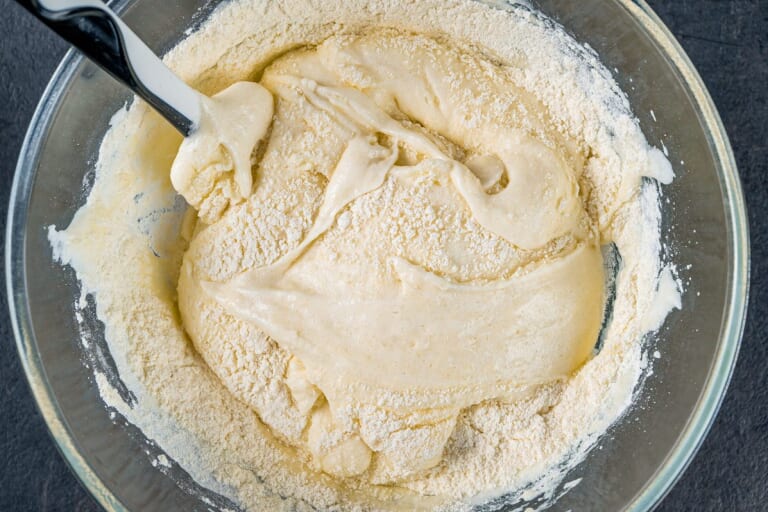
Add 1/3 of the dry ingredient mixture to the whipped mass and carefully fold it in using a silicone spatula with upward motions from the bottom.
After the mixture becomes more or less uniform, add the next portion of dry ingredients. In this way, we need to incorporate all the dry ingredients in 3 additions while maintaining the airy structure of the batter as much as possible.
Tip. A silicone spatula is best suited for delicately mixing the batter.
Important. Do not use a mixer at this stage.
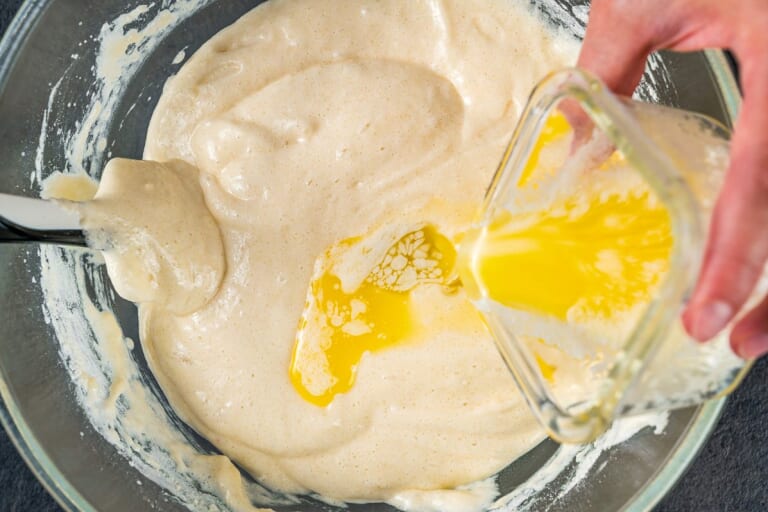
Pour the melted and cooled butter into the batter and carefully fold it in with a spatula using upward motions from the bottom. If desired, you can incorporate the butter into the batter in several additions. At this stage, you can also add vanilla essence for flavor.
Tip. It's best to use butter with at least 72% fat content.
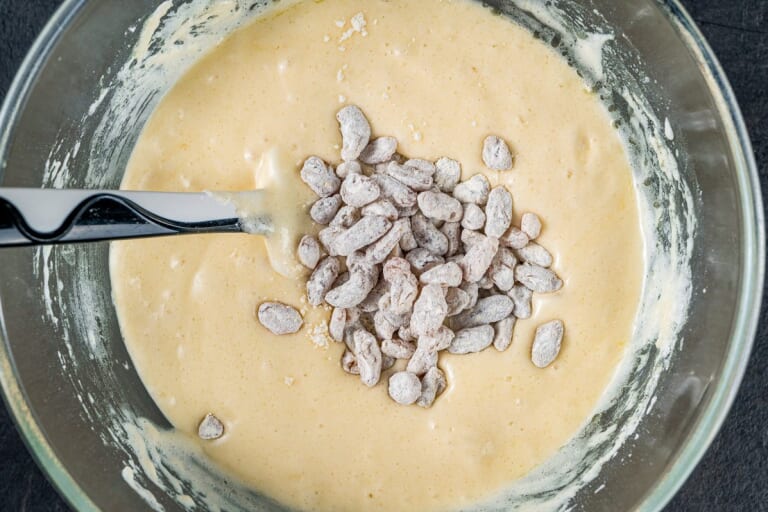
Drain the raisins in a sieve and let all the liquid run off, pat them dry with a paper towel, and coat them in a small amount of flour (about 1 teaspoon). Add the raisins to the bowl and distribute them evenly in the batter with gentle movements. This procedure will help the raisins distribute more evenly in the batter and prevent them from sinking to the bottom.
The finished batter should be smooth and glossy. The consistency should be light, airy, with a large number of small bubbles.
Tip. To get rid of excess flour, you can place the raisins in a sieve and shake it gently.
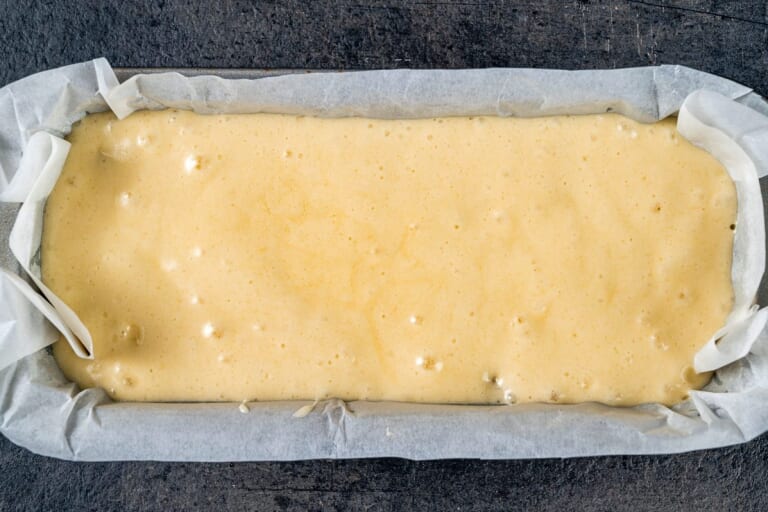
Transfer the batter into the prepared pan. It should fill about 2/3, maximum 3/4 of the pan, as it will rise slightly during baking. Evenly distribute the batter in the pan and smooth the surface with a spatula. Place it in the preheated oven at 350°F (180°C) (top and bottom heat mode without convection) for 40-50 minutes. Check the cake's doneness with a toothpick: it should come out of the crumb completely dry.
Prepare the pan by greasing it with a piece of butter and lining it with parchment paper. The butter helps the parchment stick well to the surface. Alternatively, you can grease the pan with butter, dust it with flour, distribute it evenly on the sides and bottom, then turn it upside down and shake out the excess flour.
My pan size is 10×4.3×2 inches (25×11×5 cm). You can use any pan of a suitable size.
Nuance. Baking time and temperature may vary depending on your oven's characteristics. I place the cake on the middle rack, but if baked goods tend to burn on top in your oven, it's better to take this into account. Adjust according to your oven's peculiarities.
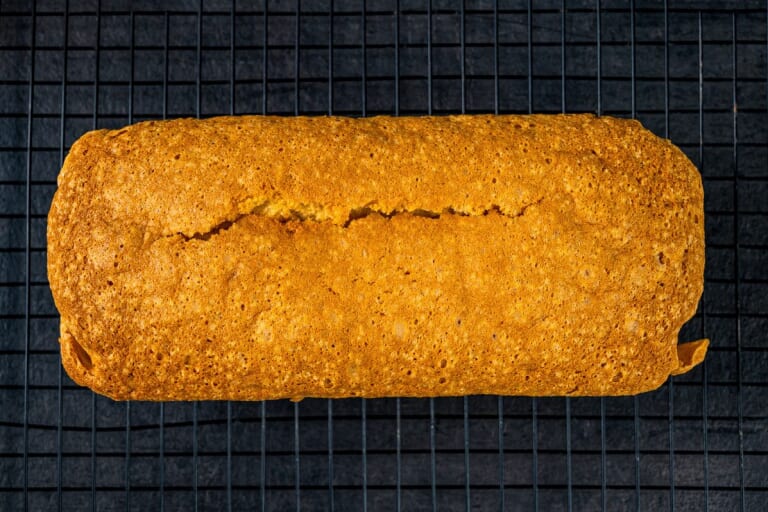
Let the finished cake cool in the pan for 20-25 minutes. Then remove it and transfer to a wire rack to cool completely.
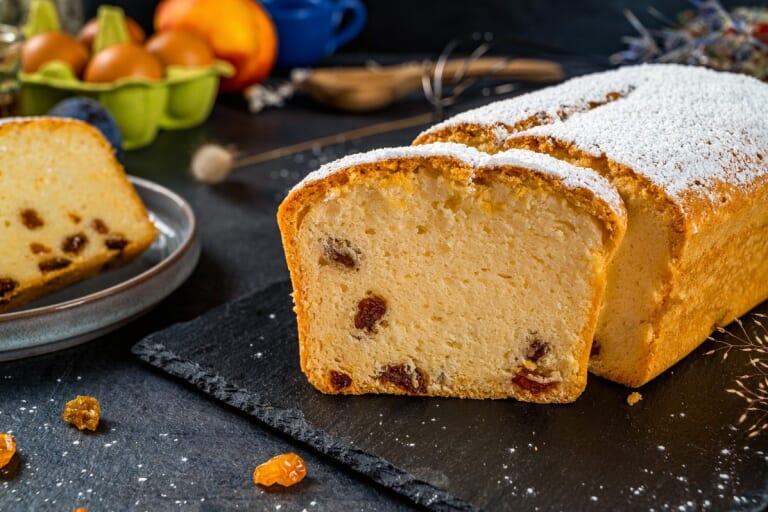
The Estonian cake is ready.
Once cooled, slice the cake into individual portions and serve with tea or coffee. If desired, you can dust it with powdered sugar or drizzle with sweet icing. You can also decorate it with frosting or whipped cream and berries.
Recipe Tips
How to Store
The Estonian cake keeps excellently. The crumb remains soft, tender, and barely stales, while the crust stays crispy even on the second day.
The cake can be stored in an airtight container or bag for 2-3 days at room temperature or 5-7 days in the refrigerator.
To freeze the cake, cut it into portions, place them in a zip-lock bag, and put them in the freezer. In frozen form, it can be stored for 2 to 3 months. Instead of a zip-lock bag, you can use plastic wrap.
Ingredient selection and substitutions
- Flour: If you have gluten intolerance, regular flour can be replaced with a mix of starch, gluten-free flour, and almond flour.
- Starch: I use cornstarch, but it can be substituted with potato starch.
- Raisins: It's best to use dark seedless raisins.
- Cognac: The leftover cognac in which the raisins were soaked can be used for re-soaking raisins in the future.
- Egg whites: The cake can be made with frozen egg whites. They freeze well and don't lose their quality.
- Sugar: Fine-grained sugar works best for whipping.
What to add to Cake
If you exclude raisins and cognac from the recipe, the crumb will have a very neutral taste, with a slight egg flavor. This is an ideal base for flavor experiments with additives.
You can add:
- dried cherries, cranberries, or lingonberries;
- chocolate chips;
- orange or lemon zest;
- vanilla, rum, lavender, or orange extract;
- toasted nuts, seeds, or poppy seeds;
- honey, jam (add them together with the butter and in small amounts);
- replace part of the flour with almond or chestnut flour.
The main thing to remember is that the batter is very light and airy. To prevent additions from sinking to the bottom, there should be only a small amount, and they should be dry and light.
I don't recommend adding more than 100-120 g (3.5-4.2 oz) of raisins or other additives. Honey and jam should be added no more than 1 teaspoon, otherwise, the batter may sink during baking.
If you decide to add fresh fruits, berries, or jam filling to the cake, they may sink to the bottom and partially caramelize or simply burn.
Tips and nuances
Baking
- Instead of a large cake, you can make individual muffins, but the baking time should be 20-25 minutes.
- If the top of the cake starts to burn during baking, you can cover it with foil.
- When preparing a double portion, the cooking time will be 60-70 minutes.
- Like a sponge cake, this cake doesn't like drafts and door slamming, so it's best not to open the oven for the first 35-40 minutes of baking.
General
- Don't skip the step of soaking the raisins in cognac, it gives the cake a special note.
- The better the whites are whipped, the airier the crumb of the finished baked goods.
- To degrease a clean bowl, you can wipe it with lemon juice, then dry it thoroughly.
- The recipe is well-suited for using leftover whites after preparing Carbonara pasta, Crème Anglaise, Sabayon, cookies, shortcrust pastry, or Easter baked goods.
- If you don't have kitchen scales, you can measure some ingredients using a spoon. We will need approximately:
- cornstarch - 1 heaping tablespoon (~ 20 g or 2 1/2 tablespoons);
- sugar - 2 heaping tablespoons (~ 50 g or 1/4 cup);
- baking powder - 1 heaping teaspoon (~ 5 g or 1 teaspoon).
Leave a Comment