

New potatoes are a perfect summer side dish that evokes childhood memories. Boiled potatoes are easy to prepare and pair wonderfully with any meat or fish dish. You can dress this side with fried onions or add some sour cream if desired.
Personally, I prefer choosing small tubers (baby potatoes or B-size one) for this dish, as they don't need to be cut and look even better. I doubt I've surprised anyone with this recipe, but perhaps you've got an idea for tomorrow's side dish.
Ingredients for 4 portions
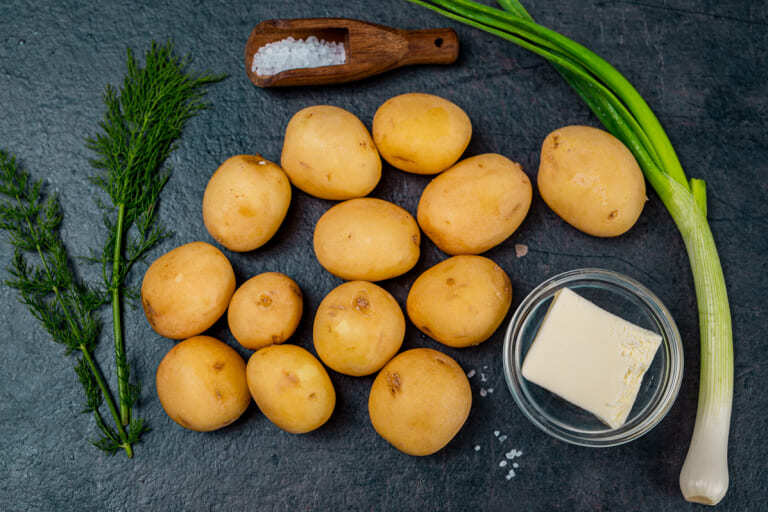
- 2 lb New Potatoes (1 kg)
- 1/2 stick Unsalted butter (55 g)
- 1 tbsp Salt
Additional
- 4 tbsp Fresh Dill (20 g)
- 4 tbsp Green onion (20 g)
Boiled New Potatoes Recipe

New potatoes should be cleaned of their skin. I do this using a metal brush. If the potatoes are not very young, they should be peeled using a regular knife or any other method you prefer.
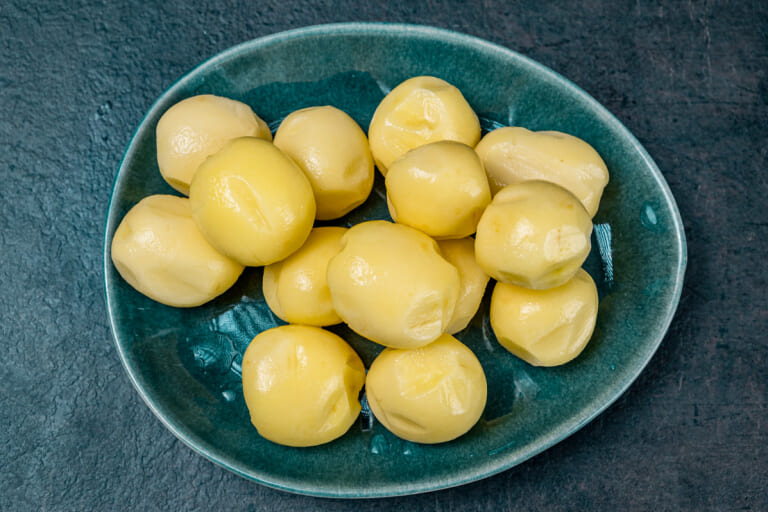
Cut the larger potatoes into small pieces. Small potatoes don't need to be cut. The potato pieces should be approximately the same size.
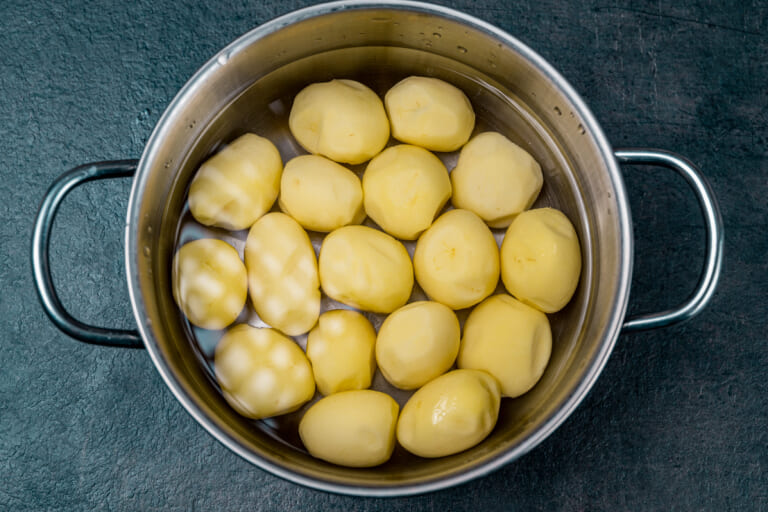
Bring the water to a boil and add the prepared potatoes to the boiling water. The water should cover the potatoes by about 1-2 fingers (1-2 inches or 2.5-5 cm).
- If you want firmer potatoes, salt them at the beginning of cooking.
- If you prefer softer, more tender potatoes, add salt towards the end of cooking.
Cook the potatoes with the lid slightly ajar. Boil the potatoes in gently bubbling water; it should simmer, but not too vigorously.

When the potatoes are cooked (check for doneness with a thin knife), drain the water.
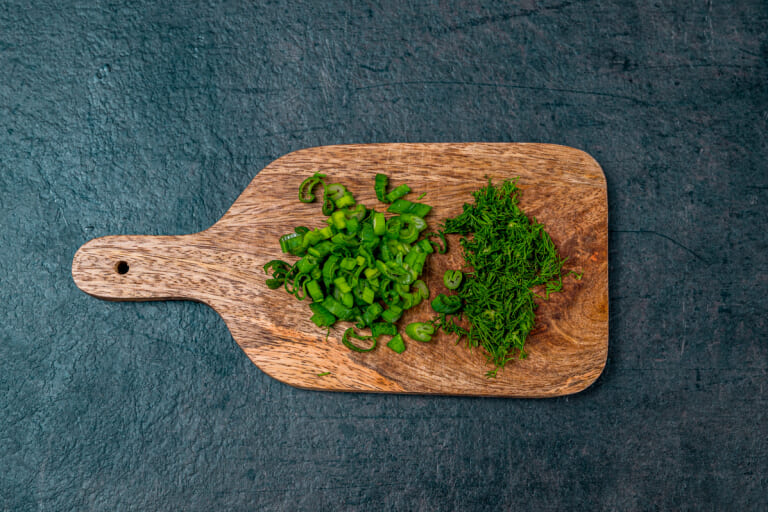
Finely chop the herbs.

Add butter and herbs to the potatoes. You can also add 1-2 tablespoons (15-30 ml) of vegetable oil.
The potatoes can be dressed with sour cream, or you can add fried onions.
Mix everything well (you can cover with a lid and gently shake) and serve.
Recipe Tips
How to Boil New Potatoes
I'd like to add a few words about how to boil potatoes, and these rules apply to both new potatoes and mature ones. However, it's worth remembering that new potatoes contain much less starch than mature potatoes.
The First Rule
Peeled potatoes should be placed in boiling water. Starch mixes with cold water, but in hot water, starch turns into paste. Thanks to this, a starchy film forms around the potato that's dropped into boiling water, keeping the flavor and nutrients inside the potato. So it's better to put potatoes in boiling water.
The Second Rule
Potatoes should be boiled in a small amount of water, with the water covering the potatoes by 1-2 fingers (about 1-2 inches or 2.5-5 cm). It's best to boil potatoes in gently boiling water under a loosely closed lid. The water should bubble, but not vigorously.
When to Salt the Potatoes?
The timing of salting depends on the potato variety and your cooking purpose. Salt interacts with the starch in potatoes, making them denser.
Salting at the Beginning of Cooking
Salt potatoes at the start when:
- You want firmer potatoes
- You're using potatoes that tend to fall apart easily
- You're preparing potatoes for a salad (firmer potatoes are easier to cut and hold their shape)
Salting Towards the End of Cooking
Salt potatoes closer to the end when:
- The potatoes don't tend to fall apart easily
- You're boiling potatoes for mashed potatoes
- You prefer a softer texture
Remember: Salting at the beginning results in firmer potatoes, while salting later keeps them softer.
Leave a Comment