

Crème Anglaise (English Cream) is a classic French dessert sauce, rightly considered one of the pillars of pastry art. Despite its name suggesting English origins, modern Crème Anglaise recipes originate in France. So, the contemporary classic Crème Anglaise belongs to French cuisine.
Crème Anglaise is one of the basic recipes in the pastry world. Despite its elementary composition and seemingly simple preparation, it's the first thing future pastry chefs learn.
What is Creme Anglaise?
Crème Anglaise is a type of custard sauce made from milk (or cream), egg yolks, and sugar. Like all custards, English cream is egg-based and thickened by cooking the yolks. Its silky texture and rich vanilla aroma make it the perfect complement to many desserts.
How to Use and Serve
This versatile sauce can be drizzled over strudel, Irish apple pie, muffins, cakes, cheese pancakes, fresh berries, or crepes. It's also an essential component of the famous French dessert "Floating Island" (Île flottante).
However, the true value of English cream lies in its role as a base for more complex desserts. Baked Anglaise turns into flan or crème brûlée. Frozen liquid custard becomes delicious ice cream. Even our childhood favorite, French vanilla ice cream, is nothing more than a mixture of Anglaise and whipped cream.
It's important not to confuse this liquid custard sauce with the more familiar custard cream we use for filling pastries and Napoleon cake. As I mentioned, Anglaise is a basic recipe. Add starch, and we get Crème Pâtissière. Add flour, and we get the familiar custard cream with flour. Add gelatin with whipped cream, and we have Bavarian cream.
Proportions Matter
In pastry making, as in chemistry, precision is important. Crème Anglaise is no exception. So it's best to keep the correct proportions in mind.
In my view, the optimal ratio of ingredients for Crème Anglaise is as follows:
- 1 part milk
- ¼ part egg yolks
- ¼ part sugar
That means for every 1 cup (240 ml) of milk, you need to add:
- About 3 tbsp (60 g) egg yolks (approximately 3 extra large egg yolks)
- About ¼ cup (2 oz / 60 g) sugar
Variations in Proportions
The milk-to-yolk ratio in different recipes can range from 3:1 to 5:1. Any of these will work, but the thickening time and final consistency will vary slightly.
It's all about the lecithin contained in egg yolks and its emulsifying properties. Thanks to lecithin, the liquid components and fats bind into a homogeneous and stable structure, forming a velvety cream when heated.
The amount of sugar can vary from 2 to 4 tablespoons per cup of milk and depends more on your taste preferences.
We don't use egg whites in this recipe. First, egg white will give the cream a characteristic eggy taste. Additionally, the white will negatively affect the texture and consistency of the cream. Save those whites for meringues, angel food cake, or sponge cookies!
Milk or Cream: Which to Use?
Milk of any fat content is suitable for making Crème Anglaise. The thickening process occurs due to the coagulation of the egg yolk, not because of the fat content of the original products.
However, the fat percentage of dairy products affects the consistency, density, texture, and taste of the finished cream.
The higher the fat percentage, the thicker the finished sauce. So I don't recommend using fat-free milk with 0% fat, as this can negatively affect the taste and consistency of the sauce.
Most often for English cream, people use:
- Whole milk
- A 1:1 mixture of milk and cream (½ cup each)
- Medium-fat cream alone
Personally, I prefer using either whole milk or a 50/50 milk and cream blend.
Flavoring Your Crème Anglaise
While the classic recipe uses vanilla bean, you can get creative with flavors depending on your intended use:
- Coffee: Add 1-3 tablespoons coarsely ground coffee beans to hot milk and steep for 5-10 minutes. For instant coffee, use just a pinch at any stage.
- Green tea: Steep jasmine, bergamot, or milk oolong in hot milk.
- Aromatic herbs, lavender, or mint: Infuse like vanilla bean.
- Zest of 1 orange or lemon: Add with or instead of vanilla.
- Rum or bourbon: Add 1-2 tablespoons to hot milk, reducing the total liquid accordingly.
- Cocoa or chocolate: 1-2 tablespoons cocoa or dark chocolate pieces for a rich chocolate flavor.
- Caramel, vanilla bean, dried fruits, freeze-dried fruit powder, nuts, praline...
This is just a small part of the flavorings that can be used to make the taste of the basic sauce richer.
Ingredients for 1 portion
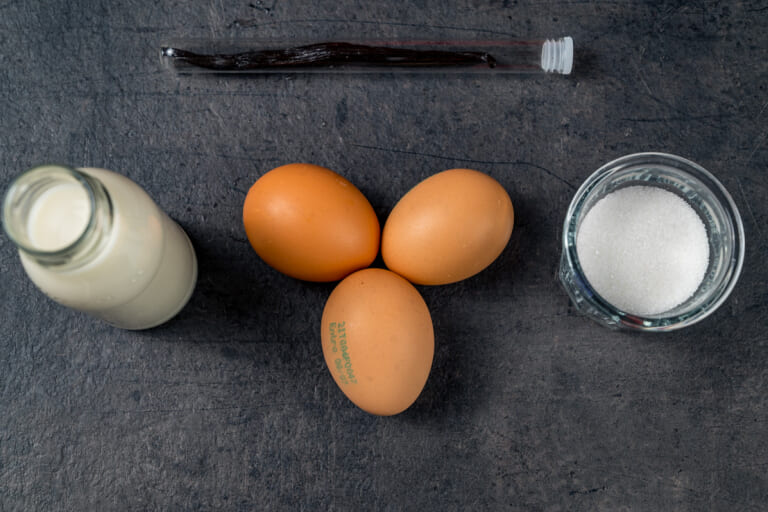
- 1 cup Milk (240 ml)
- 3 X-Large Egg yolks (60 g)
- ¼ cup Granulated Sugar (50 g)
- 1 whole Vanilla bean
Creme Anglaise Recipe
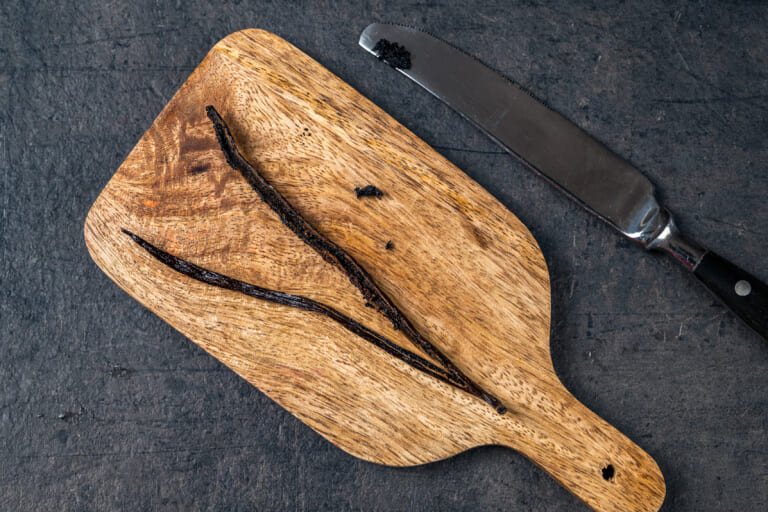
Split the vanilla bean lengthwise, stopping just short of cutting it completely in half. The vanilla bean should form a "V" shape. Using a knife, scrape the seeds from the inner surface of the bean, starting from the base and working along its entire length.
This method of splitting allows the vanilla to release its full aroma during cooking.
You can substitute the vanilla bean with:
- 2 teaspoons vanilla sugar
- 1 teaspoon vanilla extract
- ½ teaspoon vanilla essence
- ½ teaspoon vanilla bean paste
If using vanillin, add just a tiny amount - a knife tip's worth. Vanillin is a concentrated synthetic flavoring and should be used cautiously. In large quantities, it can make the cream taste bitter.
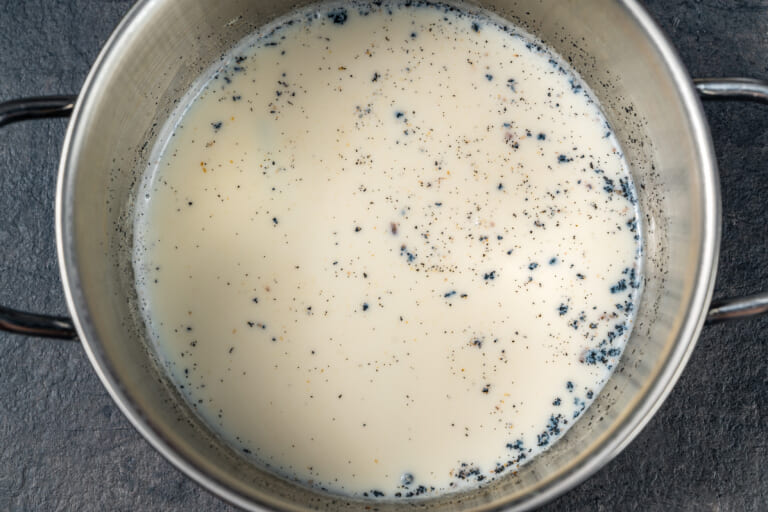
First, we need to infuse the milk with vanilla flavor.
Pour the milk into a heavy-bottomed saucepan or sauté pan, add the vanilla seeds and pod. Place the pan over medium heat and warm the milk almost to boiling, then remove from heat. Stir occasionally to prevent scorching.
Cover the pan and let the milk steep for 20 minutes. This allows it to absorb all the vanilla flavors. For a more pronounced aroma, you can leave the milk to infuse with the vanilla pod overnight in the refrigerator.
Tip: To prevent the milk from scorching, you can add 1/3 of the total sugar amount. Additionally, the presence of sugar will prevent a skin from forming on the milk, which occurs due to protein coagulation.
After steeping, reheat the milk until hot to temper the egg yolks.
To do this, remove the vanilla pod from the milk, place the pan back on the stove, heat over medium heat almost to boiling, and remove from heat. The milk temperature should be 176-180°F (80-82°C).
Tip: If you don't have a thermometer, you can determine the right milk temperature in two ways:
- As soon as you see steam rising where the milk touches the edge of the pan
- As soon as the first tiny bubbles appear around the edges of the pan
Nuance: If you're using vanilla extract or another soluble flavoring for aroma, you can skip the steeping step and proceed directly to tempering the egg yolks.
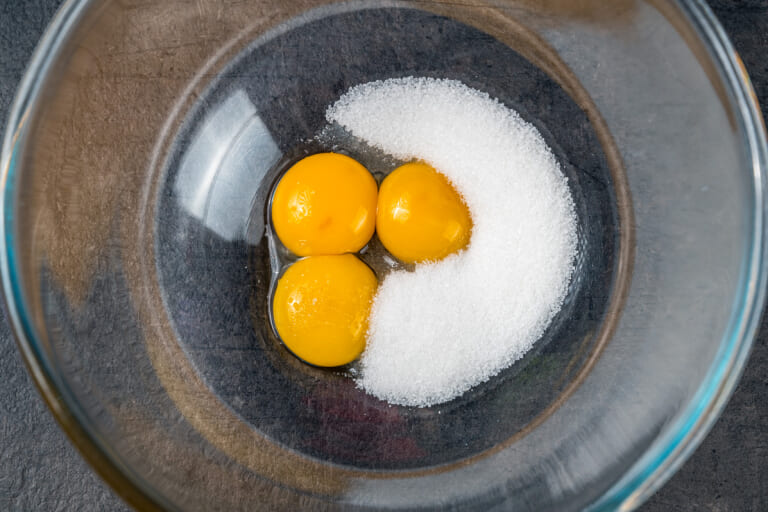
Thoroughly wash the eggs using a brush and special detergent or baking soda to avoid salmonella contamination.
Separate the yolks from the whites. We need 2 to 2.5 oz (60 to 75 g) of yolks. Add the sugar to the yolks in a bowl and mix with a whisk.
If you don't have a scale handy, you'll need 3 large egg yolks (US Grade A or AA) or 4 medium egg yolks (US Grade B).
Important: Mix the yolks with sugar only when the milk is already heated to prevent the yolks from "burning" upon contact with the sugar. Prolonged contact with sugar can cause granules and graininess to form on the yolk surface, which may ruin the texture of the finished cream.
Use the leftover egg whites to make meringues, pound cake, sponge cookies, or angel food cake.
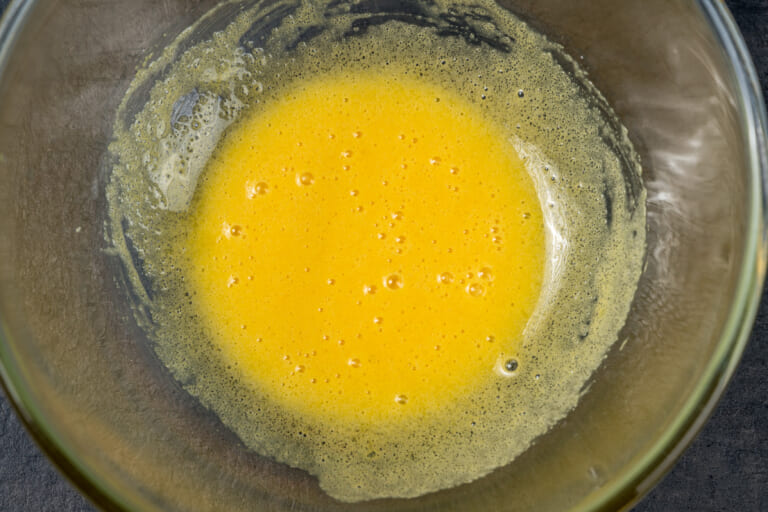
Whisk the egg yolks with sugar until uniform in consistency.
There's no need to beat them until white or fluffy; it's sufficient to mix until uniform, ensuring there are no lumps.
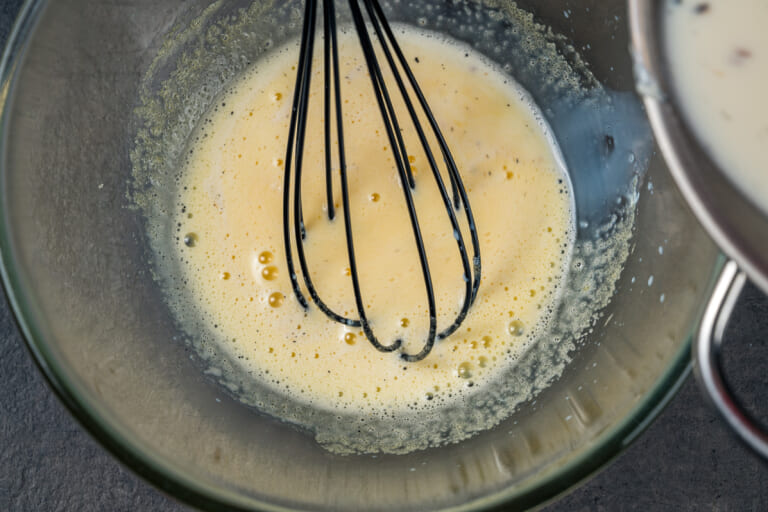
While continuously whisking the egg yolks, slowly pour in the hot milk in a thin stream. Add the milk gradually, mixing the mixture well to a uniform consistency so that the yolks don't curdle.
This process is called tempering the yolks. We're gradually raising their temperature to avoid thermal shock. This allows us to cook the yolks into a cream and prevent the formation of lumps. If we were to add the yolks directly to hot milk, we'd end up with a sweet omelet instead of a cream.
To temper the yolks, it's enough to pour in half of the total milk mixture. After this, you can pour the yolks into the remaining milk and whisk everything well.
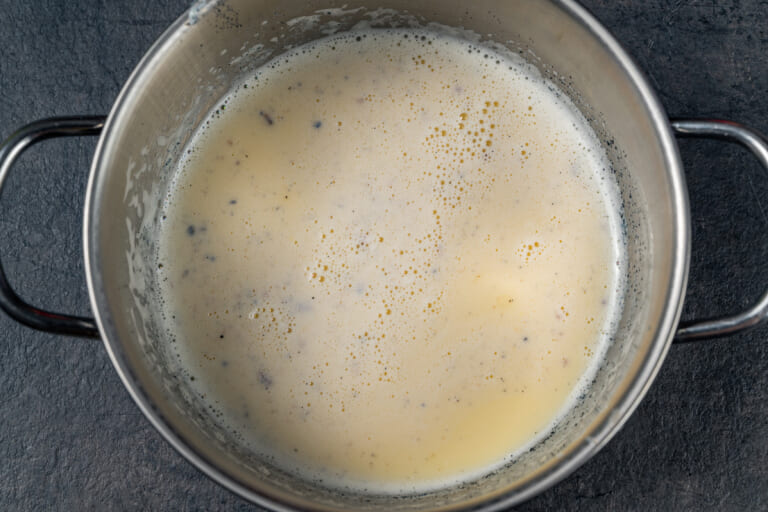
Return the pot with milk and egg yolks to the stove and cook the cream over low heat, stirring constantly. This ensures even heating of the sauce, making the cream's texture smoother and more uniform.
While cooking, the Crème Anglaise needs to be stirred continuously. It should be in constant motion to ensure the heating process is as even as possible. However, the stirring shouldn't be too vigorous to avoid excessive protein binding and lump formation.
Initially, there will be a lot of foam on the surface of the milk mixture. As it cooks, the foam will start to disappear, and the cream will thicken.
Our goal is to heat the cream to 180°F (82°C). This is the working temperature for Crème Anglaise, at which the egg yolks are pasteurized but haven't yet started to curdle. This process can take 5 to 10 minutes, depending on the heating temperature, material, and size of the pot.
Tip: The easiest way to stir the sauce is with a silicone spatula, using smooth figure-eight motions. This allows us to mix the sauce well, scraping the more heated part of the mixture from the bottom and sides of the pot. Otherwise, the egg yolks at the bottom of the pot will overheat and turn into an omelet.
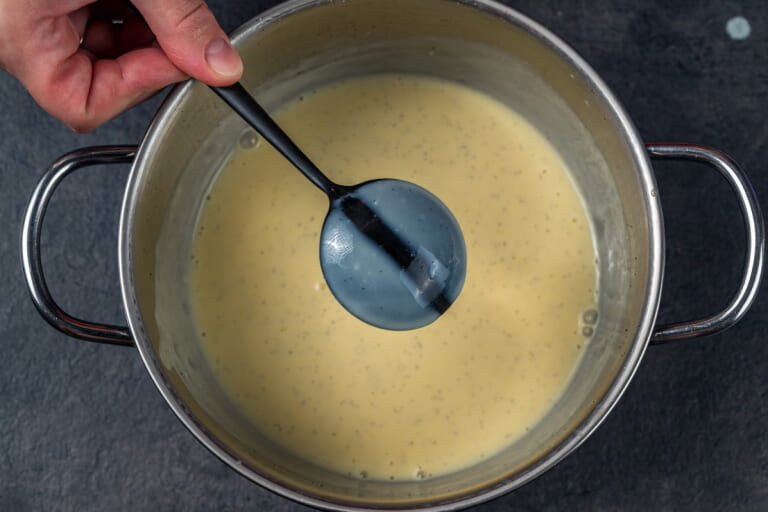
Cook the cream to 180°F (82°C). The maximum allowable temperature for Crème Anglaise is between 180-185°F (82-85°C), but it's best to stop the cooking process as soon as the cream reaches 180°F (82°C). The easiest way to control this process is with a kitchen thermometer.
You can also test the sauce's readiness using a spatula or spoon. As it cooks, the Crème Anglaise becomes thicker. The finished sauce will evenly coat the back of a spoon. If you run your finger through it, the trail will be clearly visible and won't flow back together. Don't cook the cream any longer; as the temperature rises, the egg yolks will curdle, and the cream will become grainy.
Important: Remove the cream from the heat, but continue stirring, as the cooking process continues in the hot pot.
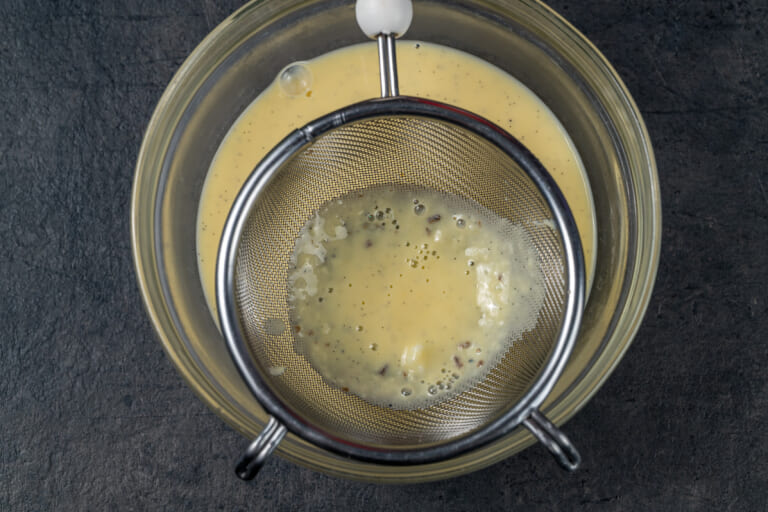
To stop the cooking process, pour the cream into a cold container. It's best to strain it immediately through a fine-mesh sieve to remove any possible bits of curdled egg, protein particles that might have accidentally gotten into the mixture, or larger fragments left from the vanilla bean. Don't forget to scrape the remaining cream from the bottom of the sieve using a silicone spatula.
If the bottom and sides of the pot are clean and smooth, without any grains of curdled yolk, then we've done everything correctly.
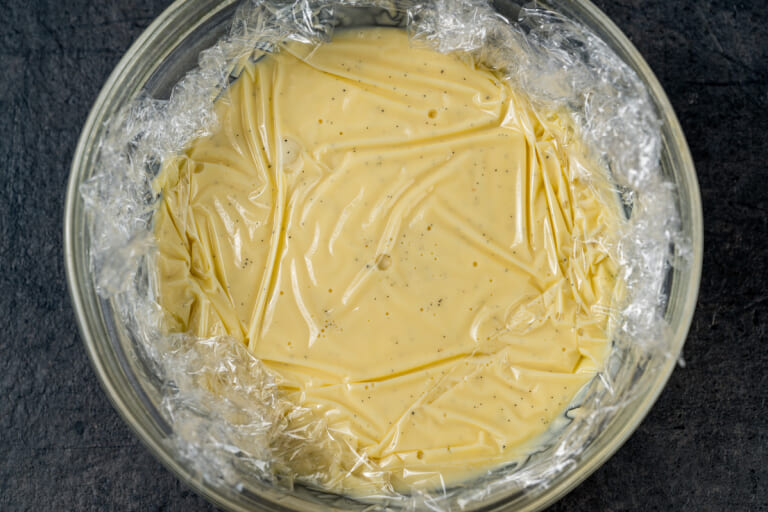
Cover the finished Crème Anglaise with plastic wrap, ensuring it touches the surface of the cream, and leave it to cool completely at room temperature. The wrap should adhere tightly to the cream's surface without any air gap. This prevents the cream from drying out and forming a skin on its surface.
As it cools, the cream's consistency will become thicker.
Tip: To speed up the cooling process, you can place the container with the cream on ice.
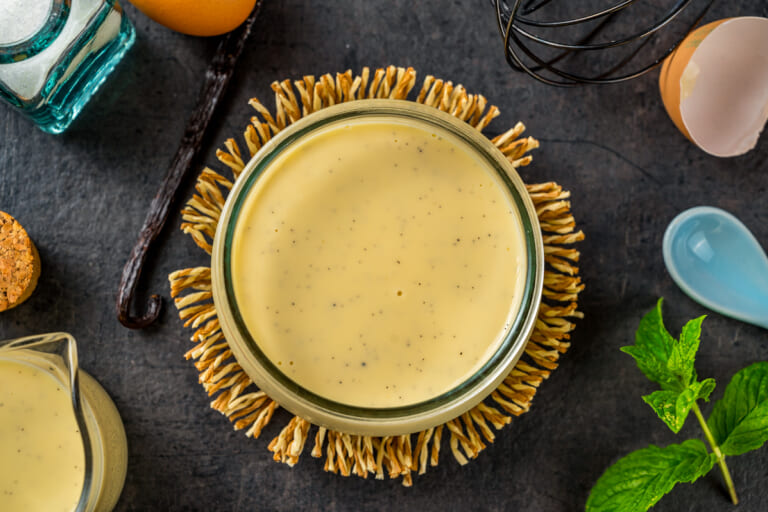
The vanilla Crème Anglaise is ready.
The consistency of the finished custard is similar to condensed milk, heavy cream, or liquid sour cream.
Tip: Before using, stir the sauce to evenly distribute the settled vanilla seeds.
Recipe Tips
How to Store
Crème Anglaise can be stored in the refrigerator for 2-3 days at 37-43°F (3-6°C). Follow these important recommendations:
- Store the cream in a clean, airtight container, ideally glass.
- For extra protection, cover the cream's surface with plastic wrap, ensuring direct contact to prevent a skin from forming.
- Cool it to room temperature before refrigerating to avoid condensation on the container walls, which could affect the sauce's texture.
If you need to reheat the Crème Anglaise before use, do so gently in a double boiler, stirring carefully.
Don't freeze English cream! Freezing and thawing will ruin its delicate structure.
Tips
Let me share some tips to help you nail this custard on your first try, even if you're a beginner:
- Choose heavy-bottomed, narrow cookware that distributes heat evenly. A wide pan surface can lead to overheating.
- Use fresh ingredients. Fresh eggs have better emulsifying properties, and since the ingredients aren't boiled, their freshness directly impacts the cream's quality.
- Use clean utensils and cookware - this affects the shelf life of your finished product.
- Cook the cream over very low heat. If you're unsure about your stovetop's ability to maintain a low temperature, use a double boiler.
- Use a thermometer for better temperature control.
If you're making this sauce for the first time and aren't confident in your skills, you can add a bit of cornstarch to the milk. Cornstarch slows down yolk coagulation, making it more gradual. This way, even if you accidentally overheat the sauce to 190°F (88°C), the yolks won't curdle. The sauce with added cornstarch will have a thicker consistency. Don't add more than 1 tablespoon of cornstarch, or the sauce will have a noticeable starchy taste.
Leave a Comment