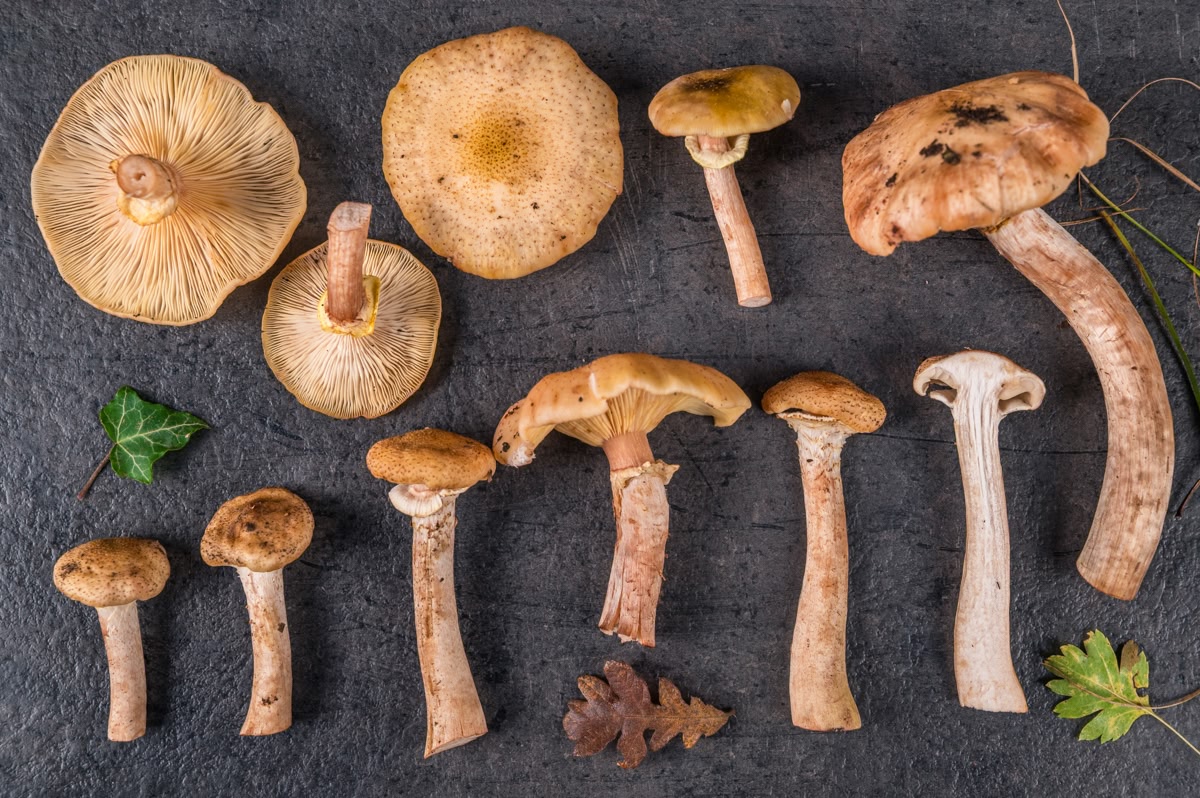

Every fall I go foraging in the woods and gather honey mushrooms. I absolutely love these mushrooms for their bold flavor, earthy aroma, crunchy cucumber-like texture, and versatility. But what I love most is the speed at which you can collect and process them. All you need is to find one stump with honey mushrooms and you have a full basket of first-class fresh mushrooms, from which you don't need to scrape off the film like with slippery jacks, and which can be cleaned in a very short time thanks to my favorite trick with salt and hot water.
Honey mushrooms (Latin: Armillaria) are parasitic fungi that grow in large clusters on stumps and infected trees and can be found in the forest from September through November. These are gilled mushrooms with caps ranging from 3 to 17 cm in diameter, which can be a variety of shades in pastel tones: yellowish-brown, honey-colored, beige. The center of the cap is usually darker due to scales, and in older mushrooms it takes on a dark shade. The honey mushroom, unlike false varieties, always has a ring on the stem (also called an annulus).
Prepared honey mushrooms can be frozen, pickled, sautéed with potatoes, or made into soup. But first they should be properly cleaned, washed, and boiled. This way we get rid of small debris, sand, and the unwanted food additive in the form of worms. In addition, honey mushrooms include several similar varieties at once, most of which need to be pre-boiled, otherwise they can be bitter, tough, or cause mild stomach upset as a result of toxic substances.
And you always need to remember that mushrooms are a perishable product, so you need to start processing them as quickly as possible.
⚠️ If you are not sure and cannot 100% identify that these are honey mushrooms - it's better not to cook them. Honey mushrooms have many dangerous lookalikes and to be 100% certain - consult a professional mycologist.
Ingredients for 1 portion
- 2 lb Honey Mushrooms (1 kg)
- 12 cup Water (3 l)
- 1½ tbsp Salt
- 1 tbsp White wine vinegar
How to cook
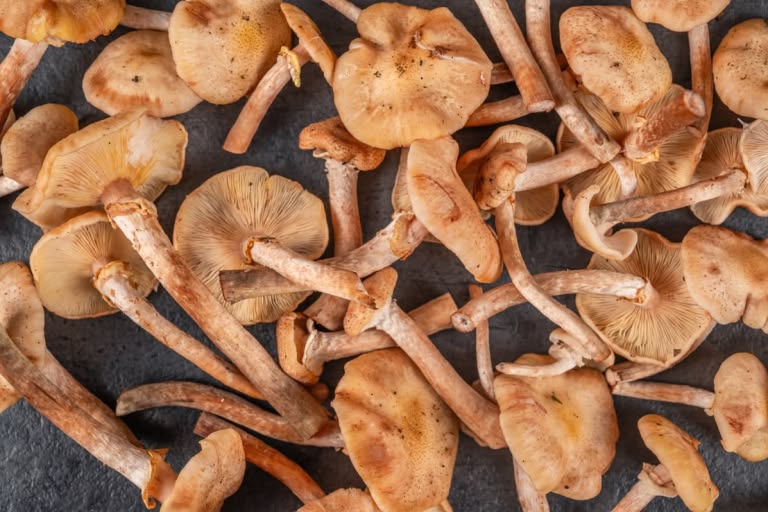
Spread the honey mushrooms in 1-2 layers on a flat surface lined with cloth or paper, out of direct sunlight. This allows the mushrooms to breathe, which will significantly slow down their overheating and spoilage.
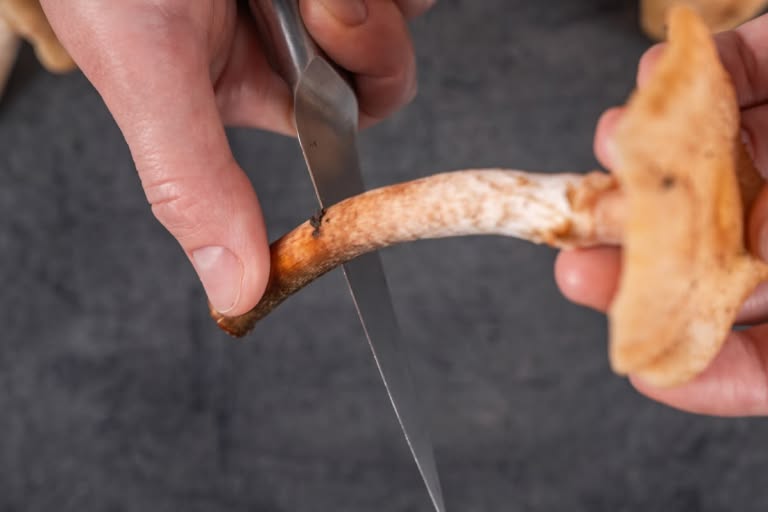
Honey mushrooms don't require any special handling. It's enough to inspect each mushroom, remove damaged and wormy spots with a sharp knife, mycelium remains at the base of the stem, and clinging forest debris.
You also need to spend a little time on the gills, as small insects and debris often hide in them. You can use a soft toothbrush, gently brushing from the base of the gills toward the edge. We'll get rid of most of this debris during the washing and boiling process. But if you're planning to dry or freeze fresh honey mushrooms, they should be thoroughly cleaned with a soft brush or sponge.
Bruised, spoiled, wormy, and severely damaged honey mushrooms are best discarded.
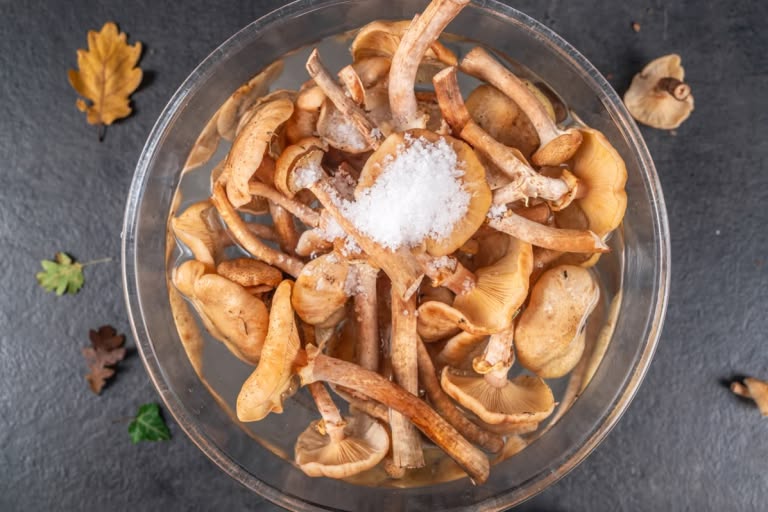
I've tried many methods for cleaning honey mushrooms and I like this one with salt and hot water the most.
Place the honey mushrooms cleaned of large debris into a large container and pour hot salted water over them (1 tablespoon of salt per 4 cups of water). Gently stir the mushrooms with your hands and leave them in the salt brine for 30-60 minutes. While the mushrooms are soaking in the salted water, you need to occasionally stir them with your hands so they rub against each other and get additionally cleaned of dirt.
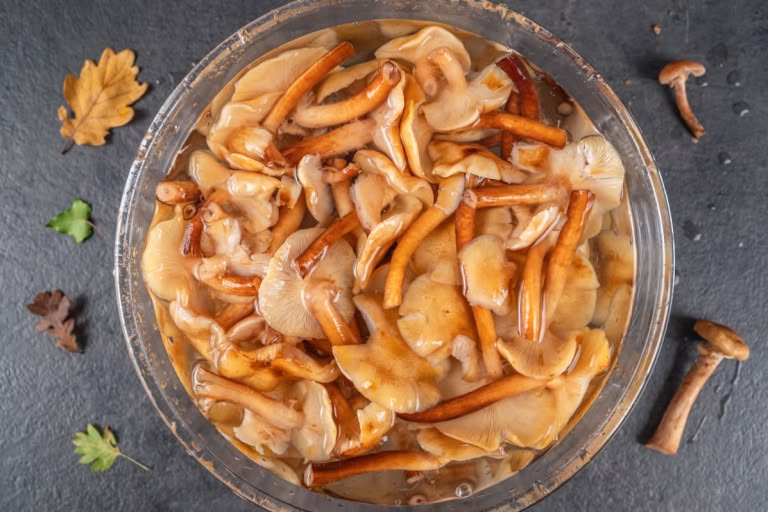
Transfer the washed honey mushrooms to a colander and rinse thoroughly under running water. Now the mushrooms are completely ready to cook.
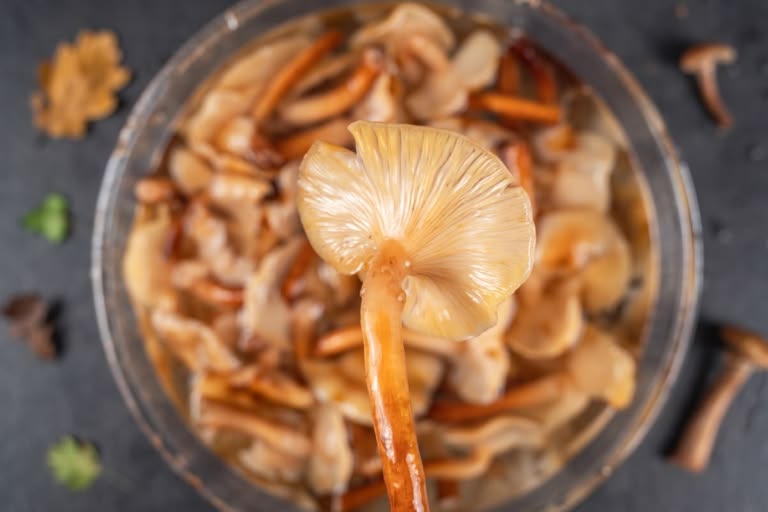
This is what a honey mushroom looks like after cleaning off large debris and soaking in the hot salt brine. As you can see, there's no debris left on it, and the ring has almost completely dissolved.
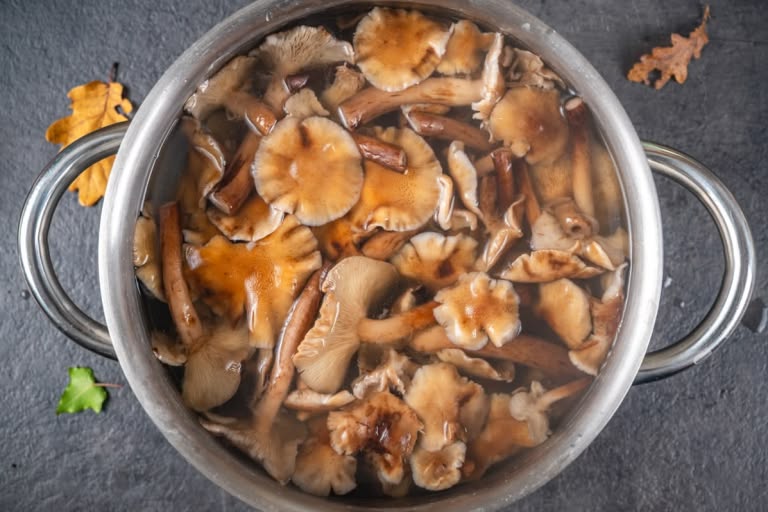
Pour 12 cups (3 L) of water into a large pot and add 1½ tablespoons of salt and 1 tablespoon of vinegar. Bring the water to a boil, add the rinsed honey mushrooms to the boiling water, and boil them for 20 minutes once the water returns to a boil. While boiling the mushrooms, white foam will appear on the surface of the water, which needs to be skimmed off with a slotted spoon.
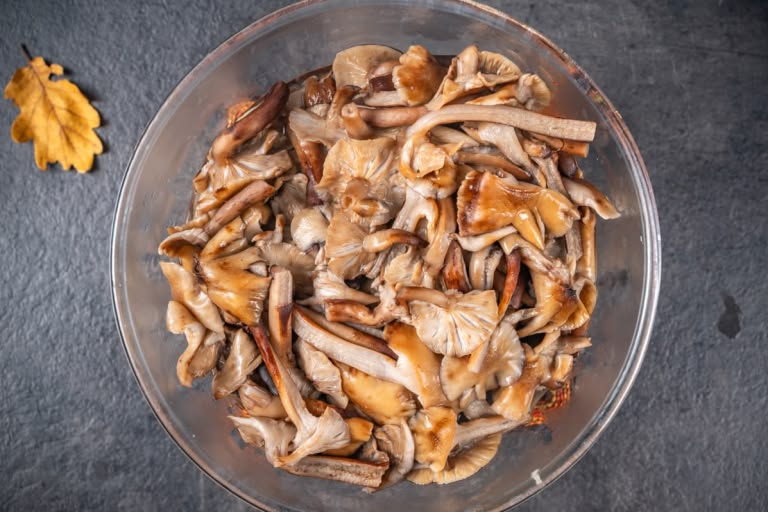
Transfer the boiled honey mushrooms to a colander and rinse with cold running water. This will rinse off the remaining foam and stop the cooking process, as a result the mushrooms will remain crunchy with their characteristic cucumber crunch.
After boiling, honey mushrooms can be used for preparing any dish, pickled, or frozen.
Recipe Tips
Tips for Processing Honey Mushrooms
A few tips that will help you efficiently process honey mushrooms:
Start cleaning in the forest to save time
To speed up processing time at home and avoid carrying extra dirt, you can pre-clean the mushrooms in the forest.
To do this, carefully inspect the mushrooms, cut off the roots, as well as dirty, damaged, and wormy spots. Remove leaves, pine needles, and other clinging debris from the mushrooms. It's better not to put wormy mushrooms in your basket, just like questionable mushrooms you're not 100% sure about. It's also best to get rid of broken and overly fragile mushrooms.
After you've sorted suitable mushrooms and cleaned the mushrooms of large debris, carefully place the clean sorted honey mushrooms into your basket.
Sort mushrooms by size before washing
It's most convenient to sort mushrooms at the cleaning stage, especially if you have a lot of mushrooms and plan to use them for different purposes.
- Tiny honey mushrooms and small firm mushrooms are best suited for pickling, salt-curing, and freezing fresh.
- Medium-sized honey mushrooms can be used for any purpose. If necessary, they can be cut into 2 or 4 pieces.
- Large and broken honey mushrooms are good for mushroom pâté, sauce, or spread. They can be cut into small pieces, then sautéed with sour cream, potatoes, or frozen for future use.
Any mushrooms are suitable for drying. Dried mushrooms can be ground into mushroom powder and used as a seasoning.
Use a bathtub or large basin for washing a large harvest
If you're dealing with large quantities of honey mushrooms, you can wash them right in the bathtub or in a large bowl. To do this, carefully place them in the container and fill with cool water. With gentle movements, stir the mushrooms, helping small debris and sand residue to separate. After this, transfer the mushrooms to a colander in small batches and rinse under running water.
It's important that the colander mesh not be too fine so debris doesn't get stuck in it.
How to properly store fresh and boiled honey mushrooms
Fresh honey mushrooms are a delicate and perishable product.
At room temperature. Ideally, after you bring them home from foraging, they need to be processed within 5-6 hours.
In the refrigerator. Fresh mushrooms can be stored in the refrigerator for no more than 2 days. Mushrooms are best wrapped in paper or placed in a container for ventilation. In plastic bags and sealed containers, excess moisture is trapped and the mushrooms begin to spoil quickly.
They also shouldn't be stored in large quantities in one container. Under their own weight they lose their texture and appearance, and poor air circulation promotes rotting. The sooner you process the mushrooms the better, because in addition to rotting, they're susceptible to worm infestation, which very quickly spreads to healthy mushrooms.
In boiled form, honey mushrooms can be stored for 3 to 4 days in the refrigerator. It's best to use an airtight container so the mushrooms don't dry out.
In the freezer. Both fresh and boiled honey mushrooms can be stored frozen. They're best stored in an airtight container or freezer bag. The shelf life of frozen honey mushrooms is up to 6 months. At storage temperatures below 0°F (-18°C) they can be stored for up to 12 months.
Frequently Asked Questions (FAQ)
Do you need to trim the stems of honey mushrooms?
Young honey mushrooms have firm, meaty, and tender stems so you don't need to trim them, especially when it comes to small, pin-sized mushrooms.
Mature and overgrown mushrooms have spongy, fibrous, and quite tough stems, which are best trimmed off by 2/3.
The stem trimmings can be cut into small pieces and boiled separately for 25-35 minutes. This preparation can be used for making mushroom caviar or sauce. The trimmings can also be dried and ground into mushroom powder, which can be used to season various dishes.
Do you need to remove the ring and scales from honey mushrooms?
Despite popular belief, the ring on honey mushrooms doesn't affect the taste of the finished dish in any way. During washing and boiling it's partially removed, leaving behind a light cobweb-like strand. So if you're planning to sauté or braise honey mushrooms, there's no point in spending time removing it.
The only thing the presence of the ring on the stem affects is the visual appearance of pickled honey mushrooms. It tends to break down slightly in liquid, resembling fibrous strands.
The scales on the cap also don't affect the taste or properties of the finished mushrooms in any way.
So the question of whether to remove the ring and scales from honey mushrooms is a matter of appearance.
When do you need to soak honey mushrooms in salt brine?
You need to soak honey mushrooms in salt brine in three cases:
- before brining;
- if the honey mushrooms are covered with a layer of dirt, for example after rain;
- to get rid of insects;
Salt speeds up the separation of dirt and helps get rid of worms, parasites, and other unwanted guests. In addition, it softens the texture and removes slight bitterness, resulting in better-tasting preserved mushrooms.
For the salt brine, you need to dissolve 1 teaspoon of coarse salt per 4 cups (1 L) of water.
Mushrooms should be kept in the salt brine for about 1 hour, before salt-preserving - 2 hours. Heavily soiled or large mushrooms can be soaked for up to 2 hours.
You shouldn't leave honey mushrooms for a longer time or overnight, as they'll absorb too much water, lose their texture and flavor.
When should you not wash honey mushrooms?
There are two situations when you should skip washing fresh honey mushrooms:
- you're planning to dry the mushrooms;
- you're planning to freeze fresh honey mushrooms;
In both cases, the moisture the mushrooms absorb during washing will negatively affect the result. So instead of washing the mushrooms, you need to clean them very thoroughly and, if necessary, wipe them with a slightly damp soft sponge or paper towel.
How long should you boil honey mushrooms?
Some types of honey mushrooms, especially with age, can accumulate toxins that may cause digestive upset. Therefore, all honey mushrooms should be boiled before cooking. Only fresh honey mushrooms are used for drying.
Honey mushrooms are boiled in a large amount of salted water (½ tablespoon per 4 cups/1 L of water). After it comes to a boil, foam appears on the surface, which must be skimmed off with a slotted spoon. To prevent honey mushrooms from darkening during boiling, you can add 1 tablespoon of vinegar or lemon juice per 4 cups (1 L) of water. Instead of vinegar, you can add a pinch of citric acid.
Boiling time is counted from when the water returns to a boil and depends on what you'll be making with them:
- for pickling 20-25 minutes;
- for sautéing and braising - 10-15 minutes;
- for soups - 15-20 minutes;
- for freezing - 5-10 minutes;
- for mushroom filling - 15-20 minutes;
- for cold brining 20-30 minutes;
- In a Instant Pot - 15-30 minutes on "Sauté" mode. Cooking time depends on your intended use.
Cooked honey mushrooms sink to the bottom of the pot and reduce in volume by half.
Leave a Comment