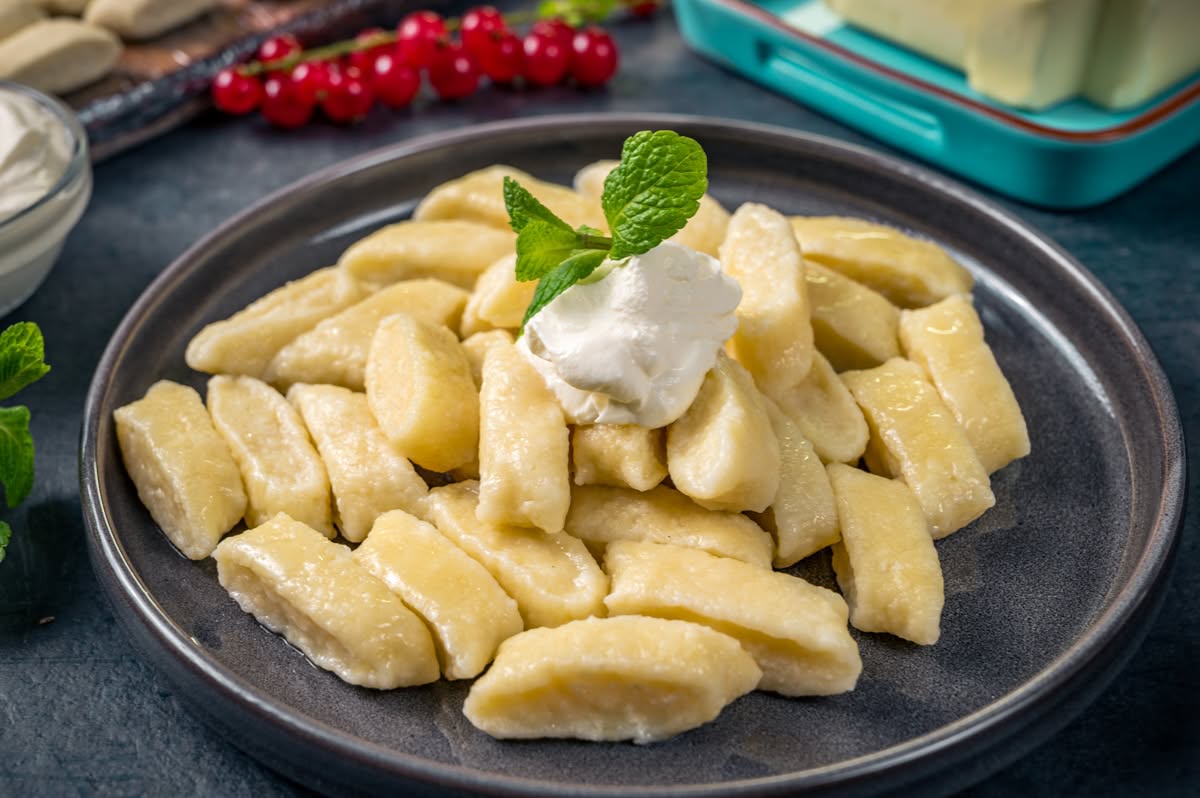

Let's make lazy vareniki – this is a simple, delicious, and nutritious breakfast. A classic recipe with farmers cheese that takes just 20 minutes to make. Tender, soft, sweet pieces of cheese dough that kids absolutely love. in Ukraine, lazy vareniki are sometimes called tvorozhni halushky, kliotski, or knedli.
Lazy vareniki is one of my favorite childhood dishes. My Ukrainian grandmother often made these small, tender, aromatic farmers cheese dumplings with a hint of vanilla for me. She always dressed them with butter and a sprinkle of sugar, then served them with homemade sour cream and fresh berries. For me, this dish is associated with family and home comfort.
What are lazy vareniki?
Lazy vareniki is a Ukrainian dish that closely resembles Italian gnocchi in appearance, texture, and cooking method. In Ukraine, classic lazy vareniki are made with tvorog (an Eastern European dry farmer's cheese). To make them, all ingredients are mixed together to create a sticky, lumpy dough with cottage cheese curds. The dough is then divided into portions, rolled into logs, cut into small pieces, boiled in water, and dressed with butter.
What's the difference between regular vareniki and lazy vareniki?
Despite the similar names, these two dishes are very different.
Classic Ukrainian vareniki are dumplings made from dough and filled with various fillings, shaped like half-moons. To make them, you need to separately prepare unleavened dough and filling, then roll out the dough, cut circles, fill them, seal tightly, and boil. Making vareniki is a labor-intensive and time-consuming process, very similar to making Italian ravioli, Polish pierogi, or Asian dumplings.
Lazy vareniki are small pieces of tender boiled dough. Their preparation process and appearance closely resemble Italian gnocchi or sweet cottage cheese dumplings.
Why are lazy vareniki called "lazy"?
In this case, the word "lazy" means "simple" and "quick." Making lazy vareniki takes just 20-30 minutes, and the process itself is very simple. Unlike classic vareniki, which require separate filling and shaping each dumpling, in this simple recipe, soft cottage cheese is mixed directly into the dough. The result is tender, fluffy pieces of cheese dough – slightly sweet and incredibly soft.
Thus, making lazy vareniki takes about 20-30 minutes, while traditional Ukrainian vareniki with filling require at least 2-3 hours.
Choosing the best cheese for perfect lazy vareniki
The secret to light and tender lazy vareniki isn't just in the recipe – it's in the cheese. It's important to use fairly dry cottage cheese. Excess moisture will require adding more flour, making the vareniki heavy and "rubbery" instead of soft and fluffy. Here are the best options – from most authentic to most accessible.
- Tvorog or Farmer's Cheese (authentic choice) For authentic taste and proper texture, use tvorog (dry, crumbly Eastern European cheese). Its closest and most accessible equivalent in the US is farmer's cheese. Both work well thanks to their low moisture content. If you have a Russian, Polish, or Ukrainian store nearby – look for it there.
- Full-fat cottage cheese (accessible option – but with an important condition) This is the easiest product to find, but it requires preparation. Regular cottage cheese is too wet, and the dough will be runny. To use it:
- Choose the right type: use only full-fat (at least 5%) small-curd cottage cheese. Don't use fat-free versions – they'll make the vareniki dry.
- Must drain: this is crucial. Cottage cheese with lots of whey needs to be well-drained. Place it in cheesecloth or a fine sieve, set it over a bowl, and leave for at least 15-30 minutes, or better yet, for several hours in the refrigerator under light pressure until excess liquid drains out.
- Whole milk ricotta (tender, creamy option) Ricotta also works great and makes the vareniki especially soft and creamy. As with cottage cheese, use whole milk ricotta and drain it through a sieve if it's too wet.
Ingredients for 2 portions
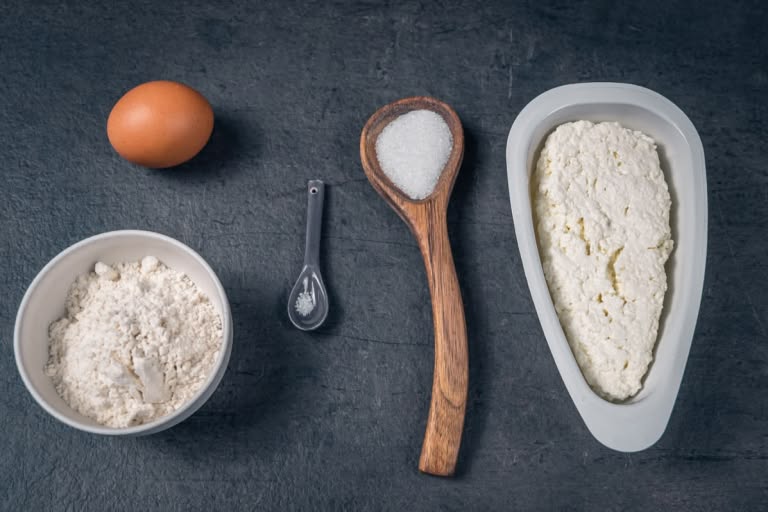
For the lazy vareniki:
- ¾ cup Farmer's cheese
- 1 medium Eggs
- 3 tbsp All-purpose flour (25 g)
- 2 tsp Sugar
- 1 pinch Salt
For cooking:
- 8 cup Water (1 l)
- 1 tsp Salt
- 1 tsp Vegetable oil
How to cook
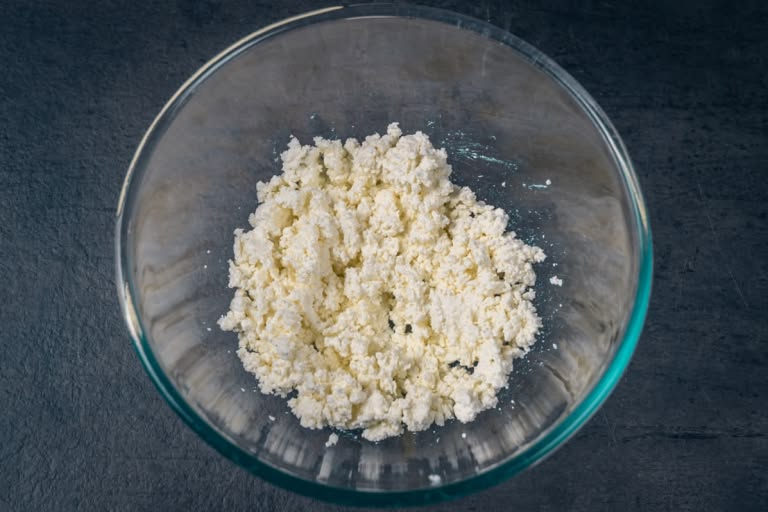
Place 3/4 cup (200g) of farmer's cheese in a suitable mixing bowl and mash with a fork to break up any large curds.
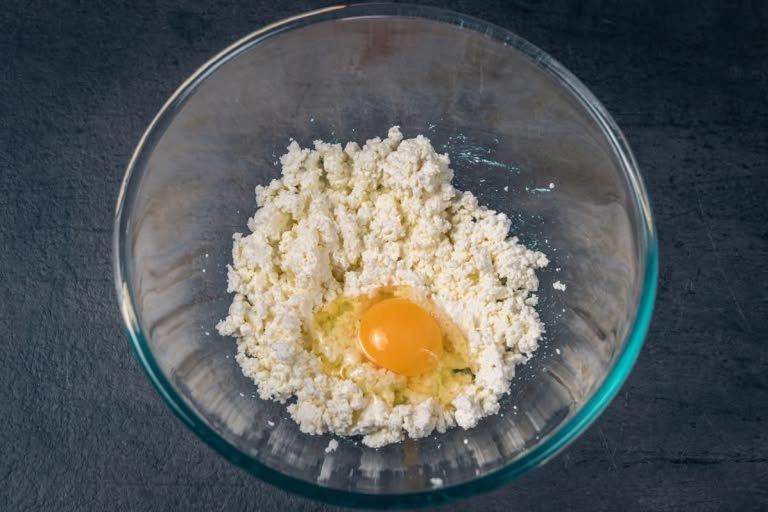
Add one medium egg to the farmer's cheese.
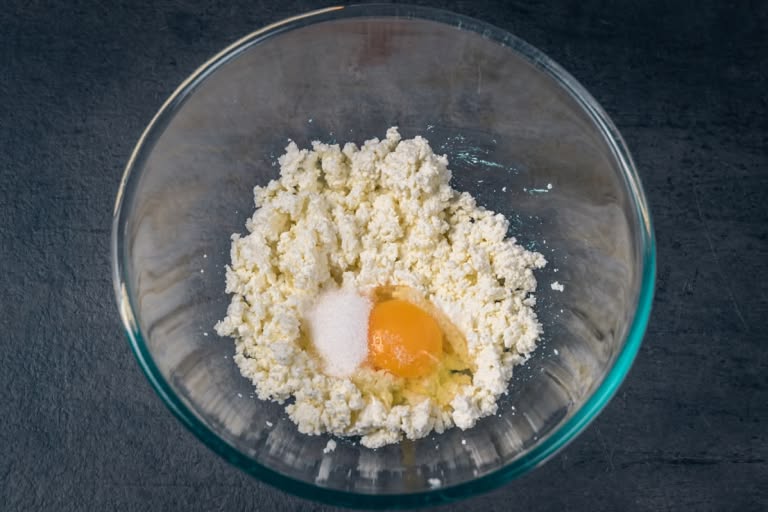
Add 2 teaspoons of sugar and a pinch of salt to the bowl. Mix everything well with a fork until uniform. For extra flavor, you can add 1/2 teaspoon of vanilla sugar or vanilla extract to the dough.
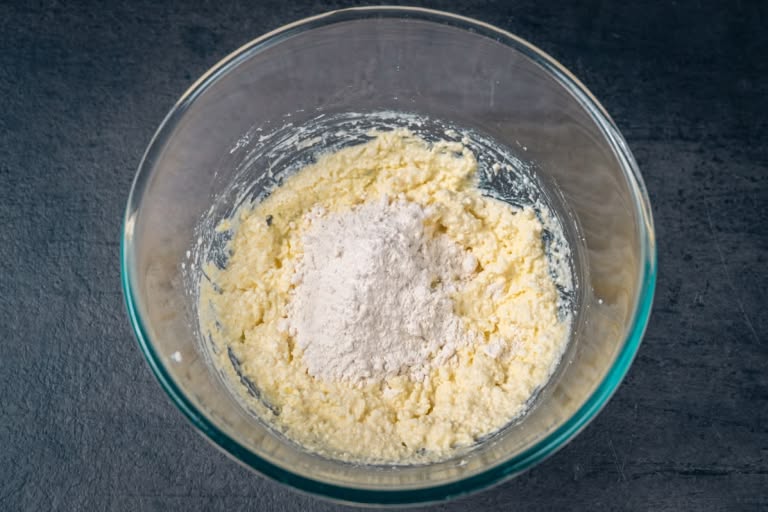
Add 1 tablespoon of sifted all-purpose flour to the farmer's cheese mixture and stir. Check the dough consistency.
Important! Add flour gradually, 1 tablespoon at a time: add a tablespoon of flour, mix, check consistency, then add the next tablespoon if needed.
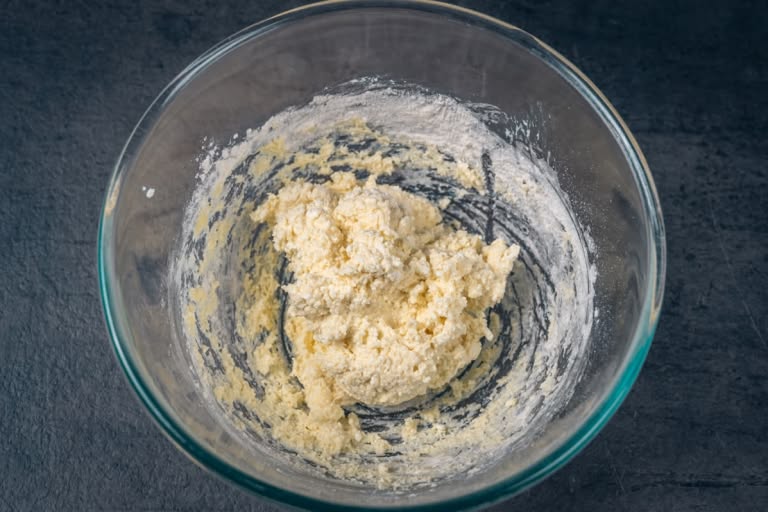
Keep adding flour until the dough begins to come together into a ball in the center of the bowl. It should be soft, fairly moist and sticky to the touch, but still hold its shape. The less flour in the dough, the more tender and delicious the vareniki will be.
I usually use 3 heaping tablespoons of flour. One heaping tablespoon of flour is approximately 1 ounce (30g). However, depending on the moisture content of your farmer's cheese, egg size, and flour characteristics, you may need anywhere from 2 to 4 tablespoons.
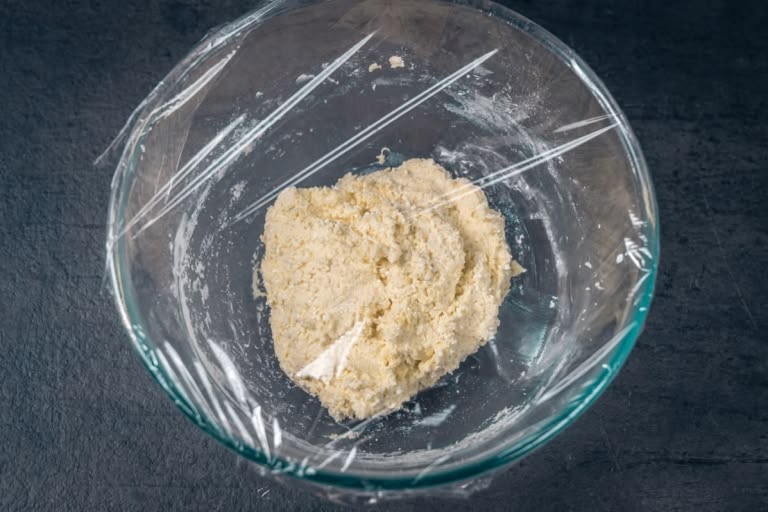
Cover the bowl with plastic wrap and let the dough rest: for 15-30 minutes at room temperature, or in the refrigerator for 30-60 minutes.
During this time, the gluten will develop in the dough. This prevents the dough from spreading in your hands, makes it more manageable and easier to work with, and results in fluffier, lighter vareniki.
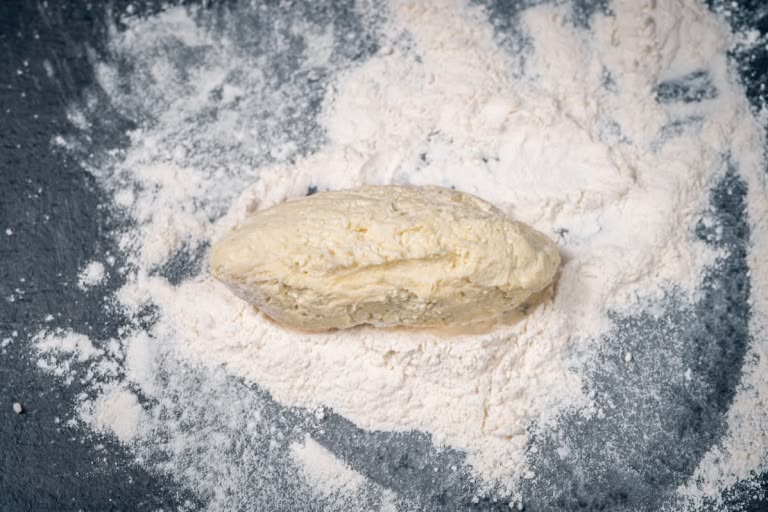
Dust your work surface with flour in a small mound. Divide the finished dough into 3-4 portions. Place one portion of dough on top of the flour and coat it on all sides, then roll it into a log.
The dough should still be sticky to the touch but hold its shape well without spreading.
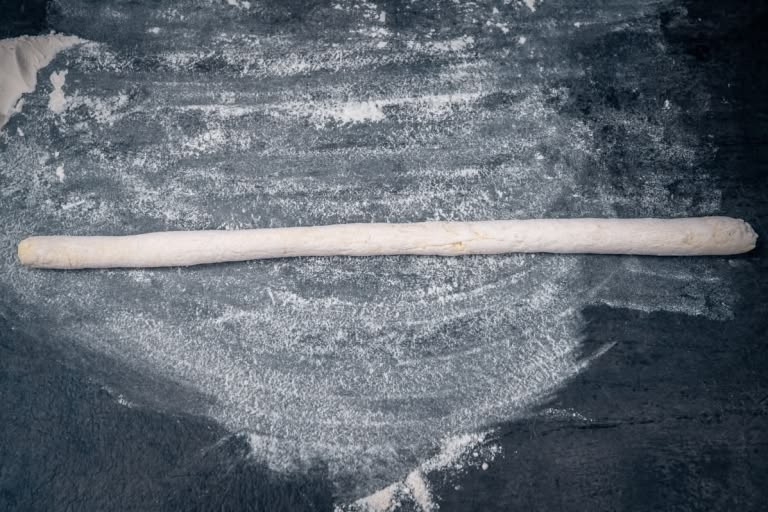
Shape the dough log into an even rope about 3/4 inch (1.5-2 cm) thick and shake off excess flour.
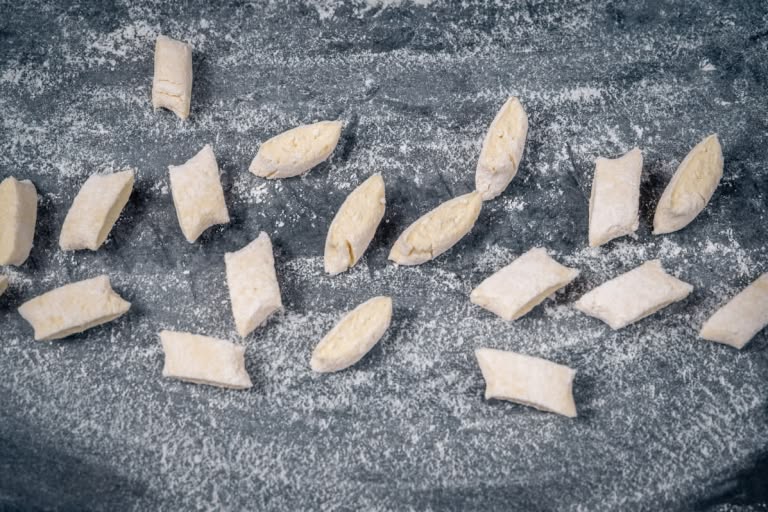
Gently flatten the rope by pressing down with your palms. Then cut it diagonally, at a slight angle, with a sharp knife to create diamond shapes.
I cut diamonds about 1/2 inch (just over 1 cm) wide, but you can make them 3/4 inch (1.5-2 cm) apart if you prefer. Each piece weighs about 1/3 ounce (10g) on average. However, your lazy vareniki can be any size and shape you like (see Tips).
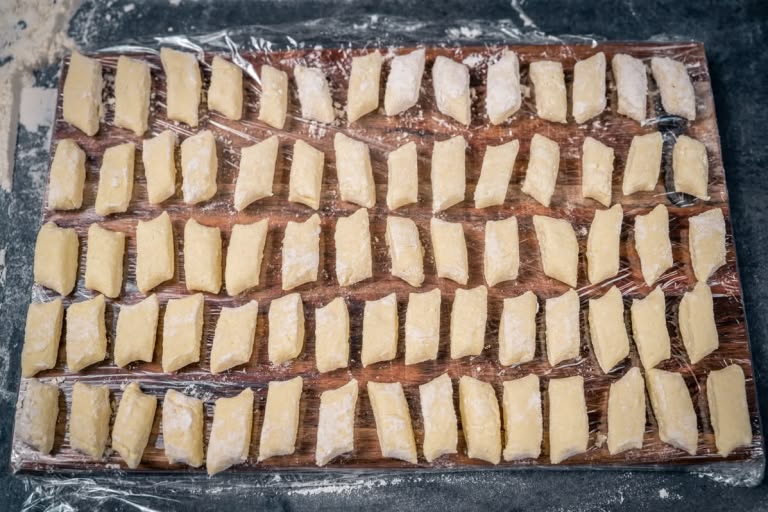
Dust a board with flour and transfer the diamond shapes onto it. Place them with space between each piece so they don't stick together.
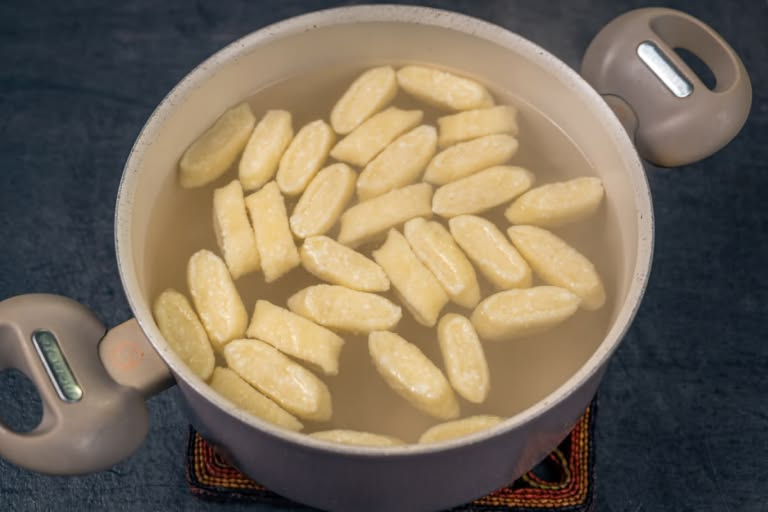
Pour water into a suitable pot, add salt (1 teaspoon per 4 cups/1 liter of water) and a few drops of vegetable oil, and bring to a boil. You can use sugar instead of salt for a sweeter version.
Drop the vareniki into the boiling water and very gently stir with a silicone or wooden spoon to prevent them from sticking to each other and the bottom of the pot.
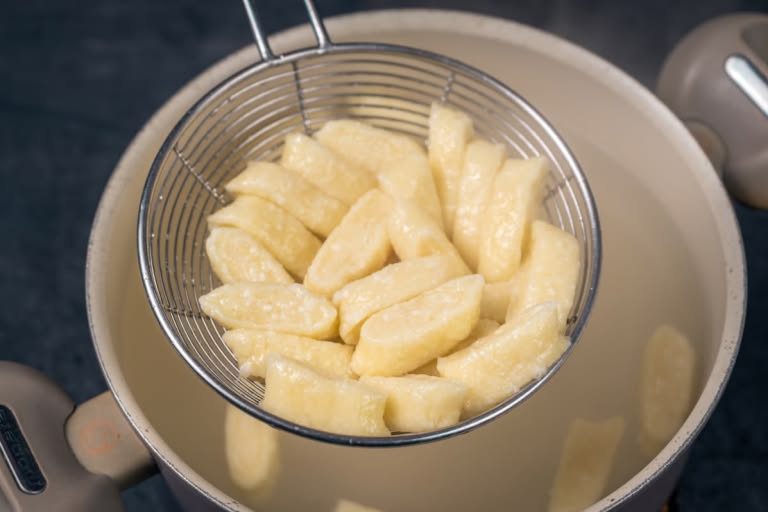
Once all the vareniki float to the surface, cook them uncovered at a moderate boil for 1-2 minutes, then remove them with a slotted spoon or strainer.
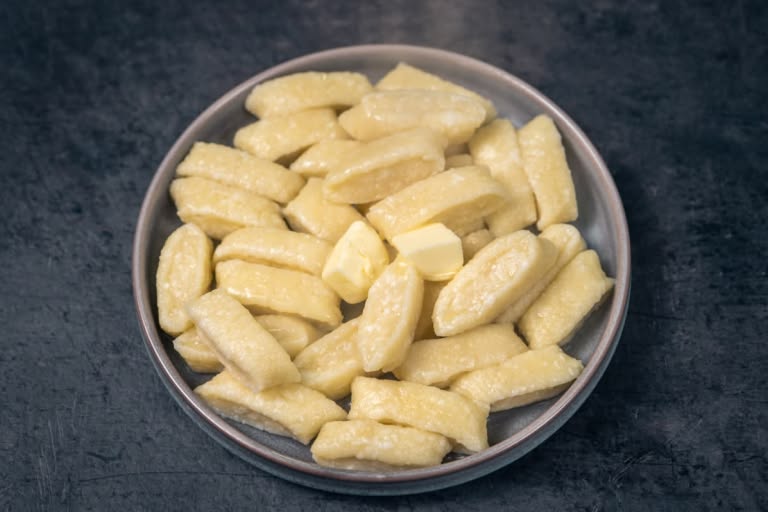
Place the cooked vareniki on a plate and toss with butter. You can sprinkle the hot vareniki with sugar or drizzle with honey.
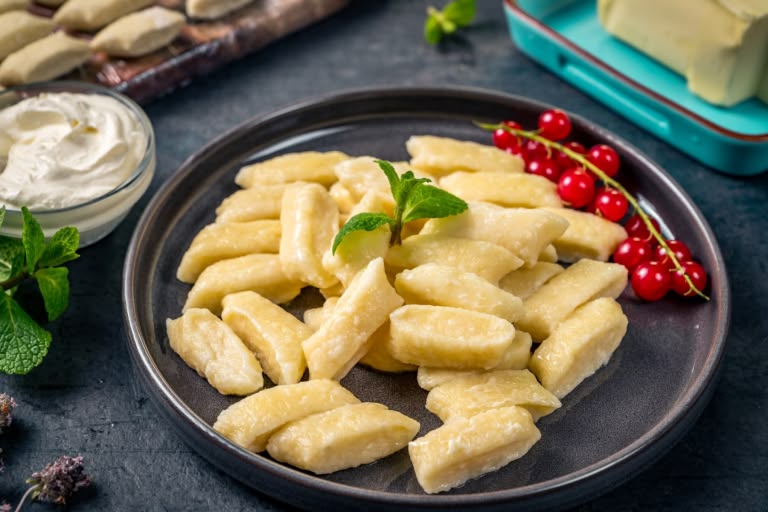
Serve lazy vareniki hot with sugar, butter, and sour cream.
Recipe Tips
Dough Consistency and Flavor
If you prefer a more airy, smooth, and tender dough, cottage cheese with curds can be blended into a creamy mass with an immersion blender or pushed through a fine-mesh sieve.
For an even more tender texture in the finished vareniki, you can use only the egg yolk.
Sugar amounts:
- 2 teaspoons of sugar = not sweet
- 1 tablespoon (level) = moderately sweet
- 1.5-2 tablespoons = sweet
Also remember that the sweetness of this dish depends on the tanginess of the cottage cheese itself. Lazy vareniki made with farmer's cheese will be less sweet than those made with ricotta.
Instead of flour, you can add semolina (cream of wheat) to the cottage cheese dough.
Shaping Techniques
The thicker the dough rope, the larger your vareniki will be.
Remember that lazy vareniki expand in size during cooking.
To form an even and attractive rope, you can use a lightweight cutting board. The shaping principle is the same as with your palms: work the board over the dough with back-and-forth motions.
If you're having trouble forming a rope and the dough splits when working with flour, there may be too much flour in the dough. In this case, remove excess flour from your work surface, lightly wet your hands with water, and form the rope with damp hands. Dust the finished rope with flour so it doesn't stick to the work surface.
It's better to shape lazy vareniki in small batches and cook them immediately, as they can become soggy and sticky while waiting their turn.
Before cooking, you can briefly place the shaped pieces in the freezer. This helps them hold their shape better and not fall apart during boiling.
Lazy Vareniki Shapes
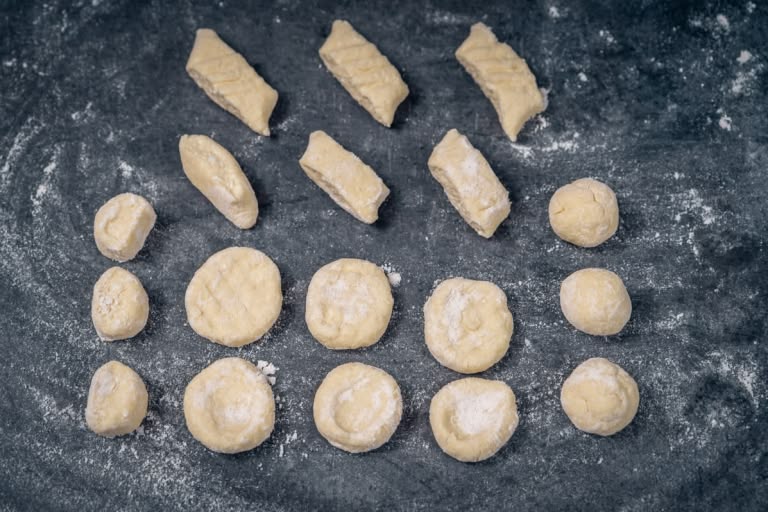
Lazy vareniki can be any shape you like. You can form them as:
- Balls: Shape them into balls or even stuff them with berries, like in lazy vareniki with cherries.
- Discs with wells: Form the dough into discs with an indentation in the center. Sauce and butter collect in these wells. Instead of an indentation, you can create a pattern using fork tines.
- Barrels: If you cut the rope straight rather than at an angle, you'll get even cylinders. You can gently press them with your fingers to make them look like little barrels.
- Diamonds: Cut diamonds can be pressed with a fork to help them hold sauce better on their surface.
- You can roll the lazy vareniki dough into a sheet about 1/2 inch (1 cm) thick and cut out any shapes using small cookie cutters. Or cut it into squares, diamonds, or strips of your desired size.
- Using a fork, you can create shapes resembling gnocchi or give them any desired form.
Two Simple Shaping Methods (No Rolling Required)
If you don't want to roll sticky dough into ropes and make a mess on your counter, you can shape lazy vareniki using one of two very simple methods.
First method – using a spoon. You'll need a bowl with lazy vareniki dough, a teaspoon, and a pot of boiling water:
- First, dip the teaspoon into the boiling salted water
- Then scoop a small portion of dough from the bowl
- Lower the spoon with dough into the boiling water
The dough will easily slide off the spoon. Repeat this process with the remaining dough. Try to keep your lazy vareniki similar in shape and size so they cook evenly.
Second method – using a piping bag. You'll need a piping bag, lazy vareniki dough, a knife, and boiling water:
- Transfer the dough to a piping bag and cut off the corner to your desired size
- Squeeze out a portion of dough over the boiling water and cut it off with a knife or kitchen scissors directly into the boiling water
- Repeat with the rest of the dough in the piping bag
It's best if all pieces are the same size.
In my opinion, these are very fast and simple ways to shape lazy vareniki. Best of all, no dirty dishes, no flour on the work surface, and no extra time spent shaping.
Cooking and Serving
Before the vareniki float to the surface, stir them very gently to avoid damaging the delicate dough. Use a silicone or wooden spoon with smooth edges for this.
Cook vareniki in small batches so they float on the surface in a single layer. If the batch is too large, the water temperature will drop too much, causing the vareniki to take longer to cook and potentially stick together or to the bottom of the pot. This is especially important when cooking frozen vareniki.
Use a large, wide pot and cook vareniki in plenty of water (minimum 6-8 cups/1.5-2 liters). Before dropping the vareniki into the water, stir it with a spoon to create a whirlpool. This helps prevent the vareniki from settling on the bottom and sticking together.
Cooked vareniki always expand in size during boiling.
If you're making a batch of lazy vareniki for the whole family, place them in a deep ceramic dish, add butter, and cover with a lid. Shake the dish periodically. This way they'll be evenly coated with butter and stay warm. Additionally, in such a container, the vareniki continue to "finish cooking" even if you removed them slightly early. This method works equally well for both lazy vareniki and classic vareniki with filling.
Frequently Asked Questions (FAQ)
Why did my lazy vareniki fall apart?
There are three reasons why lazy vareniki don't turn out well and may fall apart during cooking:
- They're overcooked
- There wasn't enough flour in the dough
- Low-quality cottage cheese with unnatural ingredients was used
If you're unsure about the dough consistency, first cook a few pieces as a test.
How do I freeze lazy vareniki?
Raw lazy vareniki can be frozen. Arrange them with space between each piece on a board previously wrapped in plastic wrap or covered with a plastic bag. This helps the frozen vareniki release easily from the surface. Complete freezing takes 2 to 4 hours. Then transfer the frozen vareniki to an airtight bag and store at 0°F (-18°C) for up to 2 months.
How can I customize the flavor?
Lazy vareniki are usually associated with the classic set of ingredients and a sweet, vanilla flavor. However, besides the familiar aroma of vanilla, salt, and sugar, you can add lemon or orange zest, cinnamon, poppy seeds, cocoa, cardamom, small raisins, or dried apricot pieces.
If you're not a sweet tooth, you can make vareniki without sugar and serve them with sauce and Parmesan, like Italian gnocchi. Or go further and add dill, green onions, cheese, minced garlic, crispy bacon bits, or fried onions to the classic ingredients, or make them with potato and cottage cheese.
For experimentation, you can make vareniki with different flavors by dividing the dough into several portions.
| Nutrition (per 100 g) | |
|---|---|
| 1.6 g | Fats |
| 11.7 g | Carbs |
| 8.8 g | Proteins |
| 97.2 ccal | Calories |
Leave a Comment