

Cooked Spicy Adjika - a recipe for a delicious and aromatic canned condiment originating from Georgia. This piquant condiment pairs well with meat, fish, potatoes, pasta, and other dishes. It's often added to sauces and soups to enhance flavor. Some spice enthusiasts simply spread it on bread as a snack. In my family, we can't get enough of this homemade preserve, so I make it every year.
This is the exact recipe I want to share with you. This canned adjika has a medium consistency, but if desired, you can reduce the vegetables further for a thicker texture. Additionally, by adjusting the ratio of tomatoes to sweet bell peppers, you can achieve different textures and flavors in the finished sauce.
The specified amount of ingredients yields about 6-7 pint-sized jars of canned adjika, perfect for preserving and enjoying throughout the year.
Ingredients for 6 portions

- 3.3 lb Tomatoes (1.5 kg)
- 6.6 lb Bell peppers (3 kg)
- 3 Red Chili Peppers
- 1 bunch Parsley
- 1 cup Garlic
- 1 cup Sugar
- 1 cup White wine vinegar 6-9%
- 1/4 cup Vegetable oil (50 ml)
- 3 tbsp Salt
How to make Spicy Georgian Adjika
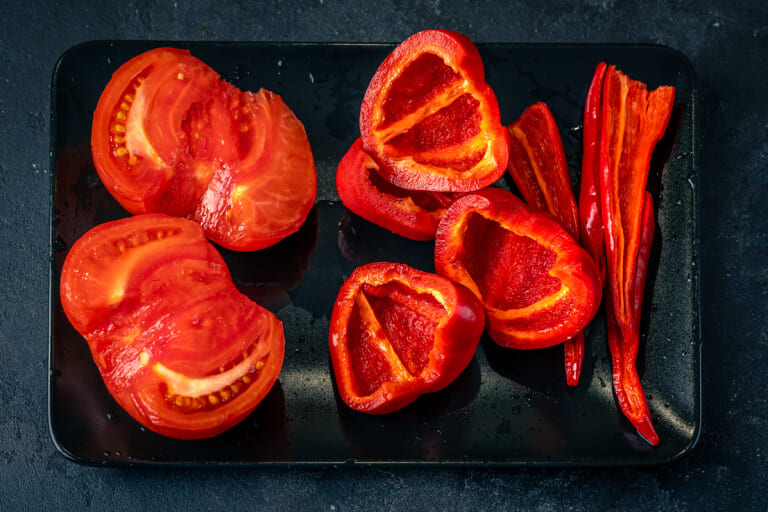
To prepare the cooked adjika, remove the stems from the tomatoes and cut them into small wedges. Wash the parsley and let excess water drain. You can use cilantro instead of parsley if preferred. Peel the garlic; we need 1 cup of peeled garlic. Clean the sweet bell peppers and hot peppers from seeds and stems.
Cut all vegetables into pieces that will be easy to process in a meat grinder, blender, or food processor. Tip: It's best to clean hot chili peppers while wearing gloves.

To avoid washing the meat grinder several times, I grind all ingredients in this order: first, I grind the parsley, then garlic and chili peppers, and finally tomatoes and sweet peppers.
If desired, you can peel the tomatoes beforehand to make the preserve smoother. To do this, make a cross-shaped incision on the tomatoes, dip them in boiling water for 5-10 seconds, remove, let them cool slightly, and then peel off the skin.
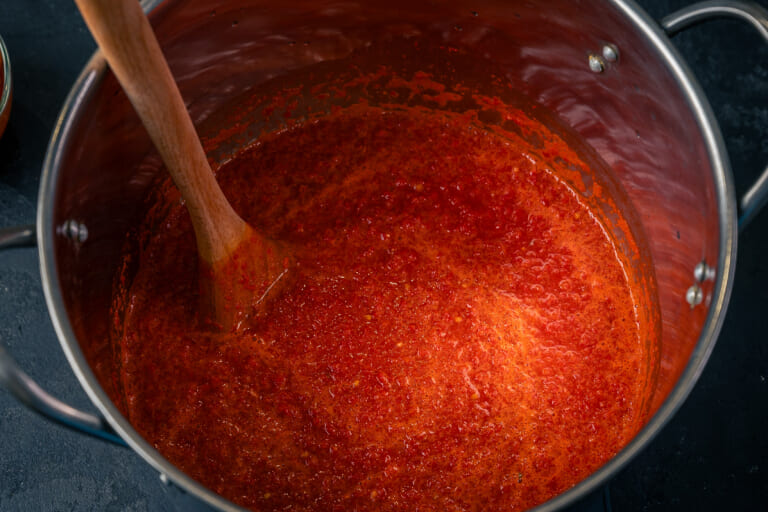
Transfer the ground tomatoes and sweet peppers into a suitable pot and place the raw ingredients on the stove.
Bring the sauce to a boil and simmer over low heat for 20 minutes. Remember to stir the adjika periodically to prevent it from burning.
If the tomatoes are too watery, you can cook the sauce a bit longer for a thicker consistency.
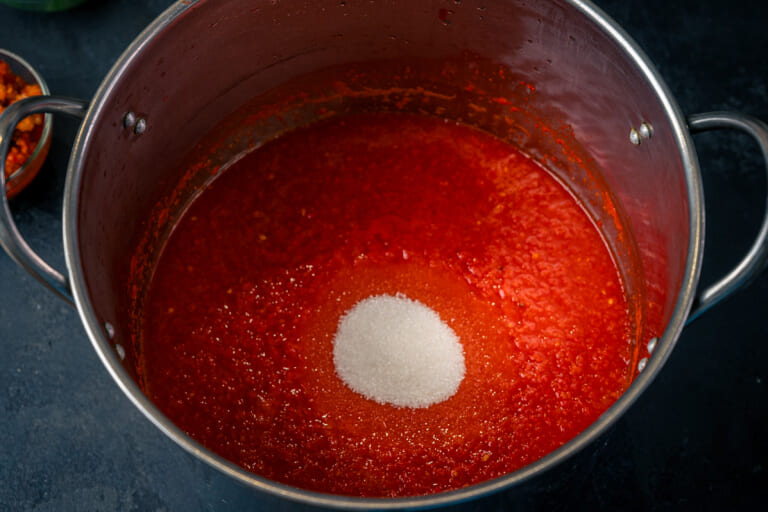
Add sugar, vinegar, salt, and odorless vegetable oil to the pot. Mix everything well, bring to a boil, and cook the adjika for another 10-15 minutes.
I add heaping tablespoons of salt, but I use sea salt, which is not as salty as rock salt. You can use either 6% or 9% vinegar.
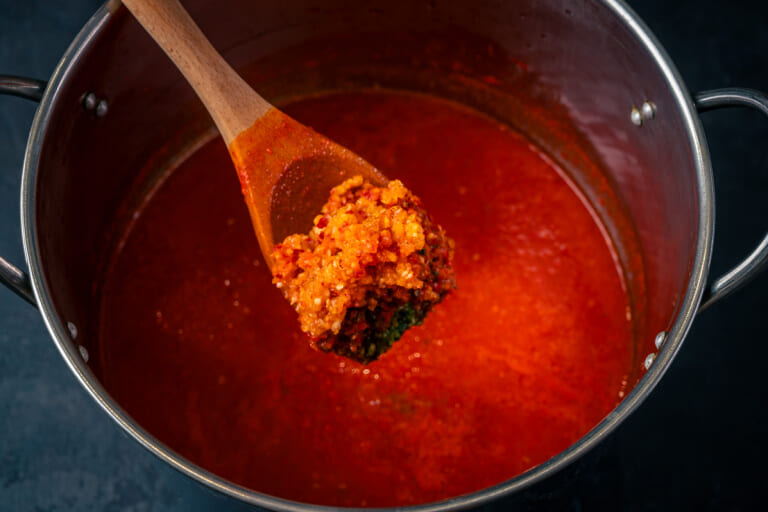
Add the minced garlic and hot peppers to the adjika that we're preparing using the hot method. Mix everything well and cook the sauce for another 10 minutes.
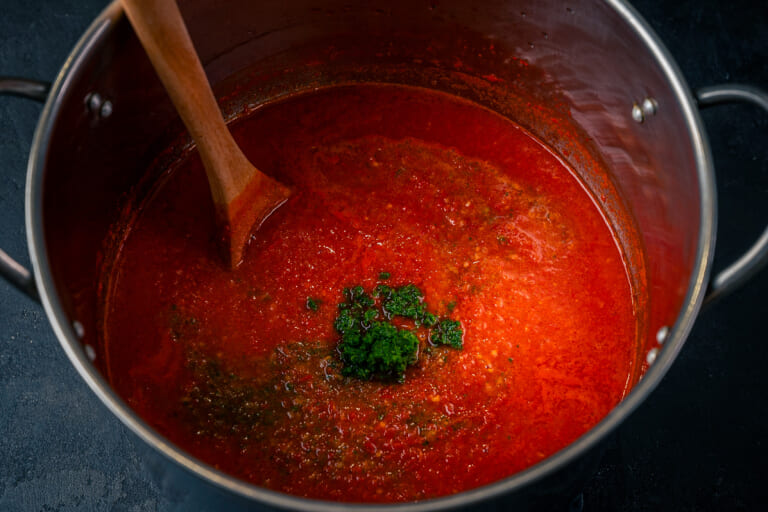
Finally, add the minced parsley and cook the sauce for another 10 minutes.
If you taste the adjika immediately, it will be sour with a strong vinegar flavor. This preserve needs time to mature. If you have a small amount of sauce that doesn't fit into the jars, it's best to transfer it to a clean container and refrigerate it to let it mature for at least 24 hours.
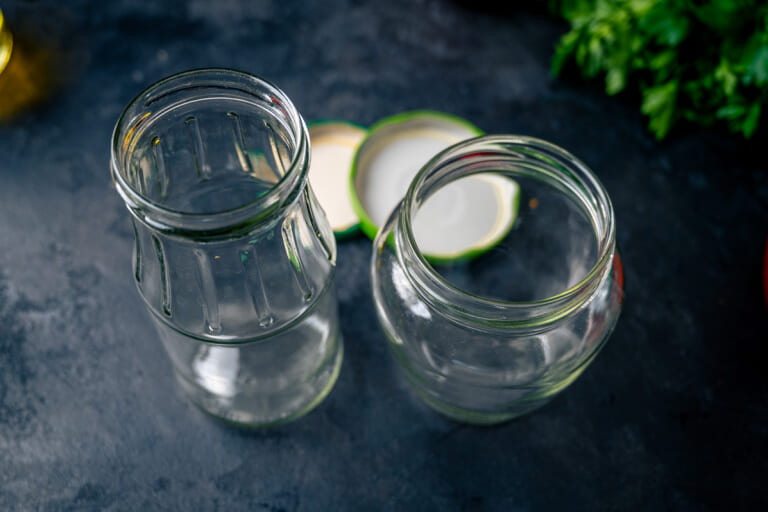
By this time, we should have clean, sterilized jars and lids ready. This is a crucial step in the canning process. This amount of ingredients usually yields about 12-14 cups (3-3.5 liters) of canned adjika. It's best to use small jars for this canning recipe, such as half-pint or pint jars.
Sterilize the lids by boiling them in water for 10-15 minutes. I sterilize pint jars in the oven for 15 minutes. You can use any method and sterilize jars in the microwave, canner, over a kettle, or in boiling water.

Pour the hot adjika into sterilized jars and seal them tightly with lids.
Since this sauce undergoes prolonged heat treatment, it doesn't require additional sterilization once it's in the jars.

Turn the sealed jars upside down, cover them with a blanket, and let them cool completely. This is sometimes called putting them "under a fur coat." This procedure additionally sterilizes the lids and the neck of the jars.
After the jars have cooled, you can store this preserve at room temperature on a shelf.

The spicy cooked adjika is ready. There's nothing better than opening such a jar in winter and enjoying its taste and aroma.
Leave a Comment