

Let's make Homemade Sriracha Sauce. Sriracha, also known as Siracha, is a spicy Thai chili sauce that has conquered the world over the past 40 years. Sriracha has a sweet, garlicky flavor with a slight tang and a pronounced spicy aftertaste. The recipe was invented in the port town of Si Racha in Thailand, after which the sauce was named.
History of Sriracha Hot Sauce
Thanom Chakkapak first made Sriracha in the 1930s. The sauce was so successful that the enterprising cook began selling it all over Thailand. Sriracha became the best-selling sauce in Thailand, but it was famous within its borders.
The Thai sauce Sriracha gained worldwide fame thanks to a Chinese immigrant from Vietnam. 1980 David Tran founded Huy Fong Foods and began producing Sriracha sauce in California. His famous rooster label and green cap won over the US and the entire world. David Tran's sauce is made from fermented red jalapenos, but its taste differs from the Thai original with its sharpness and sour aftertaste.
Composition of Sriracha
Sriracha consists of only a few ingredients: chili, garlic, sugar, salt, and vinegar. Many recipes also use water. The proportions of the ingredients vary among different producers. Depending on the region, producers use various types of chili peppers. The flavor profile of the pepper plays a key role in the final taste of the sauce.
Which Pepper to Use for Sriracha
Huy Fong Foods makes their Sriracha from red, ripe jalapeños, but green ones are more commonly found in stores. You can use green jalapeños as a base, but keep in mind that your finished Sriracha will be green instead of red.
Other suitable hot pepper varieties for making Sriracha include Fresno chili, Serrano, spur chili (Prik chee fah), cayenne pepper, Dutch hot chili, Anaheim, or Poblano. If none of these are available, use whatever you can find. Your sauce might differ from the original in taste and heat, but it will still be delicious.
When selecting peppers, you can also refer to the Scoville Heat Scale (SHU). For reference, jalapeños measure between 5,000 and 8,000 SHU. Typical Sriracha sauce ranges from 1,000 to 2,500 SHU.
We're making a quick Sriracha sauce without fermentation, so it will be slightly hotter. Fermentation typically reduces the heat, resulting in a less spicy sauce.
How to Reduce Sriracha's Heat
If you want a mild, slightly spicy Sriracha, choose less spicy varieties of hot peppers. You can also replace part of the hot pepper with sweet bell pepper. Naturally, the original Thai sauce is not made with bell peppers, but this little trick helps create an adapted Sriracha for those who do not eat very spicy food.
Why Fermentation is Important
Today, we will make a quick Sriracha sauce without fermentation. This quick recipe allows you to prepare the sauce in 20 minutes. In my experience, the difference in taste between fermented and non-fermented sauce is barely noticeable.
However, if you have 1-2 weeks and want the authentic taste of real Sriracha, I recommend fermenting red chili. Fermentation reduces the heat of the peppers, enriching the future Sriracha's flavor and making it deeper and more complex. Additionally, fermented products are gentler on our digestive system.
This recipe yields one 300-gram jar of Sriracha.
How to Serve Sriracha
Initially, it was served separately with seafood and egg dishes as a dip sauce. Now, it has become so popular that it is added to everything. Sriracha is included in many sauces. It can be used to season pork ribs in a slow cooker, Shakshuka, chili con carne soup, homemade shawarma, or any other meat, poultry, or fish dish. Sriracha can be found not only in Bloody Mary cocktails but even in desserts.
Ingredients for 10 portions
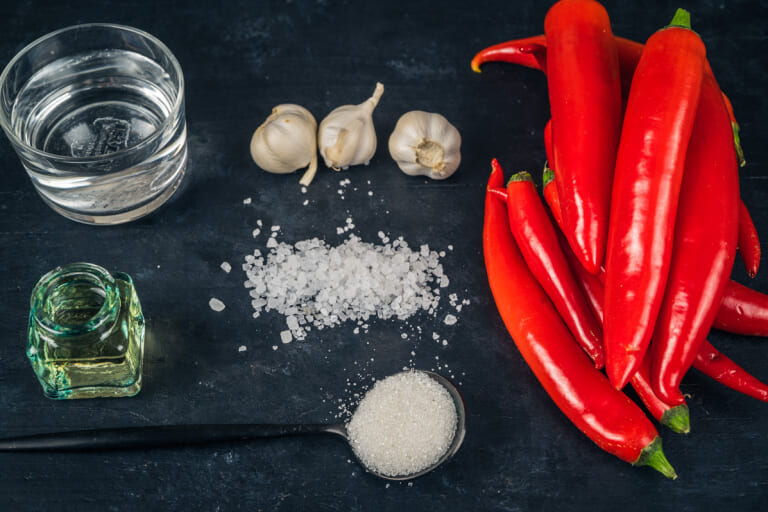
- 7 oz Red Chili Peppers (200 g)
- 6 cloves Garlic
- 1 tsp Salt
- 3 tbsp Sugar
- ½ cup White wine vinegar 6% (100 ml)
- 2/3 cup Water (150 ml)
How To Make Homemade Sriracha
Prepare the Peppers and Garlic
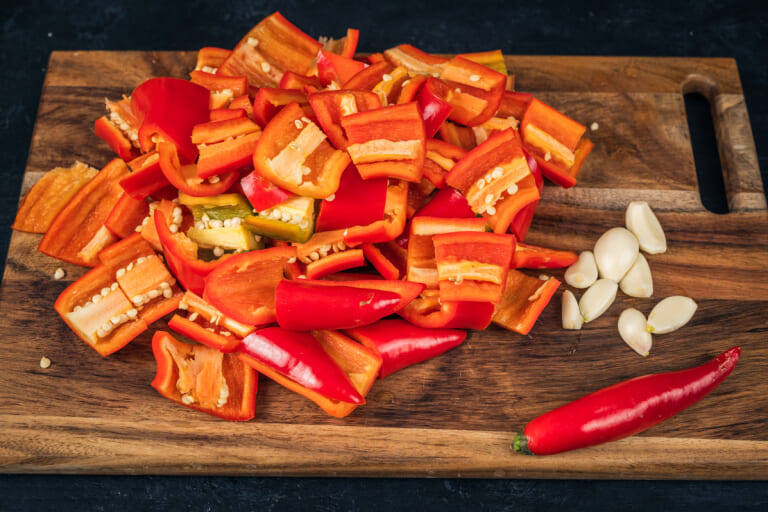
Wash the hot red peppers (200 g), remove the stems, and cut them into random pieces. Peel the garlic (5-6 cloves). You can adjust the amount of garlic to your preference.
Note on Peppers
The type of pepper used affects the finished Sriracha's heat, color, and consistency. The more flesh the peppers have, the thicker the sauce will be. The more vibrant the raw peppers, the brighter the final sauce.
Pro Tip
Based on my experience, use disposable gloves to protect your hands from the effects of capsaicin.
Combine Ingredients
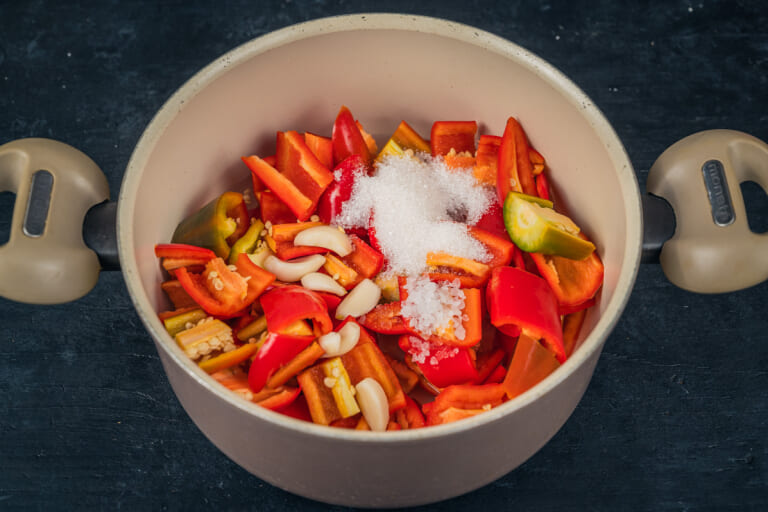
Place the prepared peppers and garlic into a saucepan. Add ½ cup (100 ml) of 6% vinegar, 2/3 cup (150 ml) of water, 1 teaspoon of salt, and 3 tablespoons of sugar (without heaping).
You can reduce the amount of water in the recipe. Its primary purpose is to prevent the ingredients from burning and to ensure even cooking.
Sweetener Options
Light brown sugar is better than white sugar, and palm sugar is even better. You can substitute sugar with honey, maple syrup, stevia, or a heat-resistant sugar substitute. Each of these ingredients will add unique flavors to the finished sauce. I recommend making the sauce according to the recipe first and then experimenting with different ingredients later.
Vinegar Choices
You can use any distilled vinegar. Original recipes recommend using rice vinegar. However, using vinegar with a strong flavor and aroma, such as apple cider or wine vinegar, also affects the final taste of the sauce.
Optional Additions
Some Asian recipes add fish sauce for a richer flavor and aroma. Personally, I haven't made Sriracha with fish sauce.
Cook the Mixture
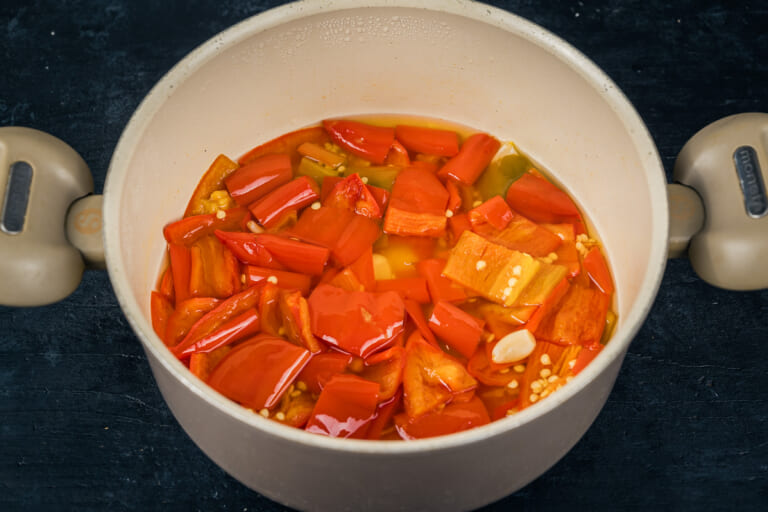
Place the saucepan over heat with all the ingredients. Once it comes to a boil, cover and simmer on low heat for 15 minutes. During this time, the peppers should become soft.
It may take longer to cook if you have chili peppers with tough skins, like "bird's eye" chili. "Bird's eye" chili has tougher skin, more seeds, and less flesh, which affects the cooking time and the sauce's consistency. The finished sauce will also be very spicy, as "bird's eye" chili ranges from 50,000 to 100,000 Scoville Heat Units (SHU).
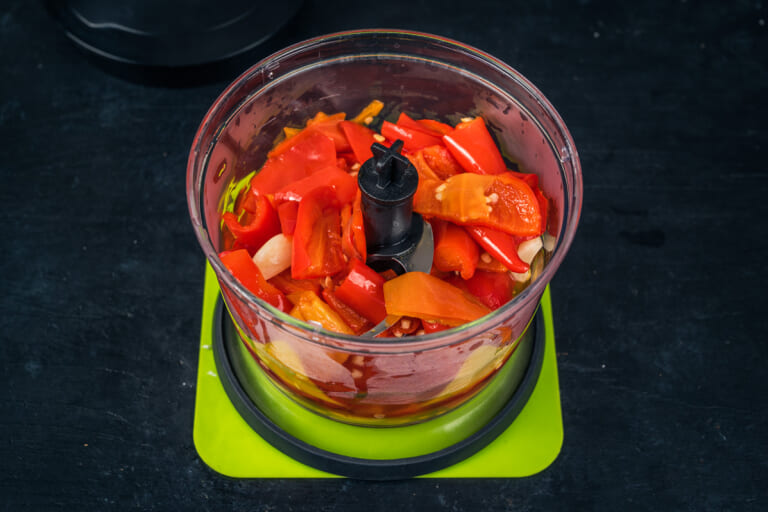
Blend the Ingredients
Allow the contents of the saucepan to cool slightly. Transfer the vegetables to a blender or food processor.
Add only a tiny amount of the cooking liquid to the blender. The sauce will become too thin if you add all the liquid at once.
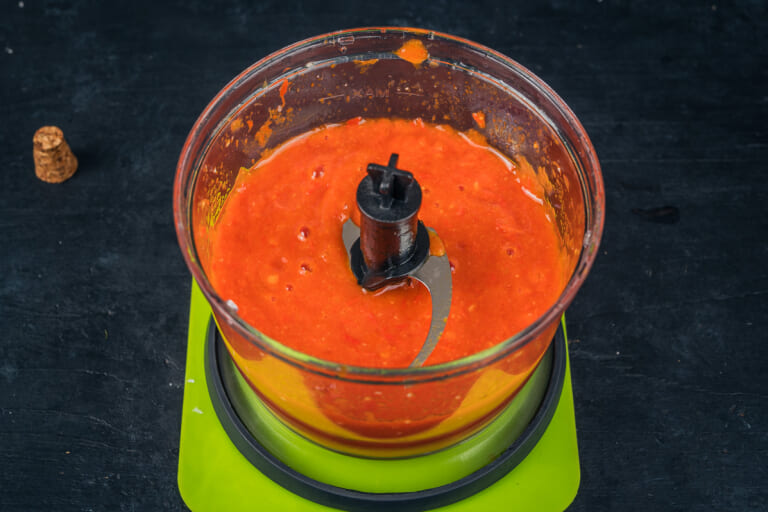
Blend into Puree
Blend all the ingredients until they form a smooth puree.
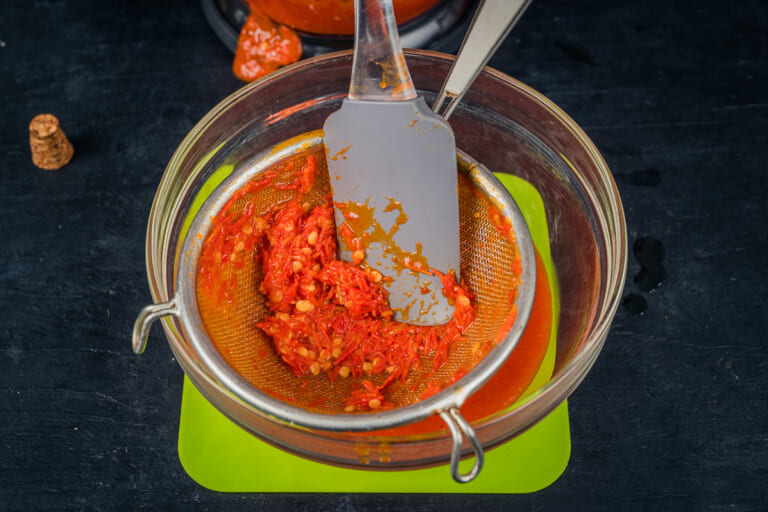
Strain and Adjust the Sauce
Rub the resulting puree through a fine sieve. Seeds and skins will remain in the sieve. If needed, add some of the liquid in which the peppers were cooked to the sauce to achieve the desired consistency.
Taste and Adjust
Taste the sauce. If you feel the Sriracha lacks salt, sugar, or vinegar, add the necessary ingredients and adjust to your liking. Place the resulting sauce on the stove and simmer on medium heat for 2-5 minutes after it comes to a boil. This ensures that the new ingredients won't reduce the shelf life of the finished product.
If you want to preserve the Sriracha:
- Boil it for an additional 5 minutes after straining.
- Pour the hot sauce into sterilized jars and seal them with sterilized lids.
- Turn the jars upside down, cover them with a towel or blanket, and leave until completely cooled. The canned sauce can be stored in a cool, dark place or a cellar.

Store and Enjoy
Pour the finished Sriracha sauce into an appropriate container and enjoy.
Sriracha can be stored in the refrigerator in an airtight container for 1 to 3 months. The sauce's long shelf life is due to its acidity. For longer storage, you can freeze the sauce in a suitable container or preserve it for the winter.
Because of its acidity, Sriracha can be stored without preservatives. The finished product's pH level should be 4.0 or lower for a longer shelf life. If you're unsure about the acidity of your hot sauce, you can increase the amount of vinegar to lower the pH.
If you make Sriracha from fermented peppers, its acidity will naturally increase.
3 Comments
I love this recipe – quick and simple
I’m glad you liked it 😊
Made this tonight using red jalapeños and it turned out great. Thanks for the recipe.