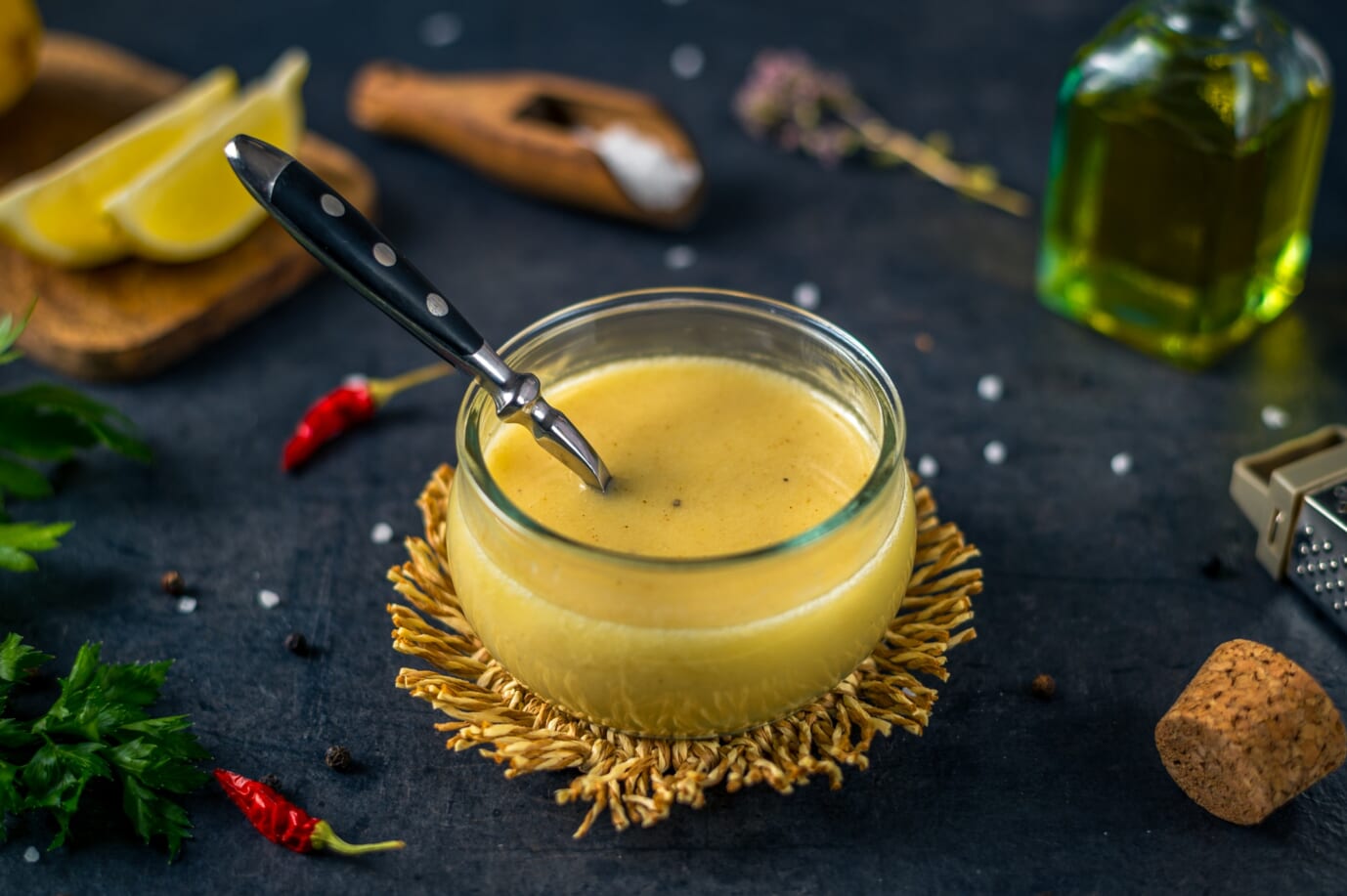

Like the Vinaigrette salad, the Vinaigrette dressing derives its name from the French word "Vinaigre," meaning "Vinegar." Sometimes referred to as French dressing, the Vinaigrette has evolved since the 19th century, with Worcestershire sauce, onion juice, ketchup, sugar, and Tabasco sauce in the 20th century, altering the classic recipe.
Dressing Composition: Tips on Choosing and Substituting Ingredients
The classic Vinaigrette consists of 1 part vinegar and 3 parts vegetable oil, seasoned with salt and pepper. Mustard is added to stabilize the dressing, making it easier to emulsify and less likely to separate during storage.
You can create hundreds of variations of this dressing by altering just one ingredient.
Choosing the Right Vinegar
The base of the classic recipe is white wine vinegar, but you can substitute it with balsamic, raspberry, rice, red wine, apple cider, sherry, champagne vinegar, or any other type.
You can replace it with lime, orange, lemon juice, or red wine. From my experience, experimenting with different types of vinegar or combining them with fruit juices works well.
Citrus juices soften the dressing, while balsamic vinegar adds a sweet note. It's crucial to maintain a balance of flavors. If the vinegar has a strong and distinct taste and aroma, it's better to use oil with more neutral characteristics.
Selecting Oil for the Recipe
Choose high-quality, fresh oil without bitterness for the Vinaigrette. Neutral-tasting oils like canola, peanut, corn, walnut, grapeseed, or refined vegetable oil work well. Or, opt for oils with a strong aroma, such as walnut, hazelnut, almond, unrefined sunflower, sesame, flaxseed, avocado, or olive oil. Mixing oils is also an option.
Tip: Avoid using two components with intense flavors as the base. If you use aromatic unrefined oil, complement it with a neutral-tasting vinegar.
Choosing the Mustard
Mustard isn't a classic ingredient but is often found in vinaigrette recipes. Oil and vinegar create an unstable emulsion prone to separation. Mustard stabilizes this process, making the dressing easier to prepare and slowing separation. A cooked egg yolk can also act as a stabilizer.
Mustard not only stabilizes the dressing but also adds a vibrant flavor. Dijon mustard is perfect in the recipe for French Vinaigrette. You can use any mustard or mix different types for a spicier sauce.
French Salad Dressing Recipe
Ingredients for 1 portion
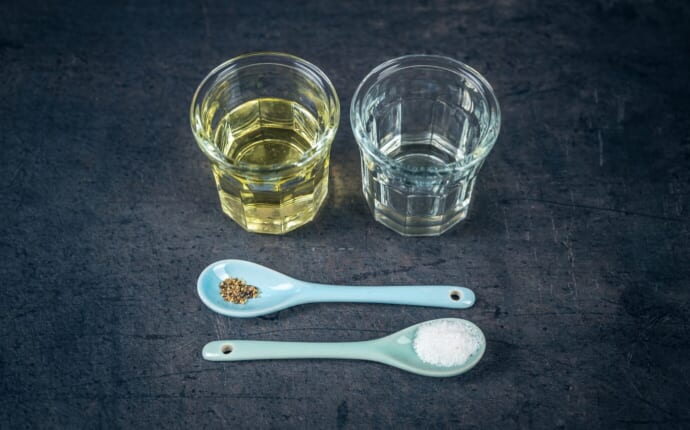
Base
- 2 tbsp White wine vinegar or red wine vinegar
- 6 tbsp Extra Virgin Olive Oil or vegetable oil
- 0.5 tsp Salt
- 1 pinch Ground black pepper
Additional
- 1 tsp Dijon Mustard
How to make French Vinaigrette Dressing
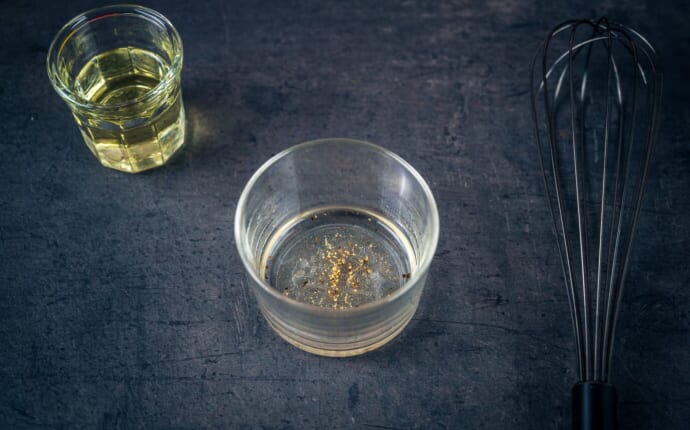
Mix vinegar with a bit of salt and a pinch of black pepper in a suitable deep bowl. Stir until the salt dissolves completely. Then, let the mixture sit for 10-15 minutes to enhance the flavor.
Salt dissolves well in vinegar but not in oil. Thus, despite the simple composition, adding the ingredients in the correct order is crucial.
All ingredients should be at room temperature. Cold components or temperature differences can complicate the emulsification process.
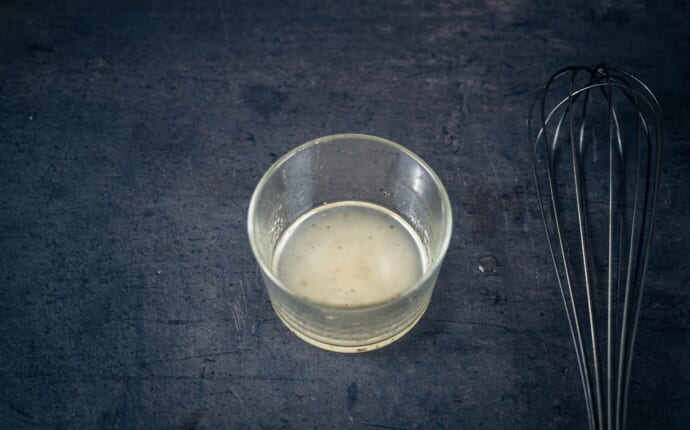
Gradually pour the oil into the vinegar, vigorously whisking. You will notice the vinegar and oil beginning to emulsify and blend.
As you add the oil, the sauce will thicken and become cloudier. Continue whisking for another minute after adding all the oil.
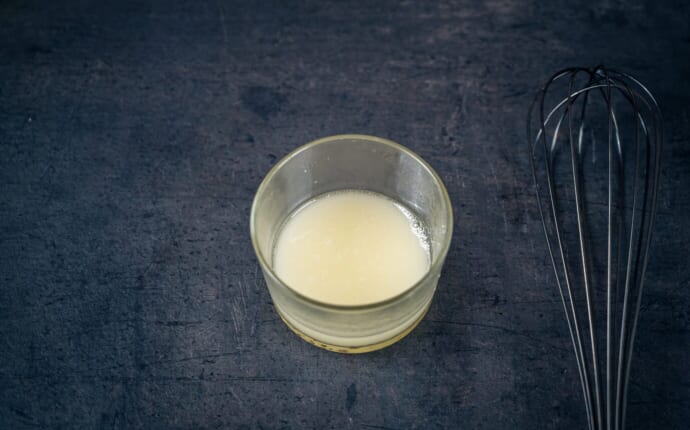
The finished dressing will be a smooth, silky, pale-yellow mass without large bubbles or signs of separation.
Taste the dressing and adjust the salt and black pepper if necessary. This is the classic Vinaigrette dressing.
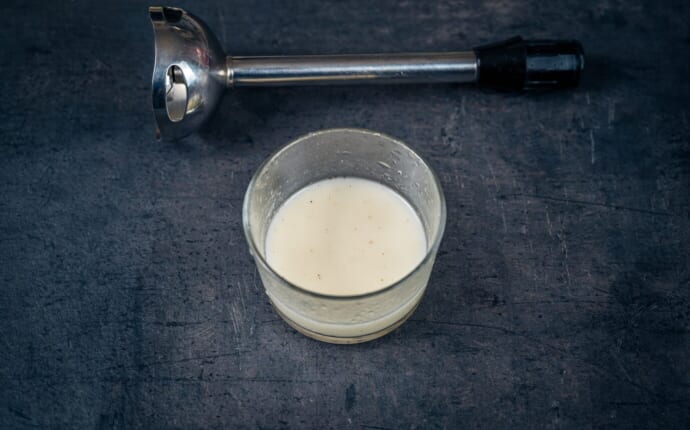
You can also blend the dressing with an immersion blender for a thicker and airier vinaigrette.
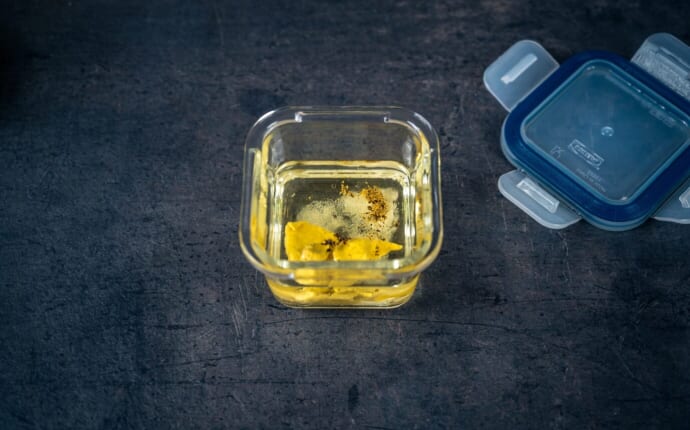
A regular jar is the simplest and quickest way to make the dressing. Combine all the ingredients in the jar, filling it about one-third full. This time, I'm making the dressing with mustard to demonstrate how its consistency and color change.
When whisking in the jar, you can gradually add vinegar and oil following the above method or combine all ingredients at once.
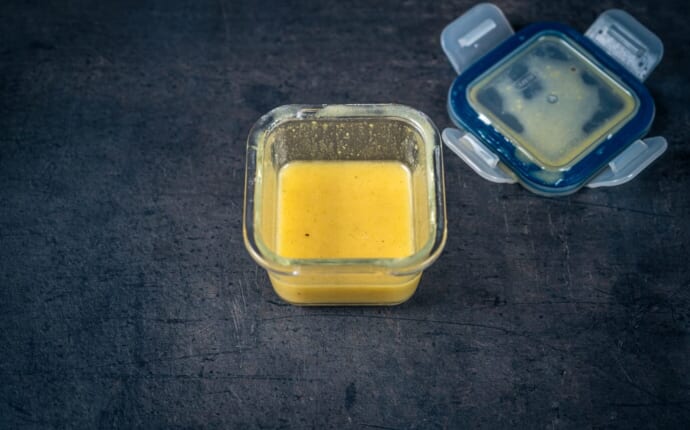
Tightly close the jar with a lid and shake vigorously, like a shaker, until a uniform emulsion forms.
Depending on the amount of dressing, this could take between 30 to 90 seconds.
This method is convenient because you can store the leftovers in the same container.
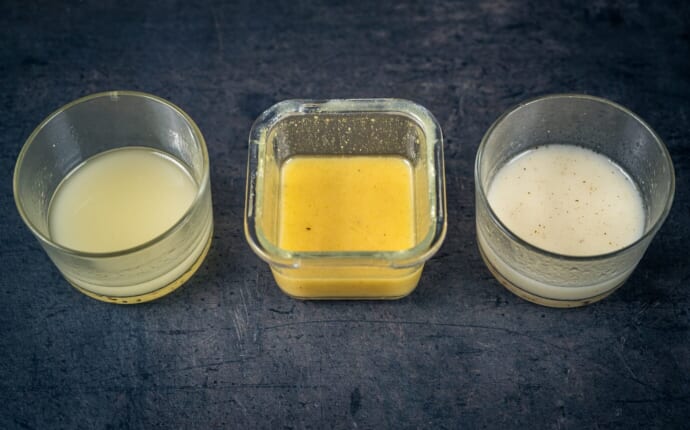
The photo shows three versions of the dressing: whisked, made in a jar with mustard, and blended with an immersion blender.
Let the finished dressing sit for 15-25 minutes to allow the flavors to meld. You can use the dressing immediately after preparation if desired.
If the dressing separates during storage, whisk it again to restore the uniform emulsion texture.
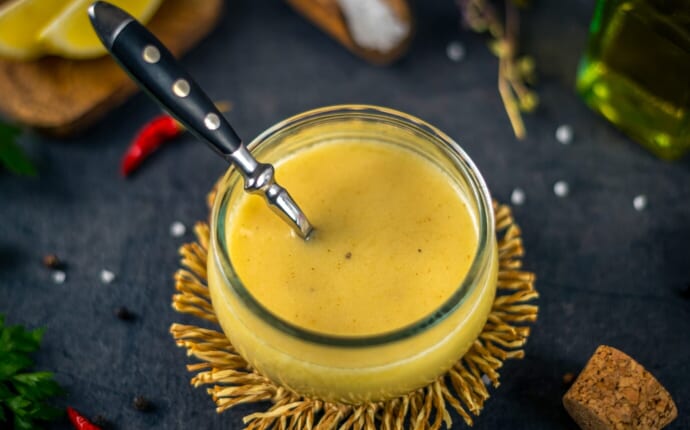
Traditional French Vinaigrette is done.
This oil and vinegar-based emulsion can serve as a salad dressing and as a marinade for meat, poultry, grilled vegetables, or fish. It's suitable for dressing cabbage, artichokes, asparagus, stewed and boiled vegetables. Serve this cold sauce with grilled dishes, light meats, vegetable sides, fish, seafood and it's also great with mussels and shrimp.
| Nutrition (per 100 g) | |
|---|---|
| 39.6 g | Fats |
| 2.17 g | Carbs |
| 0.26 g | Proteins |
| 364.29 ccal | Calories |
Leave a Comment