

One of my favorite Italian dishes is inky black pasta with soft chunks of stewed cuttlefish. It has a delightfully subtle flavor and aroma with a gentle hint of the sea, perfectly balanced by seafood and the slight tang of dry white wine.
This pasta is wonderful on its own, perfect for a family lunch or a romantic dinner. It's also a wonderful addition to Halloween fare, in part because it will temporarily stain your lips and teeth the color of a raven's wing.
What is "Pasta al nero di seppia"
This Italian dish has come a long way from the tables of the poor to the top restaurants. It was originally cooked by fishermen who tried to utilize the whole portion of the cuttlefish. Today, it's a superlative dish.
You can try it everywhere in Italy, but traditionally this dish is served in Venice and Sicily. The Sicilian version contains tomatoes added to it, which positively enrich the seafood flavor. Venetian chefs prefer to make a sauce with only white wine in order to highlight the light ink flavor. Cuttlefish in ink sauce in Venice is typically served with polenta.
Ingredients for 3 portions
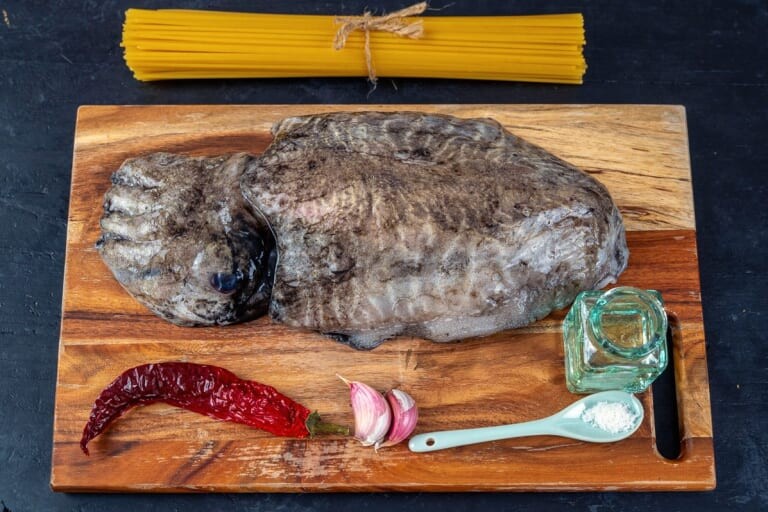
- 1 lb Cuttlefish , Squid or Calamari (500 g)
- 1/2 lb Spaghetti (250 g)
- 4 tsp Cattlefish or Squid ink (20 g)
- 2 cloves Garlic chopped
- 1/4 cup Fresh Parsley chopped
- 1 small Red Chili Peppers
- 3/4 cup Dry White wine (100 ml)
- 1/4 cup Extra Virgin Olive Oil (60 ml)
- 1/4 tsp Salt
Cuttlefish Squid Ink Pasta Recipe

The messiest and most labor-intensive part of the recipe is cleaning the cuttlefish. To do this, carefully cut open the belly without damaging it, remove the ink sacs, separate the head with tentacles and innards from the body. Then remove the cuttlebone, eyes, beak, and peel off the skin.
The ratio of raw pasta to seafood is approximately 1:2, as pasta increases in volume during cooking while seafood shrinks. For 1/2 pound (250 g) of spaghetti, you'll need about 1 pound (500 g) of cleaned cuttlefish and 3-4 ink sacs. If you bought cleaned or frozen cuttlefish, you can use store-bought ink instead of ink sacs. You'll need 4 teaspoons (15-20 g) of ink. I had one large cuttlefish from which I could extract only one small sac, so I added a jar of store-bought ink.
Tip: Place the ink sacs in a glass, plastic bag, or cover with a damp paper towel to prevent them from drying out.
Tip: Ask your fishmonger to clean the cuttlefish for you, and don't forget to tell them to save the ink sacs for you.
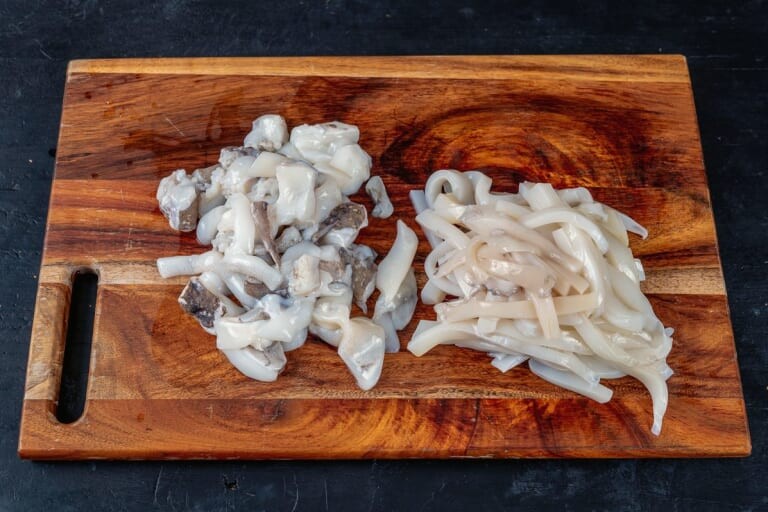
Cut the cuttlefish body into small strips. Cut the head (mantle) into small pieces or cubes, and the tentacles into short segments.
Tip: Consider the size of the cephalopod. The larger the mollusk, the longer it will take to cook. You can leave the tentacles whole for smaller specimens.
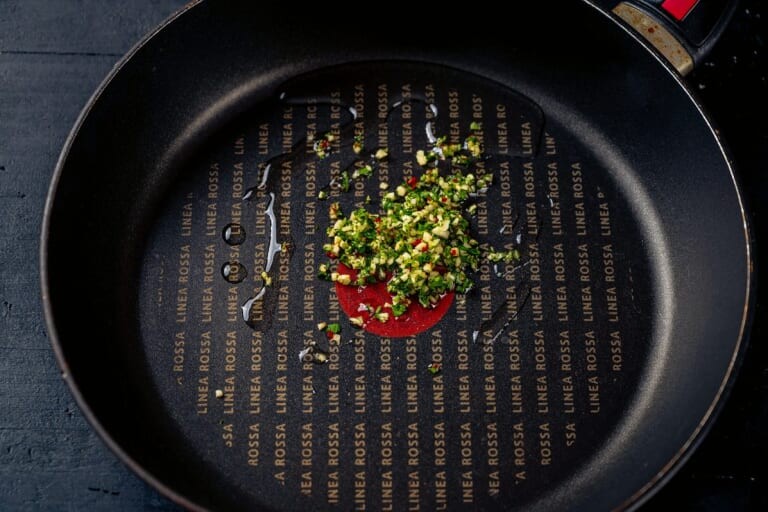
Sauté minced garlic, parsley and hot pepper in a pan with heated extra virgin olive oil for 30 seconds. The vegetables and herbs should infuse their flavor and aroma into the oil. As soon as the garlic becomes fragrant, you can move on to the next step.
Nuance: If desired, you can fry whole garlic cloves and remove them from the pan once they turn golden brown. You can do the same with the hot pepper. This way, garlic and pepper will impart their flavor, aroma, and a moderate spicy note to the oil.
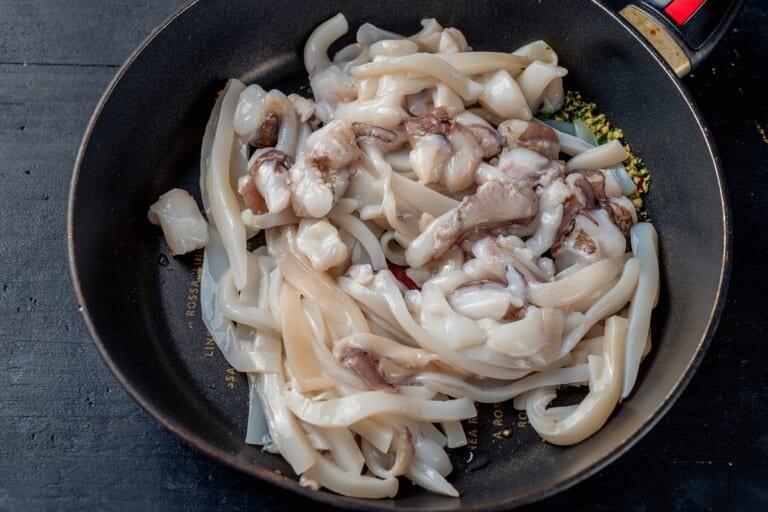
Add cuttlefish pieces to the heated olive oil and fry over high heat for 2-3 minutes, stirring occasionally.
Then deglaze the pan with dry white wine. Bring the liquid to a boil to let the alcohol vapors evaporate. Cover the pan with a lid and simmer over low heat for 15-25 minutes.
When ready, the flesh becomes firmer and turns white. To check for doneness, pierce it with a toothpick. If the toothpick easily pierces the flesh and the mollusk is soft and tender, the seafood is ready.
Nuance: Cooking time will depend on the size and age of the cephalopods. The tender meat of young cuttlefish will be ready in 15-20 minutes, while larger and older specimens may require 35 to 50 minutes.
Tip: If the liquid evaporates too early, you can add boiling water, pasta cooking water, or fish stock to the pan.
Nuance: In Sicily, tomatoes are added to pasta al nero di seppia. They make the dish's flavor richer with a pronounced acidity. You can use fresh tomatoes, tomato paste, canned tomatoes in their juice, or a combination of these products. Add tomatoes to the pan 10 minutes after the wine, and thick tomato paste before adding the seafood.

Reduce the liquid by 1/3-2/3. We should get a fairly thick and rich sauce that coats each piece well.
In the final stage of sauce preparation, pierce the ink sacs with a toothpick or knife tip and add the squid ink to the pan. Mix well, taste, and add salt to taste.
Tip: To prevent the ink from clumping at high temperatures and for more even color distribution, you can dilute it in 2-3 tablespoons (30-45 ml) of warm water or pasta cooking water. Not all Italian chefs do this; many add pierced ink sacs with the ink and quickly stir.
Tip: Set aside tentacles or attractive pieces for plating before everything turns black.
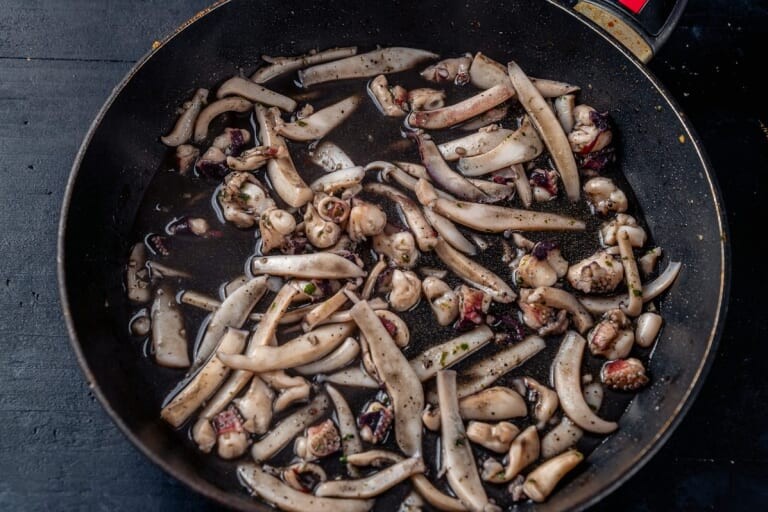
If after adding the ink the sauce is still not thick enough, you can reduce it for 4-7 minutes. However, it's better if the sauce has reached the desired consistency by the time you add the ink.
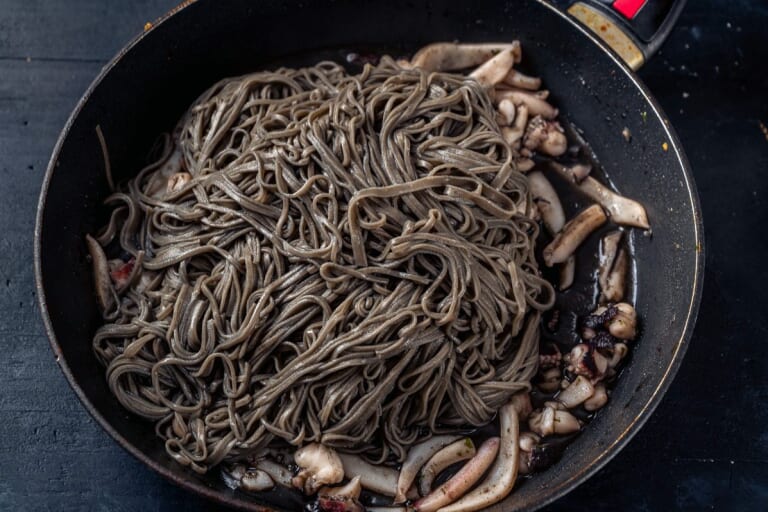
Cook the pasta al dente as per the package instructions in plenty of salted water. Don't discard the cooking water. Ideally, time it so that the sauce and pasta al dente are ready simultaneously.
Transfer pasta into the pan with sauce and add some reserved pasta water.
Tip: The easiest way to transfer the cooked pasta directly from the pot to the pan is using spaghetti tongs.
For this recipe, you can use store-bought squid ink pasta, regular pasta, or make homemade black pasta dough.
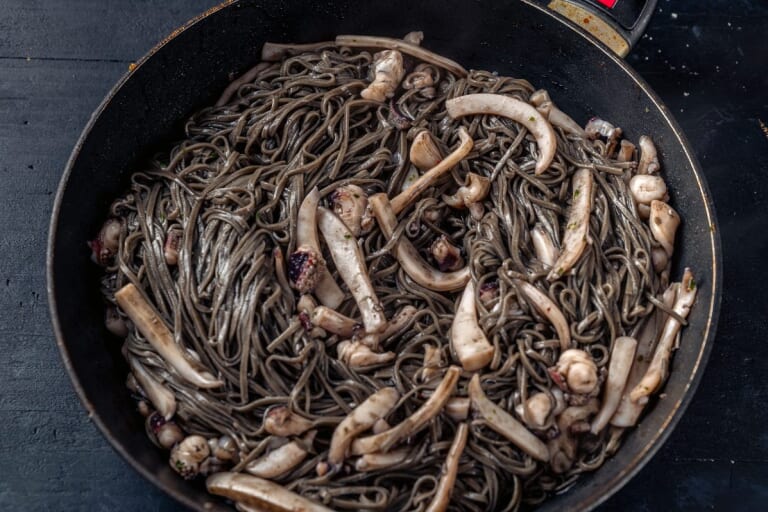
Stirring constantly, finish cooking the spaghetti over low heat for 1-2 minutes. Our goal is to ensure each strand of spaghetti is evenly coated with the flavorful sauce.
This process is called mantecatura and involves intensive mixing of al dente pasta or risotto with sauce and other ingredients. It allows the liquid and oil to combine into an emulsion and create a creamy, velvety sauce texture on the pasta's surface.
Tip: You can use tongs, a silicone spatula, or a special pan for mixing pasta.
Tip: If the pasta surface absorbs liquid too quickly and becomes dry, add a bit more of the starchy pasta cooking water.
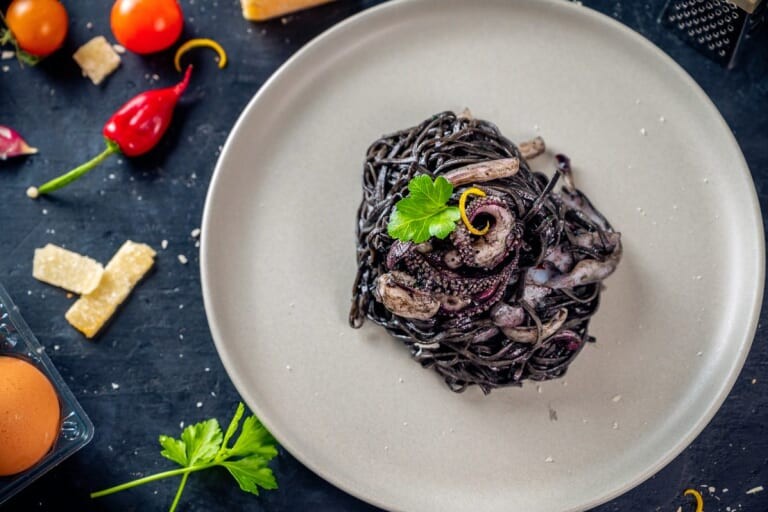
The squid ink pasta is ready. Traditionally, this dish is served drizzled with extra virgin olive oil and sprinkled with chopped parsley. For serving, you can also use dried chili flakes or lemon zest, which will add refreshing citrus notes to the dish.
Squid Ink Pasta Video Recipe
Recipe Tips
Product Selection and Substitutions
- Cuttlefish ink. It can be found inside uncleaned cuttlefish or purchased as a sauce online and in specialty stores. If your fishmonger cleans the mollusks for you, don't forget to ask them to save the ink sacs. The amount of ink used can vary based on your taste preferences and desired color of the finished dish: more ink means a more intense pasta color. Cuttlefish ink is highly perishable. It can be stored in the refrigerator for no more than 24 hours. During long-term storage, it dries out, becomes lumpy, and loses some of its coloring and flavor properties. It also doesn't freeze well. Store-bought packets or jars of ink can be frozen for next time.
- Cuttlefish. If you don't have cuttlefish, you can use squid instead. Frozen seafood works too. It should be thawed beforehand by placing it in the refrigerator.
- Hot pepper. You can use either fresh or dried pepper, or substitute with a pinch of flakes. Choose the variety and heat level according to your taste preferences. For example, you can use crushed Aleppo pepper (about 10,000 Scoville), Serrano (10,000 - 23,000), Cayenne pepper (30,000 - 50,000), Bird's eye (50,000 - 100,000), and others.
- Wine. It's best to choose a dry wine with sufficient acidity and fruity notes. It will balance well without overpowering the delicate ink flavor. For this purpose, you can use Pinot Grigio, Chardonnay, Vermentino, Sauvignon Blanc, Grand Magellan, Grechetto, or Falanghina. Additionally, any of these wines will make an excellent accompaniment to the main dish.
- Pasta. Spaghetti and linguine are most commonly used for pasta al nero di seppia. However, it can be made with any long pasta: tagliatelle, bigoli, or angel hair. Spaghetti has a roughness that helps moderately thick oily and creamy sauces coat their surface well. This is why it's used for Carbonara, Alle vongole, and Cacio e Pepe.
Storage Instructions
Squid ink pasta tastes best when fresh, so it's better to prepare only what you'll eat right away. If needed, it can be stored in the refrigerator for 2-3 days in an airtight container. It's best to reheat the pasta in the microwave or in a pan, adding a few tablespoons of water. This will make the reheated spaghetti juicier and prevent it from sticking together.
If Cuttlefish Releases Too Much Liquid
If the Cuttlefish Releases Too Much Liquid
During frying, cuttlefish may release a lot of liquid. This usually happens for two reasons:
- the frying temperature is too low;
- there are too many mollusks in the pan.
In both cases, insufficient temperature prevents the juices from being sealed inside quickly. As a result, there might be quite a lot of liquid in the pan after adding the wine. This isn't a problem. We'll just need a bit more time to evaporate the excess liquid.
Salt also affects the amount of liquid. Cuttlefish should be salted at the very end of cooking, after it has become tender. Salt draws moisture from seafood, causing it to release even more liquid, and the flesh may become tougher.
If the seafood is already cooked but the sauce hasn't reduced to the desired consistency, you can remove the seafood and continue reducing the excess liquid.
Helpful Notes
Ink was previously used for writing and as a dye. It stains badly and is difficult to wash out of clothing, so don't wear your new white T-shirt when working with it. For the same reason, it's better to work with gloves.
Many restaurants serve this dish with paper bibs. You can use this life hack at home.
It's best to use a special "Saltapasta" pan for cooking. This is a deep and wide pan specifically designed for mixing pasta.
To speed up seafood cooking time, you can use a pressure cooker.
Leave a Comment