

Tomato and bell pepper borscht is a flavorful, warming, savory, fragrant, and filling first course. Red borscht is Ukraine's national dish, with there being many hundreds of recipes to be found out there. Every home cook has their own family recipe for borscht passed down over the generations, and every single one of them claims that theirs is the authentic version. My grandmother, for instance, cooked amazing borscht with fermented beets, I cooked it with sour cream, and now I enjoy eating a pretty rich and thick borscht with meat broth, tomatoes, and bell peppers.
True Ukrainian borscht would be reddish and very bright. Depending on the recipe and the traditions of cooking in some regions of Ukraine, there are typically two main methods for getting borscht its color: beets or tomatoes. The tomatoes and bell peppers give bell pepper and tomato borsch its bright red color.
Meat for Borsch
For a rich broth, use ribs or bone meat. I also like borscht made with a combination of beef and pork broth. For that, I choose shoulder, rump, or neck cuts and cut them into serving portions, anticipating 1-3 pieces of meat per serving.
Ingredients for 10 portions
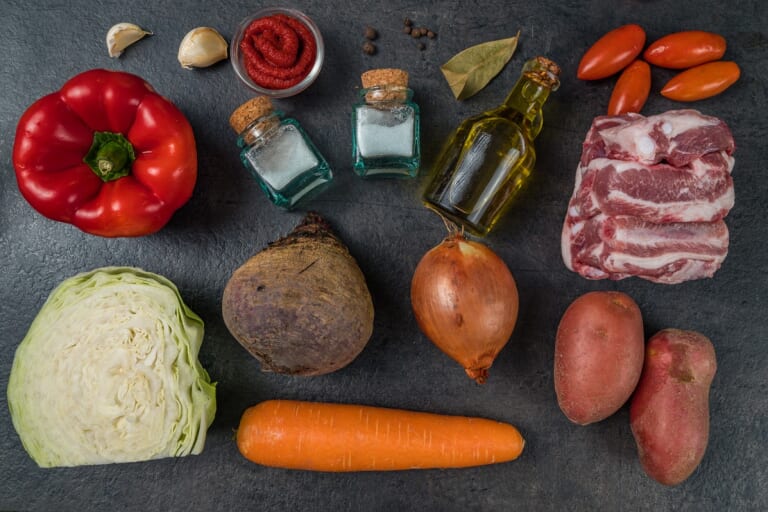
For the borscht
- 1 medium Beet
- 1 medium Carrot
- 1 medium Onion
- 1 medium Bell peppers
- 2 medium Tomatoes
- 1 tbsp Tomato paste (15 ml)
- 4 medium Yukon Gold Potatoes
- 7 oz Cabbage (200 g)
- 1 pinch Sugar
- 3 tbsp Vegetable oil (45 ml)
- 1/3 cup Fresh Dill (30 g)
- 1/3 cup Fresh Parsley (30 g)
For the broth
- 1¾ lb Pork ribs or bone-in pork (800 g)
- 12 cup Water
- 1 medium Carrot
- 1 medium Onion
- 1 Bay leaf
- 2 whole Allspice Beries
- 6 whole Black peppercorns
- 1 tbsp Kosher Salt
- 1 pinch Ground coriander
Ukrainian Borscht Recipe (Beet Soup)
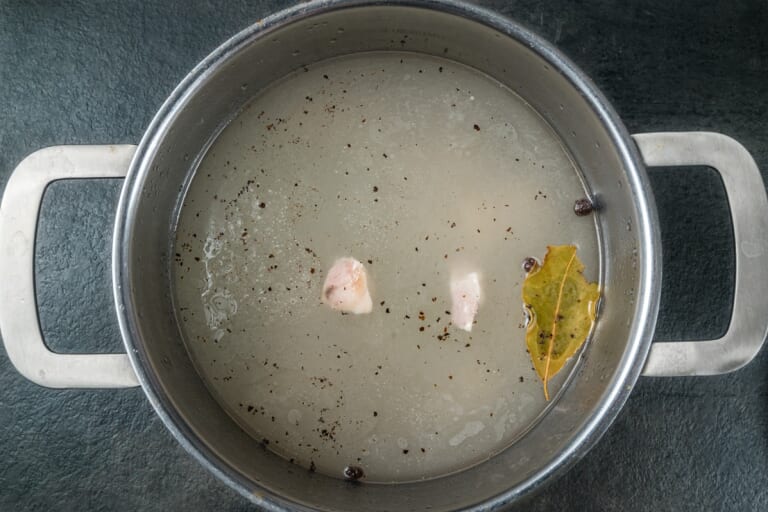
First, you need to prepare the broth. There are two methods:
Classic Rich Broth. Pour water into a large pot (6 quarts), add meat, peeled carrot, and yellow onion, and place over heat. Once boiling, remove all foam with a skimmer and simmer covered over low heat for 1½ to 2 hours. It's best to add spices and salt toward the end of cooking. You can also enhance the broth with parsley root, parsnip, or a piece of celery.
Double-Boiled Meat Broth. Place the meat in a small pot with cold water, bring to a boil, and let it cook for 2-3 minutes. Then rinse the meat to remove any coagulated protein, transfer it to a pot with fresh cold water, add vegetables and spices, and cook as you would a regular broth. This pre-boiling method results in a leaner and clearer broth, and eliminates the need for skimming foam.
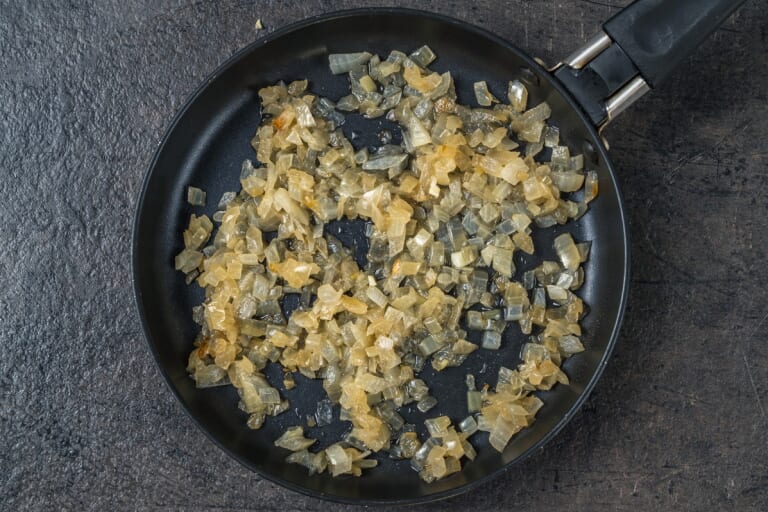
While the broth is cooking, prep and chop all the vegetables for the seasoning base.
Sauté the diced onion in hot vegetable oil until lightly golden. Use a large, deep skillet for this.
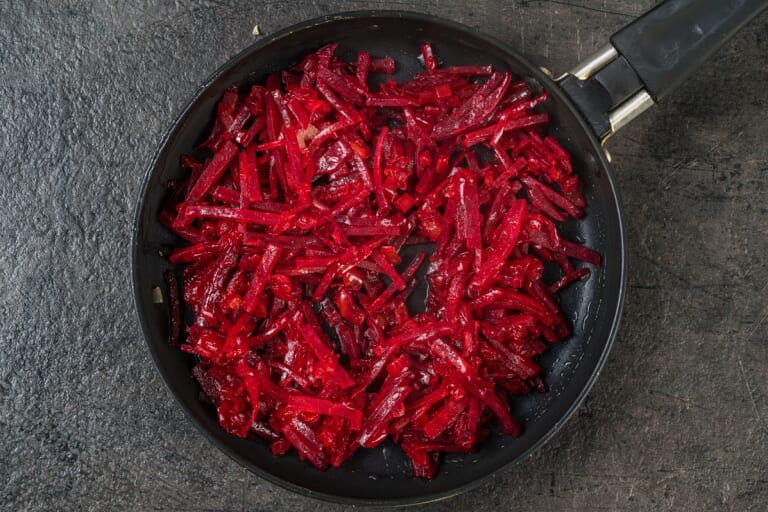
Add the julienned beets and a pinch of sugar to the sautéed onions. Cook the beets over low heat until tender, about 3-5 minutes.
Tip: For balanced flavor and to preserve the color, you can add ½ teaspoon of white vinegar (6% acidity) or lemon juice.
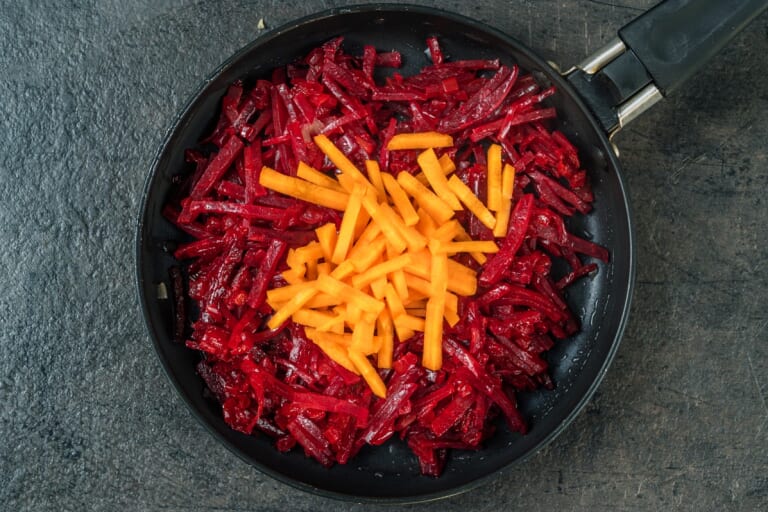
Add julienned carrots to the pan and cook everything together for 2-3 minutes.
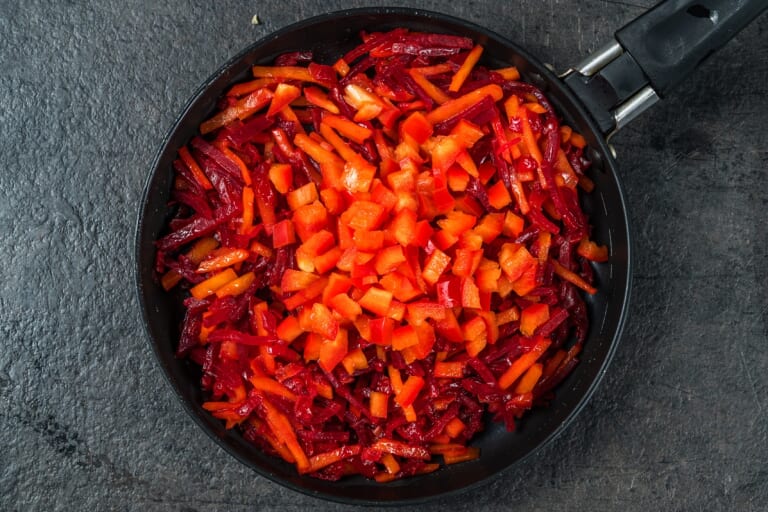
Add thinly sliced or diced bell pepper, stir, and cook for 1-2 minutes.
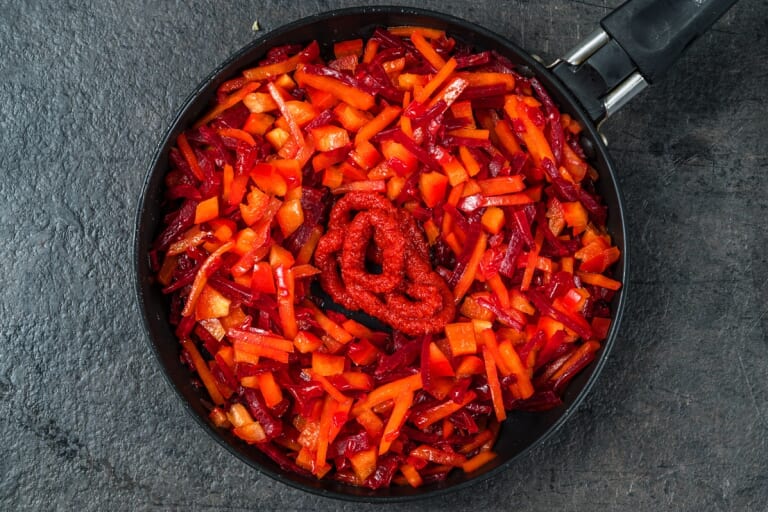
Add tomato paste to the vegetable mixture, stir well, and let it heat through for 1-2 minutes.
Nuance: Sautéing the tomato paste allows it to caramelize slightly. This reduces its acidity, creating a sweeter and more pleasant flavor while enhancing its aroma. Additionally, sautéed tomato paste develops a deeper, richer color.
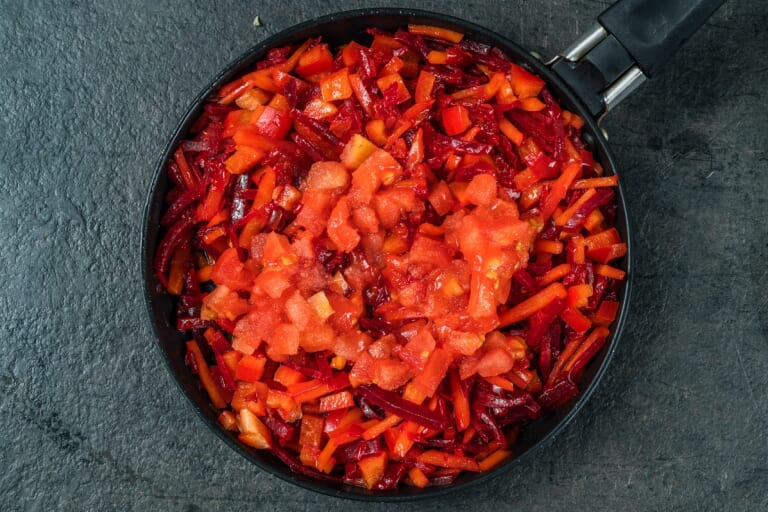
Add chopped tomatoes to the pan and mix well, cover the vegetable base and simmer over low heat for 10-15 minutes. The vegetables are done when the beets are tender.
If the tomatoes aren't very juicy, you can add more tomatoes, some tomato juice, or 1 ladleful of meat broth. In winter, you can substitute fresh tomatoes with frozen ones or canned whole peeled tomatoes.
Tip: Blanch the tomatoes in boiling water first and remove their skins. Then you can either finely chop them, grate them, or purée them in a blender.
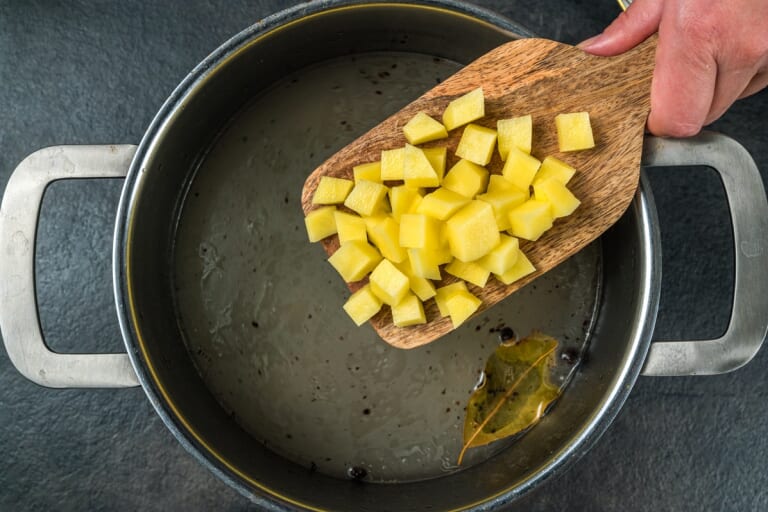
Remove the carrot and onion from the broth - we won't need them anymore. Add the potatoes cut into medium cubes to the broth, return to heat and cook for 10 minutes.
If you're using bone-in meat for your broth, remove the meat, separate it from the bones, cut into serving pieces and return to the pot. You can strain the broth to remove any small bone fragments that may have settled at the bottom of the pot.
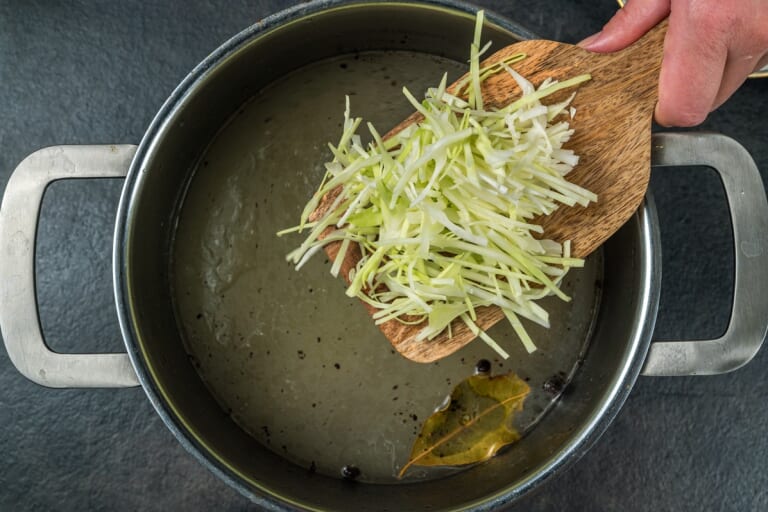
Add the shredded white cabbage to the broth and cook together for 5 minutes.
Nuance: Add early-season cabbage just 5 minutes before the end of cooking, as it cooks very quickly. Late-season cabbage takes about the same time to cook as potatoes.
If you prefer your borscht with slightly cooked, crispy cabbage, add it towards the end of cooking.
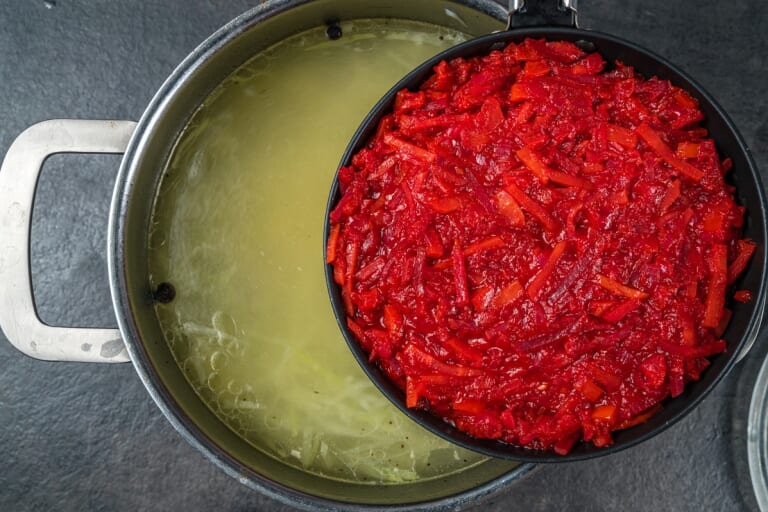
Add the sautéed vegetable mixture to the pot 10-15 minutes before the end of cooking.
After 5-7 minutes, taste the borscht and adjust the seasoning to your liking by adding salt, pepper, sugar, or acid as needed.
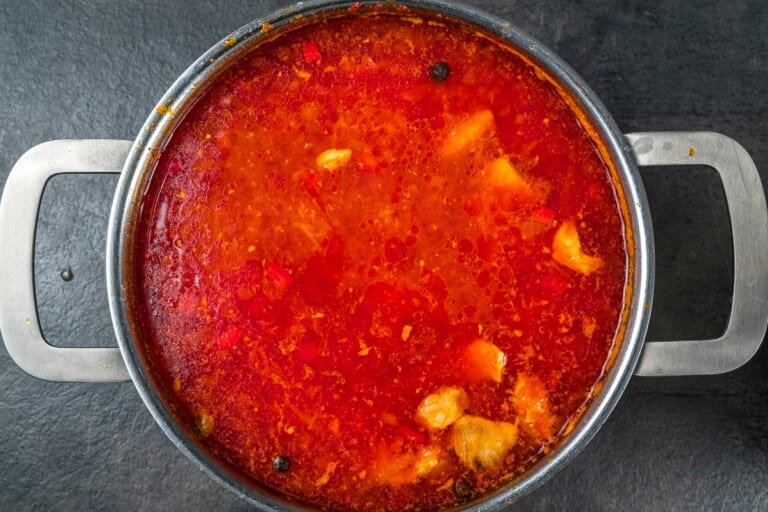
2-3 minutes before the end of cooking, add the finely chopped fresh herbs. When the borscht is fully cooked, add pressed garlic, stir, and immediately turn off the heat.
Cover the borscht and let it rest for 20-25 minutes.

The Ukrainian borscht with pork ribs, tomatoes and bell peppers is ready.
Traditionally, red borscht is served with sour cream, fresh herbs, garlic, pork fatback (salo), dark rye bread, or garlic pampushky (Ukrainian garlic rolls). When in season, you can also serve it with green onion tops, young radishes, fresh garlic, spread made from pork fatback, or onion skin-braised pork belly.
Recipe Tips
Storage and Shelf Life
Ukrainian borscht tastes best on the second day. In my experience, this is a dish that gets better with each passing day.
Keep the borscht refrigerated for up to 5-6 days.
In the past couple of years, I've been using this kitchen hack: I pour the still-hot borscht into individual glass containers with airtight lids. Each container holds about 1½ to 2 cups (400-600 ml). I portion one serving per container, let them cool at room temperature, then refrigerate them.
I love this method because:
- I can see exactly how many servings I have
- The borscht maintains its flavor better and doesn't absorb other odors from the fridge
- A large pot doesn't take up unnecessary space in the refrigerator
- Each portion has the perfect ratio of meat, vegetables, and broth
If desired, you can portion the borscht into containers and freeze it. Frozen borscht can be stored for up to 3 months.
To be honest, I've never frozen borscht myself, so I can't say with certainty how it might affect the taste.
Leave a Comment