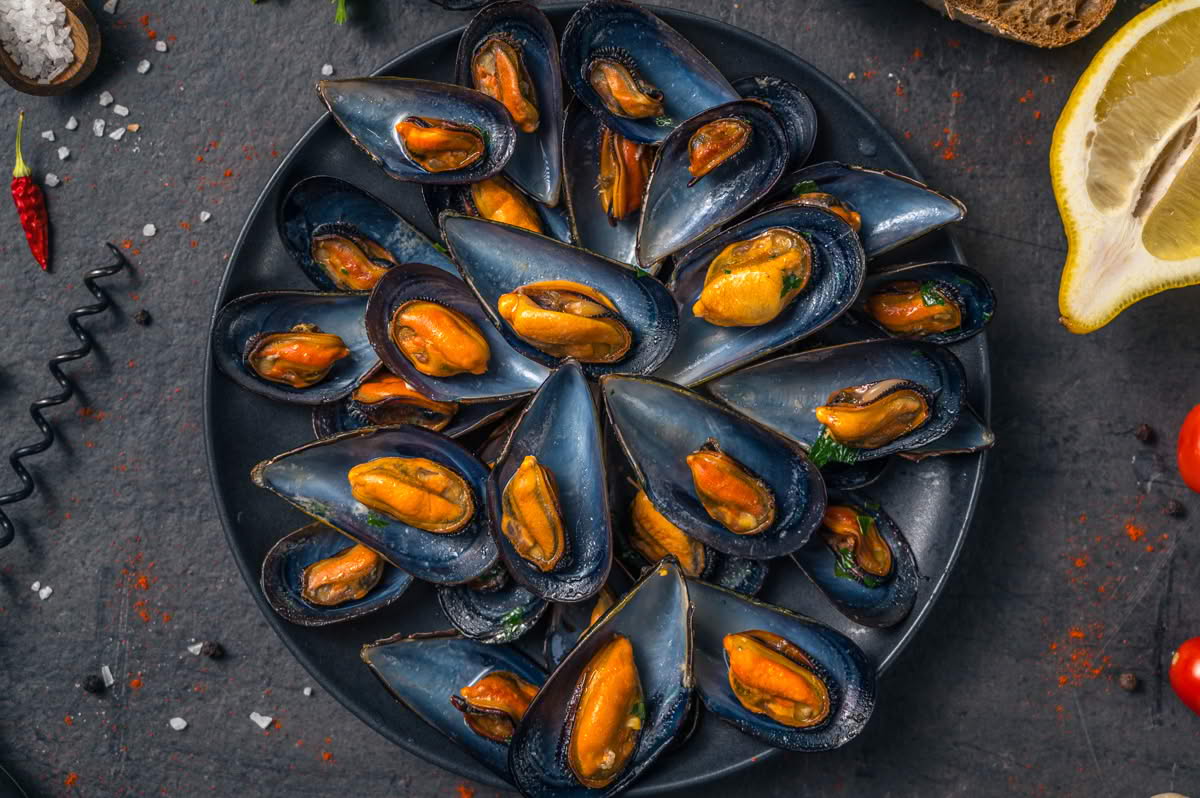

What I love most about Mediterranean cuisine is its simplicity. For me, mussels in white wine are one such dish. All you need are fresh mussels, clean them, toss them into a hot pan with a clove of garlic, olive oil, and white wine, and in 10-15 minutes, a steaming plate of fragrant food with a subtle sea aroma is ready. Besides the ease of preparation, I adore the delicate taste of mussels, lightly enhanced by the wine's acidity and the barely perceptible scent of garlic and parsley. Plus, a whole pan of wine-steamed mussels with crispy toasted ciabatta makes for a wonderful light dinner for the whole family.
A Crucial Note on Mussel Freshness & Safety
Important! Since we are working with shellfish, it is absolutely essential to use live mussels. Otherwise, you risk severe food poisoning.
Determining whether a mussel is alive or dead can be done at two stages: before and after cooking. However, it's very important to perform both checks, as they are not mutually exclusive.
The first check is done before cooking, during the cleaning process. At this stage, discard any mussels with damaged, cracked, or open shells. And here’s a little nuance: an open shell isn't always a 100% sign that the mussel is dead.
- Mussels might open their shells if they've been stored without access to water, from which they filter oxygen. So, before you toss them, give them a firm tap. A live mussel will usually react to this "disturbance" by immediately closing its shell.
- Another way to check their viability is to place any open mussels in cool, salted water for 10-15 minutes. Use about 1 tablespoon of salt per 4 cups (1 liter) of water. As a result, all live mussels should close their shells.
If, after all these efforts, a mussel remains open – discard it without hesitation. This means it has "given up the ghost," and after cooking, you won't be able to distinguish it from the ones that are safe to eat.
The second check involves discarding any mussels that do not open after cooking. Tightly closed shells after steaming are an indicator that the mussel was spoiled.
Food poisoning from spoiled shellfish is one of the most unpleasant experiences, so I strongly advise you not to ignore these precautions when selecting and preparing fresh mussels.
Ingredients for 2 portions

- 2 lb Fresh Mussels live, in shell (1 kg)
- 1/3 cup Dry White wine such as Sauvignon Blanc or Pinot Grigio
- 3 tbsp Extra Virgin Olive Oil
- 3 cloves Garlic
- 1/2 cup Fresh Parsley (20 g)
How to cook

Clean the mussels. Using a knife or a stiff brush (like a vegetable brush or a designated seafood brush), scrub the shells to remove any seaweed, sand, barnacles, or grit. The first thing to tackle is the "beard" (also known as the byssus threads) – this is a clump of dark, fibrous threads sticking out from the shell, which the mussel uses to attach itself to surfaces. Grip the beard firmly and pull it sharply towards the hinge end of the mussel to remove it.
Rinse the cleaned mussels thoroughly under cold running water.
Important! Discard any mussels that are damaged, cracked, or open and don't close when tapped (see Tips & FAQ for more details on checking freshness).
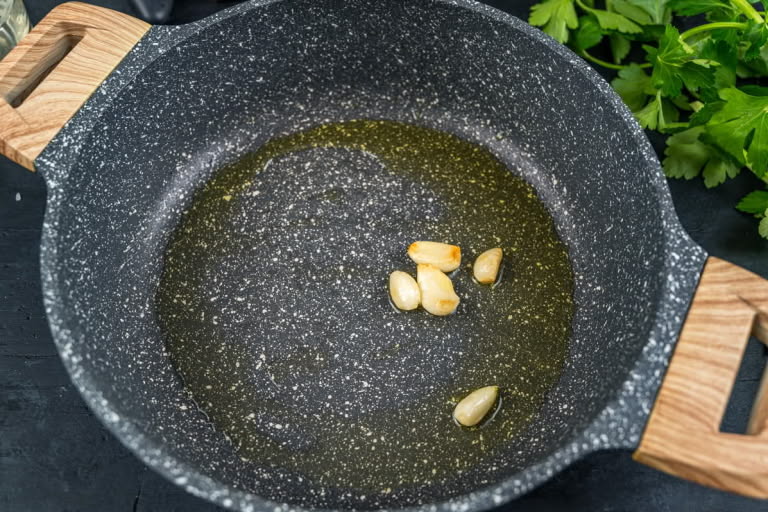
Heat the olive oil in a large, deep skillet or pot with a lid over medium heat. Add the garlic cloves and cook until they turn golden brown and release their rich aroma. If you want to make spicy mussels, now is the time to add a pinch of red pepper flakes or a small chopped chili to the pan.
Once fragrant, remove and discard the sautéed garlic from the pan (or leave it in if you prefer a stronger garlic flavor in the final dish).

Add the cleaned mussels to the hot pan with the aromatic oil. Immediately pour in the dry white wine. Bring it to a boil over high heat and let it bubble vigorously for about a minute to allow the alcohol to evaporate.
Tip: For the mussels to cook evenly, it's best to arrange them in a single or, at most, a double layer in the pan. If necessary, cook them in two batches.
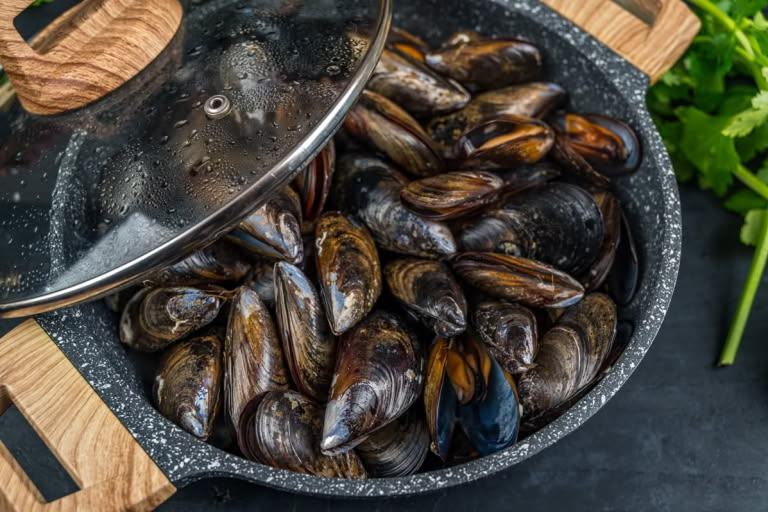
Reduce the heat to low, cover the pan with a lid, and steam the mussels for 4-6 minutes. Shake the pan occasionally or give them a gentle stir. As they cook, the mussels will open and release their natural salty liquor – this is why you typically don't need to add extra salt to the dish.

Once most of the mussels have opened, add the chopped fresh parsley and stir well to combine.
As soon as the mussels open, they are ready. The flesh of a cooked mussel will become firmer and opaque, changing from translucent to a creamy or orange hue depending on the variety. The aroma will be pleasantly oceanic, without any harsh raw smell.
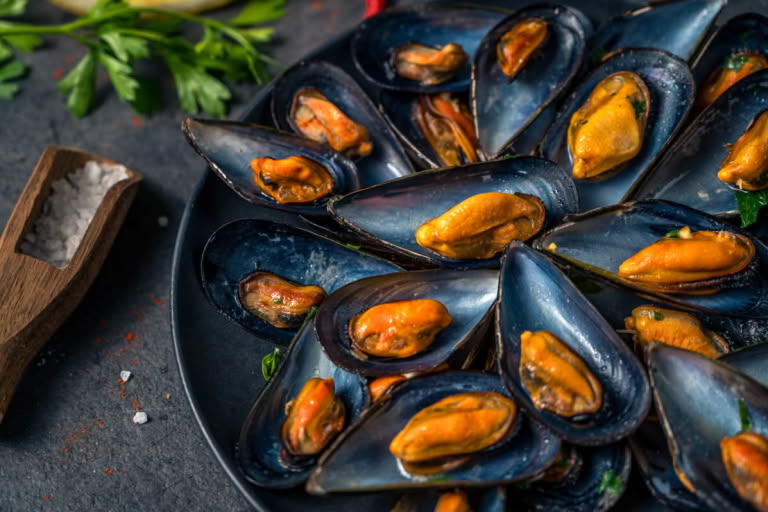
Serve the mussels hot, right from the pan, along with the delicious white wine broth they cooked in. This keeps them moist until the very last one is eaten. I always serve them with lemon wedges and fresh crusty bread, focaccia, or crispy bruschetta – perfect for soaking up that amazing sauce!
Important: Do not eat any mussels that remain closed after cooking! This is a sign that the mussel was not alive before cooking and may be spoiled.
Recipe Tips
Key Tips for Success
- Choosing Your Mussels: Always buy fresh, live mussels. Look for shells that are tightly closed. If they are slightly open, give them a sharp tap; a live mussel will close up within a minute. They should smell fresh like the ocean, not fishy or off-putting. Purchase them from a reputable fishmonger if possible.
- Cleaning Mussels (Debearding and Scrubbing):
- Just before cooking (not too far in advance), scrub the mussels well under cold running water to remove any barnacles, sand, or grit. A stiff brush works best.
- To remove the "beard" (byssus threads), grip it firmly and pull it sharply towards the hinge end (the pointy end) of the mussel. It should come out easily. Some mussels from supermarkets might already be debearded.
- The Wine Matters: Use a good quality dry white wine that you would enjoy drinking, such as Sauvignon Blanc, Pinot Grigio, or an unoaked Chardonnay. The flavor of the wine will concentrate in the sauce, so avoid "cooking wine."
- Don't Overcrowd the Pan: As mentioned in Step 3, cook the mussels in a single or double layer if possible. This ensures they cook evenly and open properly. If you have a lot of mussels, it's better to cook them in batches.
- No Extra Salt Needed (Usually): Mussels release their own salty liquor as they cook, which seasons the broth beautifully. Taste the broth at the end and only add salt if you feel it's absolutely necessary.
- Serving Suggestion: These mussels are best served immediately, hot from the pan. Provide plenty of crusty bread (like ciabatta, focaccia, or a good baguette as I mentioned in Step 6) to soak up that delicious white wine broth. A side of french fries (Moules Frites style!) is also a classic pairing. Don't forget a bowl for the empty shells!
| Nutrition (per 100 g) | |
|---|---|
| 4 g | Fats |
| 3 g | Carbs |
| 15 g | Proteins |
| 108 ccal | Calories |
Leave a Comment