

Let's make the real deal: authentic Russian pelmeni with a thin, supple dough and an incredibly juicy filling made from two kinds of meat. This is a classic, time-tested recipe, the very one my grandmother, who was born and raised in the Urals, used to make. Pelmeni are more than just food; they are a cherished ritual, a tradition where the whole family would gather to fold hundreds of these little “ears” to get through the harsh Siberian winter.
Pelmeni are essentially small dumplings made from a thin, unleavened dough, hiding a juicy ball of savory ground meat inside. Most often, it's a mix of beef and pork, generously seasoned with onion, salt, and pepper. The real magic of pelmeni lies in how they're cooked. They are boiled in salted water or broth. As they cook, the raw meat inside cooks through, releasing its precious juices. As a result, each pelmen becomes not just dough with meat, but a miniature vessel filled with a succulent meat filling and its own savory broth. They are served hot, with a dollop of sour cream, a pat of butter, or a splash of sharp vinegar.
Pelmeni vs. Vareniki: A Quick Guide
Many people wonder if pelmeni are the same as Ukrainian vareniki or Polish pierogi. As someone who grew up with both authentic pelmeni from my Ural-born mother and vareniki from my Ukrainian father, I can tell you they are wonderfully different!
The key difference is the filling: pelmeni are always made with raw ground meat, which cooks inside the dough, creating a burst of savory broth. Vareniki and pierogi use pre-cooked fillings, which can be anything from potato and cheese to sweet cherries.
Ingredients for 4 portions
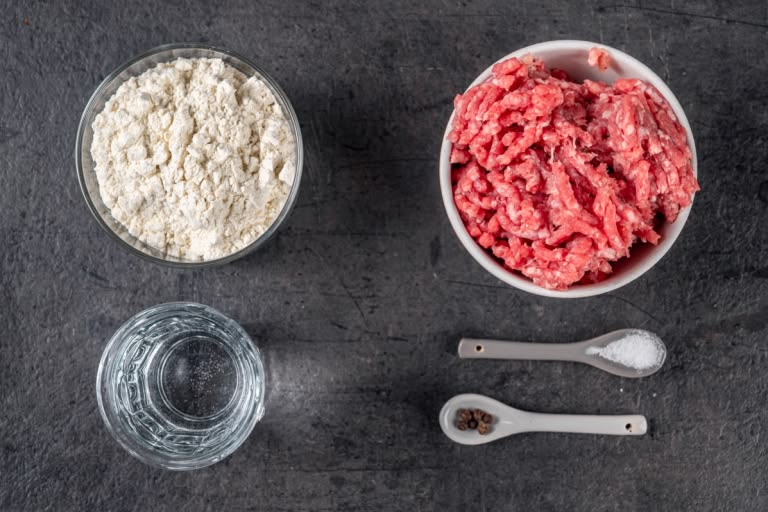
For the Dough
- 4 cup All-purpose flour (plus more for dusting) (500 g)
- 1 tsp Salt
- 1 cup Warm Water (around 100°F). You may not use all of it, so add it gradually. (200 ml)
For the Filling
- ½ lb Ground Beef (80/20 Chuck) (250 g)
- ½ lb Ground Pork (250 g)
- 1 medium Onion (150 g)
- 1 tsp Salt
- ¼ tsp Ground black pepper
- ¼ cup Ice-Cold Water (50-70 ml)
For Boiling
- 3-4 qt Water (3 l)
- 1 tbsp Salt
- 2 Bay leaf
- 6 whole Black peppercorns
- 2 whole Allspice Berries
For Serving
- ½ stick Unsalted butter (50 g)
- 1 cup Sour cream (150 g)
- Fresh Dill (optional)
How to cook
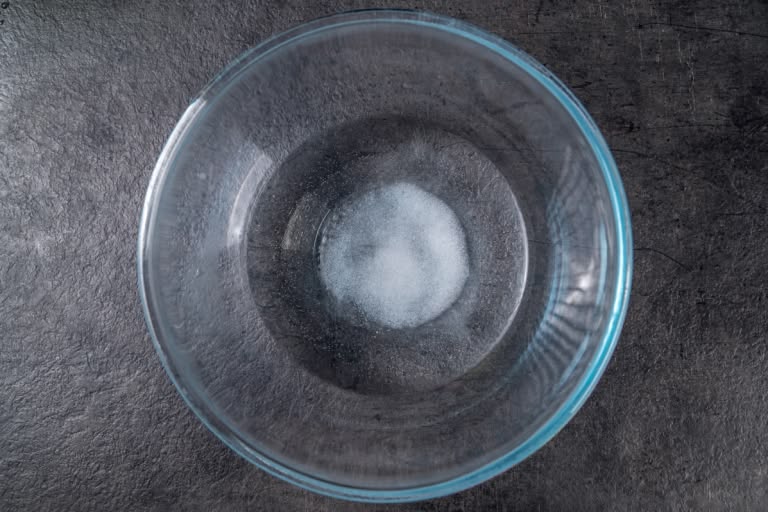
In a deep bowl, combine the warm water (95-105°F / 35-40°C) with the salt and stir until the salt is completely dissolved.
A quick tip: You can dissolve the salt in cold water by microwaving it for 30-60 seconds.
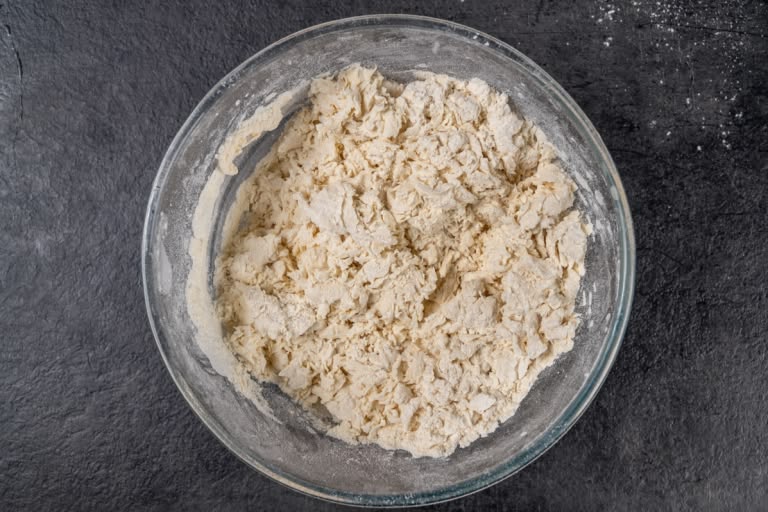
Add about ⅔ of the sifted flour to the warm salted water. Mix with a fork until you get a shaggy dough. If it’s overly wet and sticky, sprinkle in a bit more flour.
Cover the bowl with plastic wrap or a clean towel and let the dough rest for 5–7 minutes. During this rest, the flour hydrates and gluten starts developing, so the dough becomes more cooperative.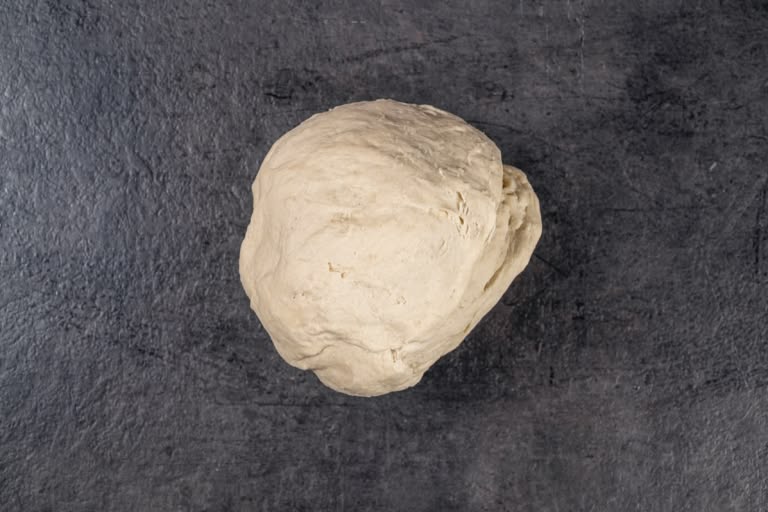
Turn the shaggy dough out onto a floured work surface and knead until you have a smooth, elastic, non-sticky, and fairly firm dough. This usually takes 5 to 10 minutes. Depending on the humidity and the type of flour, you may need 2 to 3 parts flour for every 1 part water.
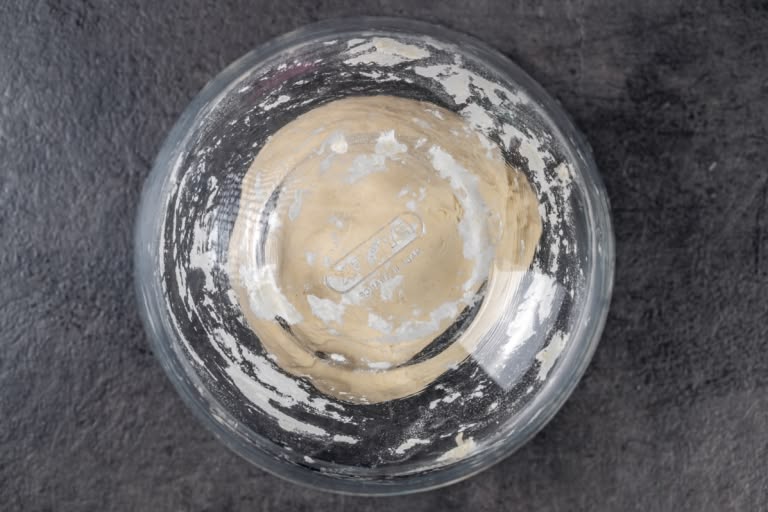
Cover the finished dough with the inverted bowl or wrap it tightly in plastic wrap and let it rest in a warm, draft-free place for 30-40 minutes. This resting period allows the gluten to develop fully while the protein strands relax. This makes the dough more elastic, pliable, and easy to work with, ensuring it will stretch well and hold any filling.
💡Tip: How to Know if Your Dough Has Rested Enough?
Gently press a finger into the dough. If the indentation holds its shape and doesn't immediately spring back, the dough is perfectly rested and ready. If it bounces back quickly, it needs a little more time for the gluten to relax.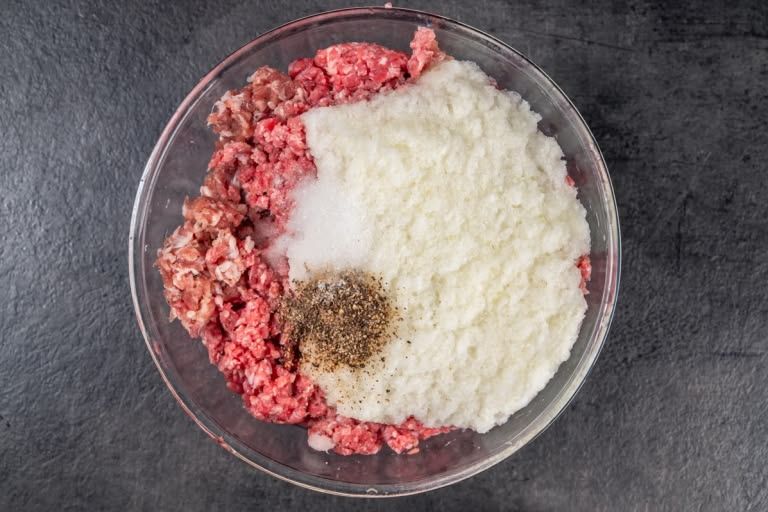
For the meat filling, combine the ground beef and pork. Add the salt, ground black pepper, any other spices you like, the ice-cold water, and the onion (which should be pureed in a blender or run through a meat grinder).
💡Why Ice-Cold Water?
The ice-cold water is absorbed by the meat, making the filling incredibly juicy. As the pelmeni cook, this water turns into a rich, savory broth inside the dumpling. Don't skip it!💡Taste Test for Perfect Seasoning (The "Cook's Treat")
To make sure your filling is perfectly seasoned, form a tiny patty from the meat mixture and fry it in a skillet for a minute. Taste it and adjust the salt and pepper if needed. This is the only way to know the final flavor before you start folding!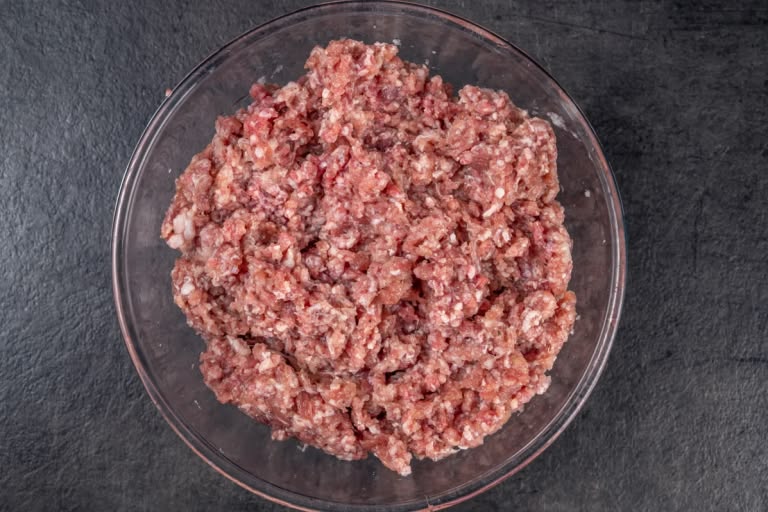
Mix the meat filling thoroughly with a fork. As you mix, all the ingredients should combine, emulsifying the fat and water. The ground meat will lose its loose texture and start to pull away from the sides of the bowl, forming a cohesive ball. Another sign of a well-mixed filling is the appearance of fine, white protein strands.
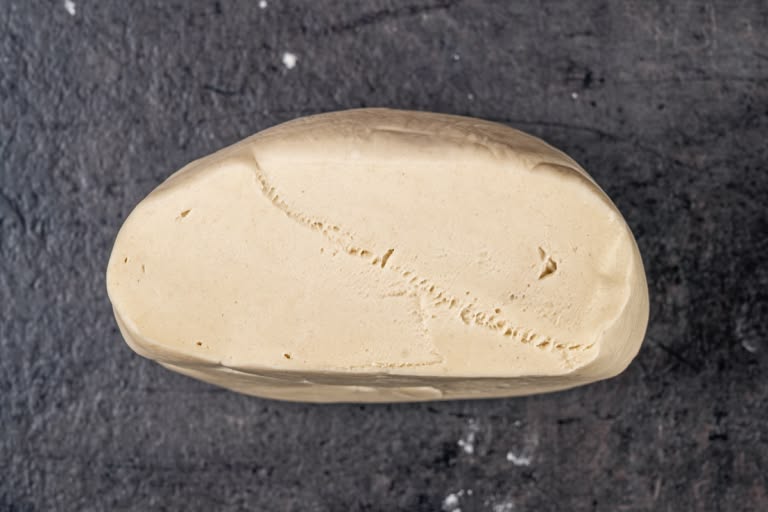
Divide the rested dough into 4 equal pieces. Work with one piece at a time; keep the others covered so they don’t dry out.
On the cut surface you should see a uniform, dense texture.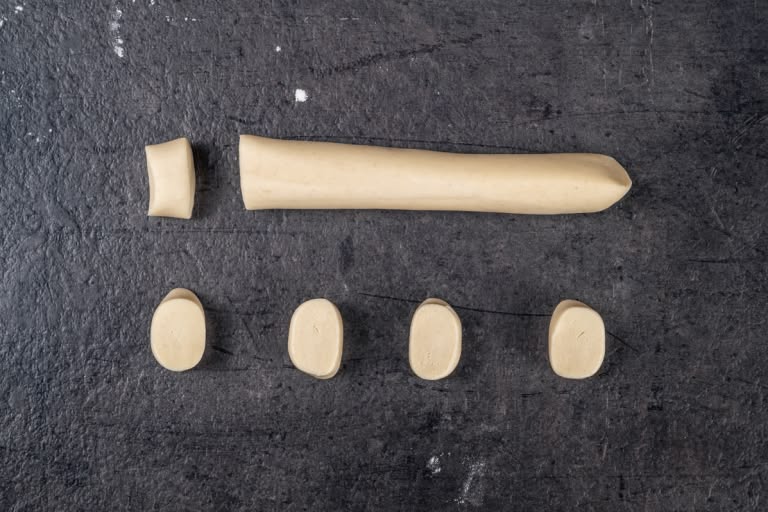
On a clean work surface, roll one piece of dough into a long rope, then use a knife to cut it into equal-sized pieces, which will look a lot like Italian gnocchi.
The diameter of the rope can be between ¾ inch (2 cm) and the pieces about ½ inch (1.5 cm) wide. It's a simple rule: the larger the pieces you cut, the larger your final pelmeni will be.
For example, if I want to make miniature pelmeni, I’ll roll the rope thinner, to about ½ inch (1-1.5 cm) in diameter, and cut pieces of the same size. Just always remember the trade-off: the smaller the pelmeni, the more of them you'll have to fold
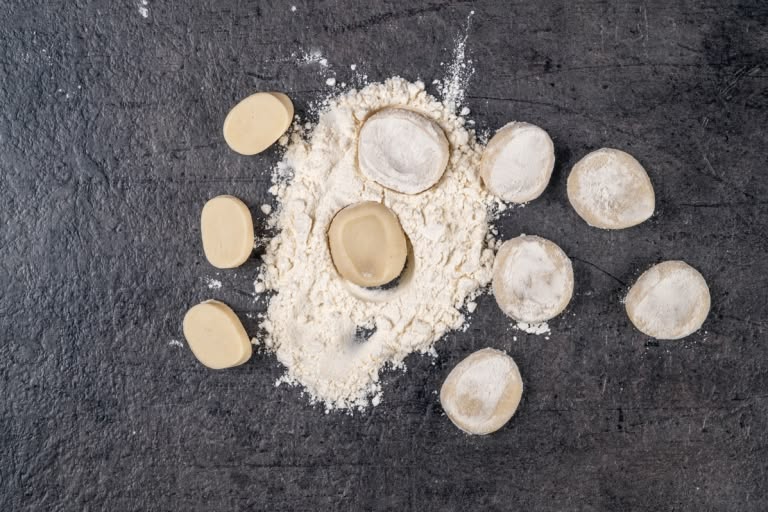
Dust each dough piece with flour and press into a small puck. Roll each puck into a thin round with a rolling pin.
Tip. Don’t roll too many rounds at once—they’ll dry out and develop tiny cracks. Roll only as many as you can fill in one go; keep the rest covered with plastic wrap.

Place about ½ to 1 teaspoon of the meat filling in the center of a wrapper. Bring two opposite edges of the dough together. Now, working methodically from one side to the other, press the edges firmly with your fingers to form a crescent shape that looks like a varenyk or pierogi. Next, take the two corners of the crescent, bring them together so they overlap slightly, and pinch them firmly between your thumb and index finger to create the classic "little ear" shape. Repeat the process with all the remaining wrappers.
If you find your dough is a bit dry and the edges aren't sealing well, you can lightly moisten them with a small amount of water. I also advise against putting too much filling in each dumpling, as it will squeeze out over the edges, prevent a proper seal, and could cause the pelmeni to break open while they cook.
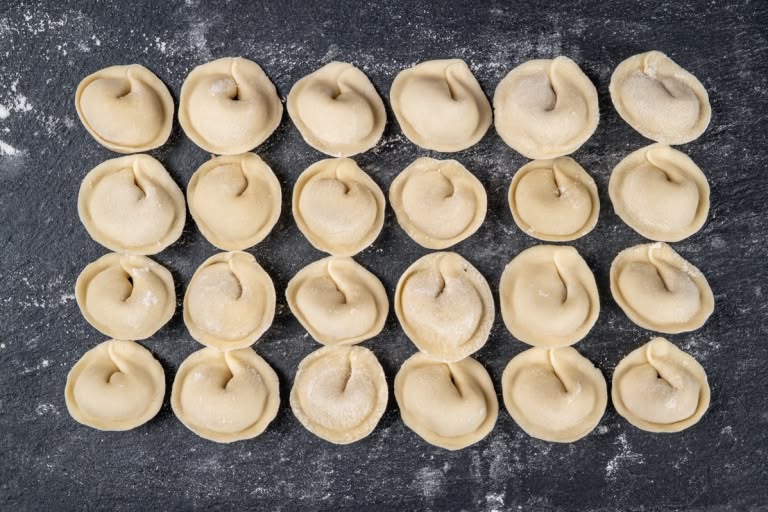
Place the finished pelmeni on a well-floured surface (like a baking sheet or cutting board), making sure they don't touch, to prevent them from sticking together.
Freezer Tip: If you're making a large batch, you can freeze them right away. Place the tray of pelmeni in the freezer until they are frozen solid. Then, transfer the frozen pelmeni to a zip-top bag for long-term storage.
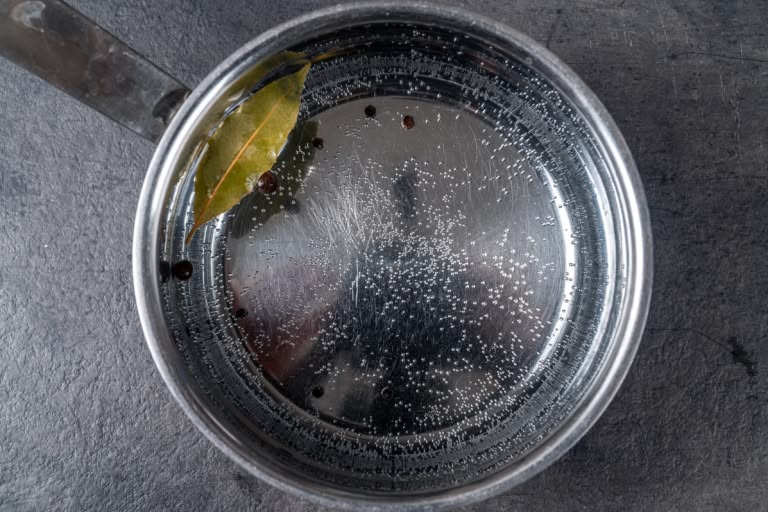
Bring a large pot of water to a rolling boil and season it generously with salt. You can also add bay leaves, allspice, and black peppercorns to the water for extra flavor. For an even richer taste, you can boil the pelmeni in meat broth and serve them in it as a soup.

Carefully drop a small batch of pelmeni into the boiling water and stir gently to keep them from sticking to each other or to the bottom of the pot. Stir now and then until they float. Once they float, cook them at a steady simmer for 4-5 minutes.
A helpful tip: To keep the pelmeni from sticking together, I first stir the water with a long spoon to create a whirlpool. This catches the little dumplings and stops them from sinking straight to the bottom.
💡How Long to Boil Pelmeni After They Float?
Cooking time depends on size:- Small (under 1 inch): 1-3 minutes.
- Medium (this recipe): 3-5 minutes.
- Large (over 1.5 inches): 5-7 minutes.
Cooking from Frozen: Do not thaw! Add the frozen pelmeni directly to boiling water and increase the cooking time by 1-2 minutes.

Lift pelmeni with a slotted spoon into a warm, deep bowl. Add butter, cover, and shake the bowl so they’re evenly coated. Let them stand 3–5 minutes, shaking occasionally so they don’t stick and the butter doesn’t pool.

Serve pelmeni hot with sour cream, fresh dill, mustard, or a quick sauce of melted butter + vinegar + black pepper.
Recipe Tips
Over the years, I've probably folded tens of thousands of pelmeni, and I've learned a few things that go beyond the basic steps. These are the little details and answers to questions I get all the time, straight from my family's kitchen to yours.
My Philosophy on the Perfect Pelmeni Dough
My grandmother from the Urals always taught me that the most authentic pelmeni dough needs just three things: water, flour, and a pinch of salt. It’s simple, classic, and lets the filling shine. I love it for its authentic texture and how beautifully it works.
You’ll see many modern recipes that call for an egg. An egg acts like a natural binder, making the dough stronger and more elastic, which can be helpful. There's also the zavarnoy or "scalded" dough method, where you mix some of the flour with boiling water. This creates an incredibly pliable dough that’s a dream to work with and freezes wonderfully. But for me, I always come back to the classic. It just tastes like home.
The Heart of the Pelmen: Let's Talk Fillings
The classic filling I use in this recipe—a 50/50 mix of ground pork and beef—is a time-tested winner. The pork brings the juiciness and tenderness, while the beef provides that deep, satisfying meaty flavor. I always tell people to aim for a blend with about 25-30% fat; that fat is what creates the delicious broth inside each dumpling!
But the beauty of homemade pelmeni is that this is just the beginning. You can get creative and use:
- Other Meats: Lamb is a fantastic, flavorful option. Chicken or turkey make for a lighter pelmen. You can even mix three meats, like pork, beef, and lamb.
- Flavor Boosters: To make the filling your own, a splash of soy sauce or Worcestershire can add wonderful depth. Some families add finely chopped fried bacon, a little fresh garlic, or different herbs like cilantro.
My most important tip? Always taste your filling before you start folding! Just make a tiny patty of the meat mixture and fry it in a skillet for a minute. It’s the only way to know if you've nailed the seasoning. I call it the "cook's treat."
The Art of Shaping: My Three Favorite Methods
How you shape your pelmeni can be a very personal choice. In my kitchen, I rotate between three main methods:
- The "Grandmother's Method": This is how I learned. You roll a piece of dough into a long, thin rope, cut it into little gnocchi-like pillows, and then roll each one out individually. It takes a bit of practice and is the most time-consuming, but the results are wonderful. You have no dough scraps, and you only roll out as many circles as you can fill at once, so nothing dries out.
- The Cutout Method: For perfectly uniform pelmeni, you can’t beat this. You roll the dough into a large, thin sheet (a pasta machine is your best friend here!) and use a round cookie cutter or a thin-walled glass to punch out circles. The only downside is that you get scraps, and when you re-roll them, the dough can become a little tougher.
- Using a Pelmenitsa (Mold): This special honeycomb-shaped mold is a lifesaver when you need to make a huge batch. You lay one sheet of dough over it, add the filling to the little pockets, cover with a second sheet, and use a rolling pin to seal and cut them all at once. It's incredibly fast, though I find the edges can be a bit thicker and they hold a little less filling than hand-folded ones.
On Serving and Storing Your Pelmeni
When people ask me how many pelmeni to serve, I usually say it depends on their size, but a good rule of thumb is about 15-20 medium-sized dumplings per person. As for serving, you can't go wrong with butter and sour cream, but don't be afraid to try a splash of vinegar with black pepper, or a side of spicy mustard—all very traditional options!
And yes, you should absolutely freeze them! They are the perfect make-ahead meal. Just lay the freshly folded pelmeni on a flour-dusted baking sheet, making sure they don’t touch, and freeze them until they are solid. Then you can toss them all into a zip-top bag where they’ll keep for months. And remember, cook them straight from frozen—just add an extra minute or two to the boiling time.
| Nutrition (per 100 g) | |
|---|---|
| 5.7 g | Fats |
| 22.9 g | Carbs |
| 7.7 g | Proteins |
| 177 ccal | Calories |
Leave a Comment